

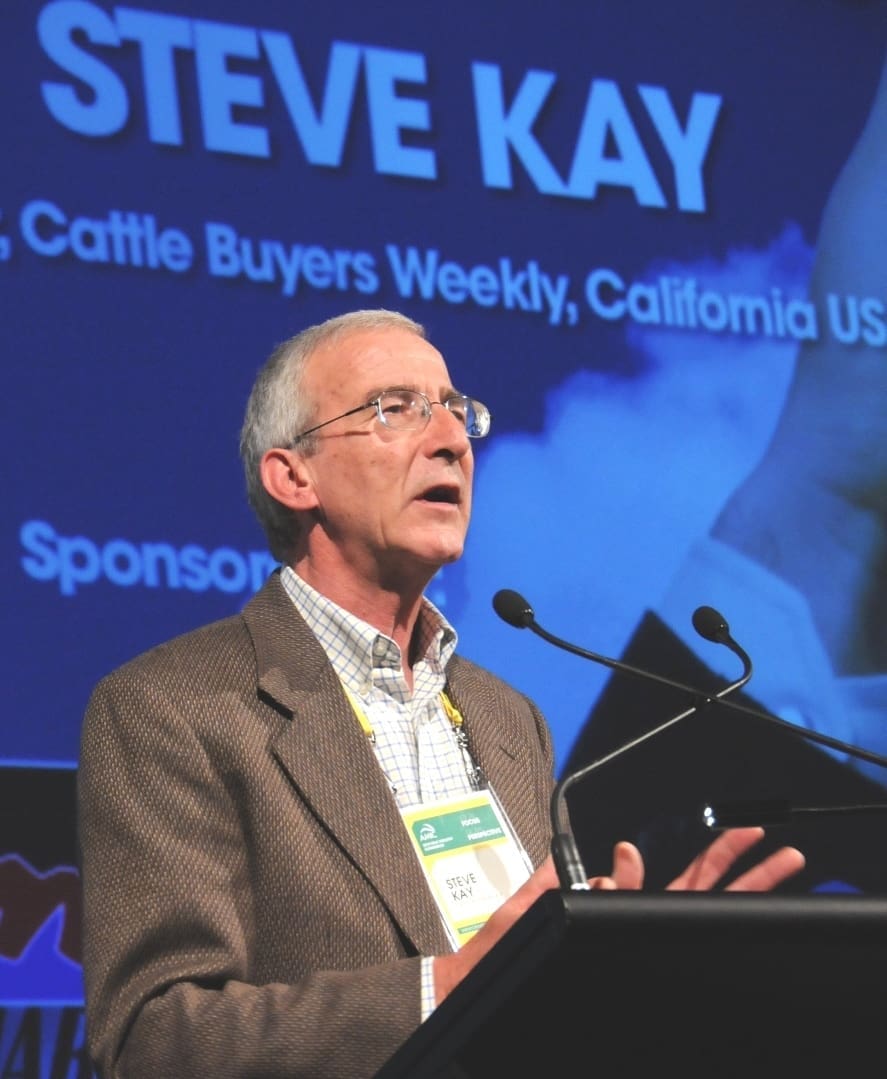
 A monthly column written for Beef Central by US meat and livestock markets commentator Steve Kay, publisher of US Cattle Buyers Weekly
THE strength of beef demand in the United States so far this year has taken the US beef industry pleasantly by surprise.
It, and shrinking cattle numbers, have elevated the prices of all classes of cattle to record levels. It also caused wholesale beef prices rise to levels only surpassed by prices at the height of the COVID-19 pandemic.
Retail beef prices remain at record high levels, suggesting that beef demand will come under more pressure this fall (northern hemisphere autumn).
Two other negative factors could conspire to further weaken demand.
The first is the federal government Appropriations shutdown, which began at midnight on October 1. Mandatory price reporting for livestock transactions expired on September 30.
The law requires meatpackers to report to USDA the prices they pay for cattle, hogs and lambs. USDA then publishes daily and weekly reports with information on pricing, contracting for purchase, and supply and demand conditions for the livestock industry.
It is unclear what information will or will not be published, although USDA on October 2 did not put out data on weekly slaughter totals and carcase weights.
Any gaps in information will be negative to the livestock markets, especially if the shutdown is prolonged.
Consumer confidence
The second negative factor is that consumer confidence in the economy in September fell to its lowest level since last April.
Uncertainty regarding the federal government shutdown and the resulting impacts will likely rattle consumers near term, said Andrew Gottschalk, HedgersEdge.com earlier in October.
 Uncertainty is generally the enemy of any market. The challenge of maintaining positive beef demand will be aggravated near term by the shutdown. The competing meats (pork, chicken) may begin to capture more of the meat and protein dollars from the consumer, he said.
Average retail beef price gains have far out-stripped the retail advances in the competing meats, consumers have noticed. Reduced weekly harvest levels may be necessary to maintain beef cutout values at or above the next level of price support, he said.
Failure to continue publishing livestock reports would jeopardise pork, beef and lamb producers’ ability to market their animals effectively, said the National Pork Producers Council in a statement.
Additionally, NPPC pointed out that USDA’s Risk Management Agency utilises LMR data to determine ending values and indemnities owed to producers under Livestock Risk Protection insurance policies. Thus, any disruptions in LMR reporting could impact the settlement of these policies while the government is shut down.
Consumer confidence
Meanwhile, the Conference Board’s confidence index, a measurement of consumers’ views on the economy, dropped to 94.2 in September from 97.8 in August. This was down from a 100-point baseline set in 1985, marked the lowest reading since April and was below Wall Street’s estimates of 96, according to FactSet.
More respondents indicated lowered expectations about the job market, according to the survey: About 26.9pc of consumers said jobs were plentiful, the lowest level since February 2021, while roughly 19pc said jobs were hard to get.
US consumers’ views of their current financial situation declined in the largest month-over-month drop since the data was first collected in July 2022, the Conference Board reported.
Fears about a recession remained strong, as more consumers thought the US economy was already in recession. The Conference Board’s expectation index, a measurement of consumers’ short-term outlook on the market, fell to 73.4, still below the 80-point threshold that signals a recession.
Available job openings rose more than expected to 7.23 million from a revised 7.21m reading in July, the Bureau of Labor Statistics reported on September 30. The hiring rate dropped to 3.2pc, the lowest since June 2024, while the number of people who quit their jobs decreased by 75,000.
The cash live cattle and boxed beef markets continued their price retreat in September and analysts wondered what might help them stabilise in the next two weeks. Cattle prices declined for the sixth week in a row in the week ended September 28. The week saw USDA’s Five-area steer price average US$232.65 per cwt live or US$364.97 per cwt dressed. The live price was down US$4.86 per cwt from the previous week, while the dressed price was down US$5.91 per cwt.
Boxed beef cutout values fell again sharply in the same almost as much as the week before. That week saw the national weekly cutout average US$382.60 per cwt, down US$10.46 per cwt from the week before. This meant it fell US$26.60 per cwt in three weeks. The Choice cutout averaged US$379.92, down US$11.95 per cwt, while the Select cutout averaged US $360.61, down US $12.04 per cwt.
US restaurant business
Meanwhile, Cargill, the US industry’s third largest beef processor, published a fascinating report focused on the restaurant business. Steak is more than just a protein, it’s a signal of quality, indulgence and experience, says Glendon Taylor, marketing director for Cargill’s North American Food Business in discussing Cargill’s first-ever “State of Steak – Foodservice Edition” report.
The report, which draws from new proprietary research, provides a comprehensive perspective on how consumer expectations for steak have evolved across the foodservice sector.
Highlighting the emotional and economic significance of steak, the report reveals the growing pressure foodservice operators face to get steak right.
Cargill’s research shows that steak can be a business driver for restaurants but only if it consistently delivers on expectations like doneness, tenderness and presentation, says Taylor. That’s why understanding the guest mindset is critical.