

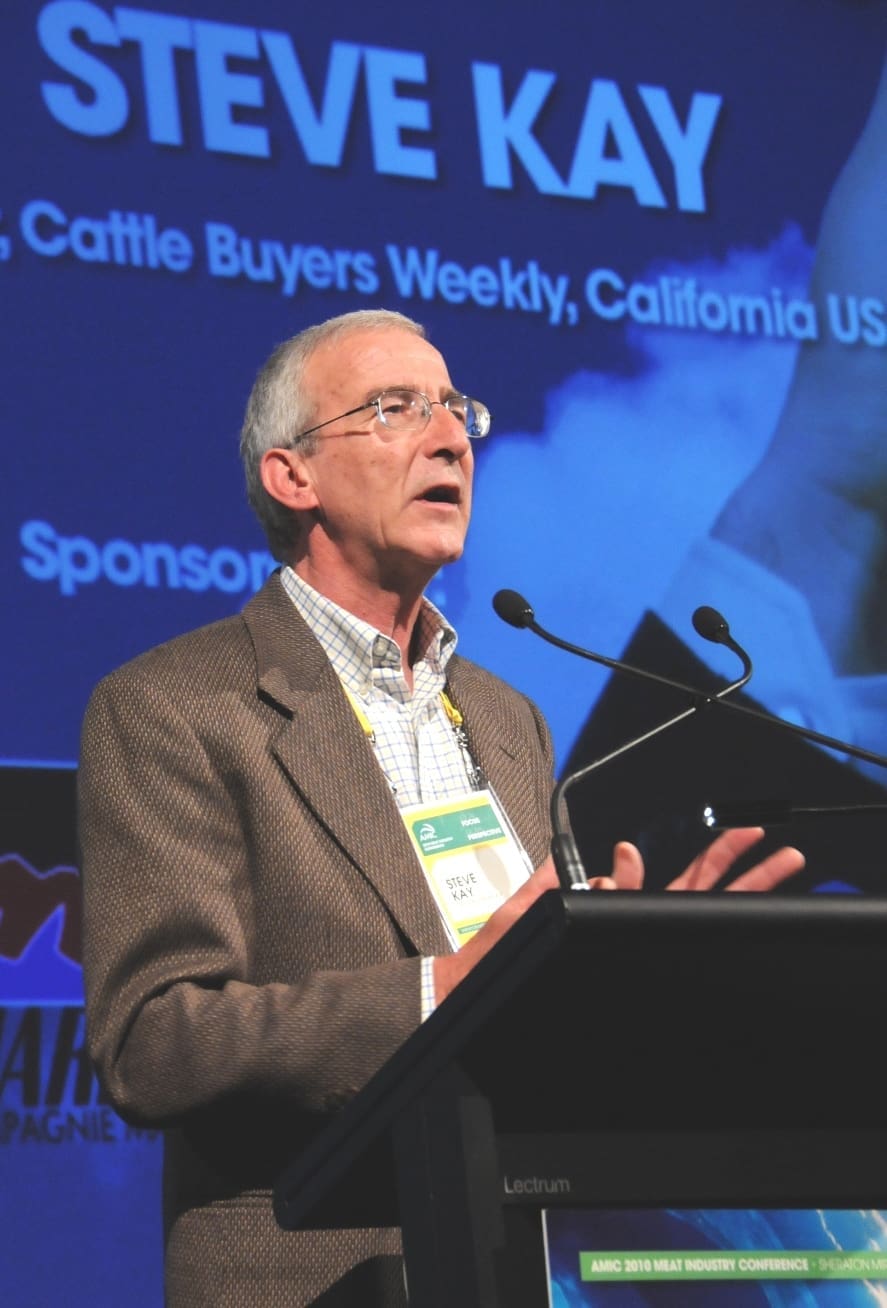
 A monthly column written for Beef Central by US meat and livestock market commentator, Steve Kay, publisher of US Cattle Buyers Weekly
ALTERNATIVE Marketing Agreements (AMAs) have been instrumental in transforming the US beef industry over the past 20 years.
AMAs for grainfed cattle include forward contracts, formula pricing, negotiated grid trades and packer-owned transfers. In each case, these arrangements help grow the demand for different types of beef and help protect cattle producers against risk and earn them better prices.
The beef industry’s two largest trade associations thus last month strongly criticised USDA’s latest proposed Packers and Stockyards rule, which is called Fair and Competitive Livestock and Poultry Markets.
Packers and Stockyards is the part of USDA that regulates the meat packing and poultry processing industries, as well as auction markets and livestock dealers.
The US Packers and Stockyards Act has been in existence for 123 years. Not once during my 36 years in covering the US meat and poultry industry has there been one serious breach of the act.
That is despite howls from some groups or individuals who claim that beef packers illegally manipulate the market. Numerous studies in fact have proven the opposite. Yet now USDA and the Biden Administration want to ‘rein in’ AMAs and other activities that have made the beef industry so successful.
The newly-proposed rule is a direct attack on cattle producer profitability, says National Cattlemen’s Beef Association’s Ethan Lane.
By creating criteria that effectively deems any innovation or differentiation in the marketplace improper, USDA is sending a clear message that cattle producers should not derive any benefit from the free market, but instead be paid one low price regardless of quality, all in the name of so-called fairness, he says.
An even more detailed attack on the proposed rule comes from the American Meat Institute, which represents the US meat processing industry. The latest proposed rule change is attempting to set meat production back decades by encouraging litigation and limiting how livestock producers can market their animals to packers, says the Institute.
USDA is attempting to circumvent Congress and the courts to reverse the longstanding legal standard that parties must demonstrate harm to competition to sue and win under the Packers and Stockyards Act Section 202 (a) or (b).
Removing the need to show harm to competition will encourage frivolous lawsuits. To protect themselves, meat packers may be forced to curtail the use of to minimise these costly litigation risks, says the Institute.
Unfortunately for the Biden Administration, Agriculture Secretary Tom Vilsack has tried these changes before, says Julie Anna Potts, President and CEO of the Institute. They have failed before the courts, conflict with Congressional intent and are a blatant attempt to pick winners and losers in the marketplace. Under these proposed rules, everyone loses, the livestock producer, the packer and ultimately the consumer, she says.
Portrayed as an effort to increase competition, this government interference comes when fed cattle prices were at record levels for most of 2023, surpassing the 2014-2015 previous record highs, says Potts.
Now, well into 2024, US cattle prices remain at record levels (as they were the week before last).
What is the Biden Administration trying to fix, she asks.The cattle price outlook for 2024 continues to be bullish, with USDA projecting the annual average price of cattle to increase over the 2023 record based on a smaller cattle supply, she says.
Changes Would Decouple Demand Signals
Contrary to USDA’s assertion, these changes would introduce uncertainty into the market and decouple the demand signals that producers receive from beef consumers, including consumers’ willingness to pay for value-added attributes, says Potts.
At low points in the cattle cycle, like this year’s historically small US cattle herd, it puts at risk the value that producers earn from sustained beef demand.
As the expansion phase of the cattle cycle begins, it would undermine the benefits earned from growing beef demand, says Potts. In response to consumer demands for value-added meat products like ‘no antibiotics ever,’ ‘grass-fed’ or even someday ‘carbon neutral,’ AMAs have rewarded livestock producers for investing in these attributes while ensuring that meat packers can make the high quality products that consumers want to feed their families, she says.
The American beef market has modernised to allow producer-driven innovations or AMAs, says the Institute.
AMAs allow producers more flexibility in how to market their cattle, protect themselves against risk and earn better prices. For example, a cattle producer signs a contract with a feedlot operator, says the Institute. The two parties agree that in six months, the producer will deliver 100 cattle at a fixed price of $1000 per head. When the delivery arrives at the lot, despite the current market price, the producer receives $1000 per head. This forward contract gives the producer certainty and provides the feedlot operator a stable supply at a fixed cost, it says.
Regarding formula pricing, a cattle producer enters a formula pricing arrangement with a small beef packer/processor, says the Institute. The formula determines the price based on the agreed criteria: price per pound for carcase weight; for higher quality grades like Choice or Prime, $.10 per pound. It might also include a penalty like $0.05 per pound for below grade carcasses. Formula pricing also provides potential premiums for other value-added production practices that align with consumer demand.
When the cattle are delivered, the pricing is calculated based on the formula, says the Institute. This lets the producer be rewarded for investments in the herd like improved genetics and high quality feed, provides risk management opportunities for the producer and ensures the processor receives high quality cattle to meet demand.
Ironically, USDA has invested significant resources in establishing a cattle market library to support this method of pricing, says the Institute.
Please no regulation of our food. I vote for no regulation! Thank you.
I disagree and do not approve any price controls on food.
No I don’t want that please
We the people need to fire all the government representatives who even sign this. It’s more past time for our government to listen to the will of its people. If not they should be removed Immediately not the next term. We the people have allowed our government representatives do too many injustices without consequences. We have completely lost the check and balances it was bought by corporate entities and sold out by our government representatives. It’s treason on the United States of America and they all should be held to treason punishment.
I do not want this.
No, The Biden Administration needs to stop and let them keep things like they have been for years, No more Government over reach.
I do not Approve of this food control at all
Please say no