
DECARBONISING Australia’s meat production risks putting our protein out of reach of some export markets, according to an industry leader prominent for his sustainability efforts.
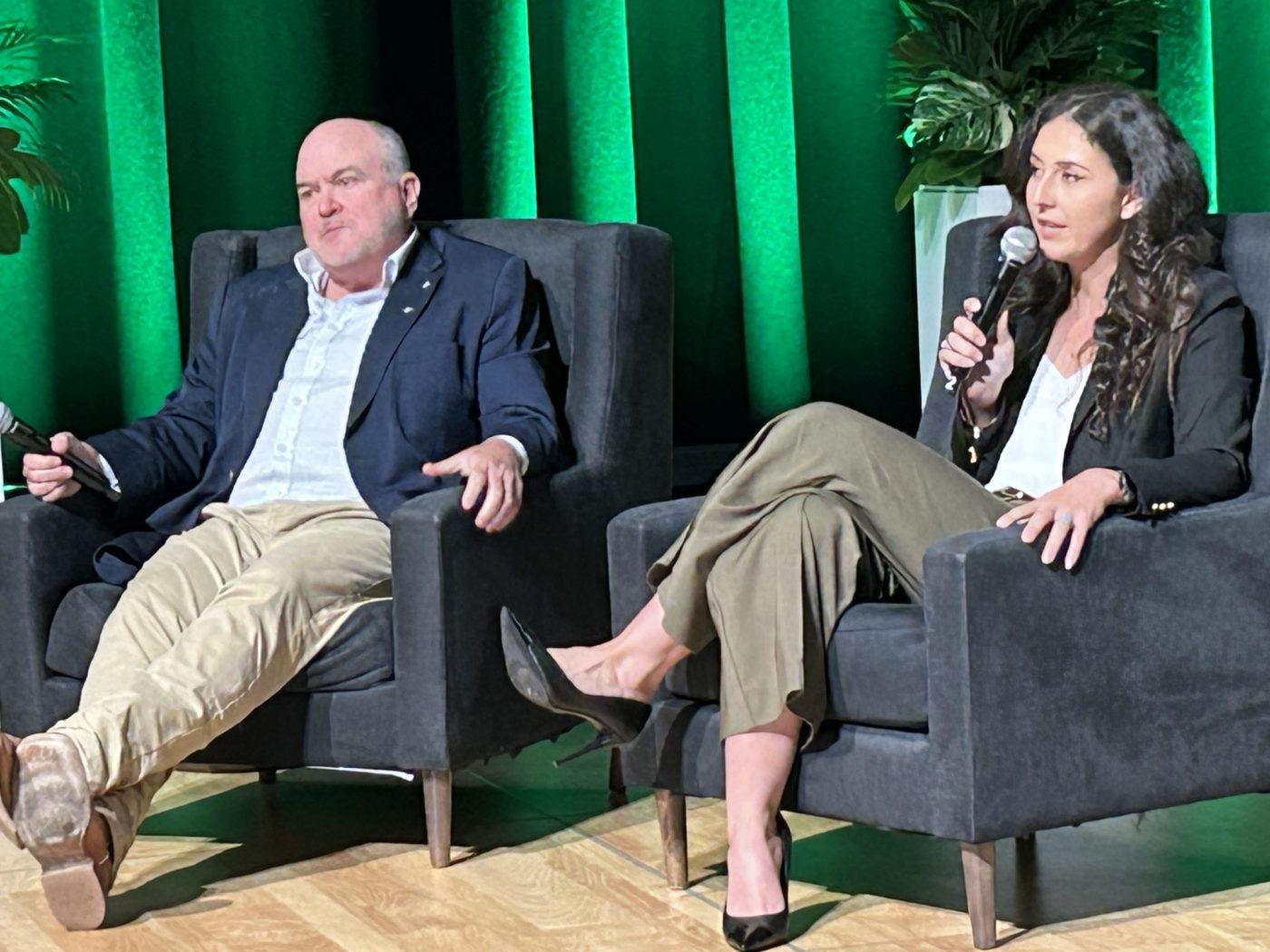
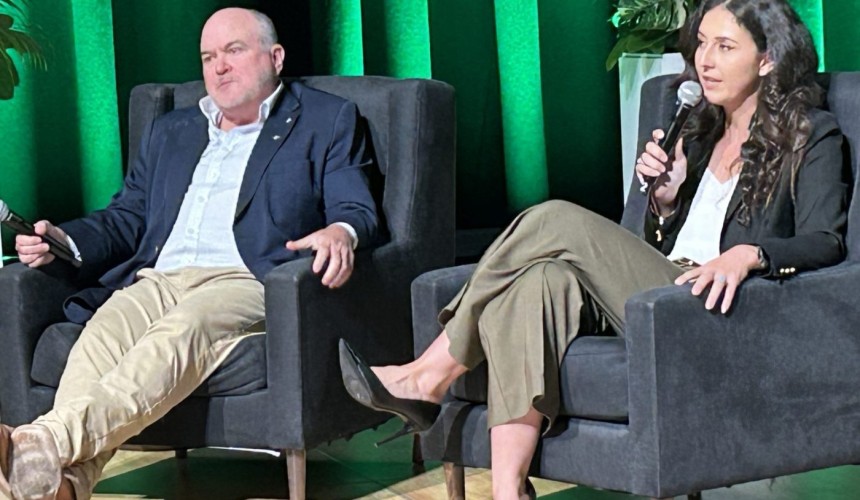
Emily Coggan on stage with Smithfield Cattle Co’s Jason Shearer-Smith
Smithfield Cattle Co MD Jason Shearer-Smith warned that reducing carbon emissions will be a costly exercise that producers might not be able to pass onto some export markets.
“I think the path we’re going down is going to increase our cost of production,”
he said. “It’s going to make the produce that we produce every day more expensive. I think we need to be very careful not to get too far in front of ourselves.
“If all of our product went to the EU we could potentially get high-enough prices to do what we need to do. But the reality is it doesn’t.
“And we’ve got a lot of second and third-world countries that we still need to feed so – keep going down this path and at some point in time we’re going to have to make a decision about who eats and who doesn’t.
“We need to be pretty careful,” he told last week’s audience attending the National Farmers Federation AgXChange conference in the Gold Coast.
Meanwhile, another conference speaker argued that quality, not eco-cred, would be the main premium-earner for Australian meat producers
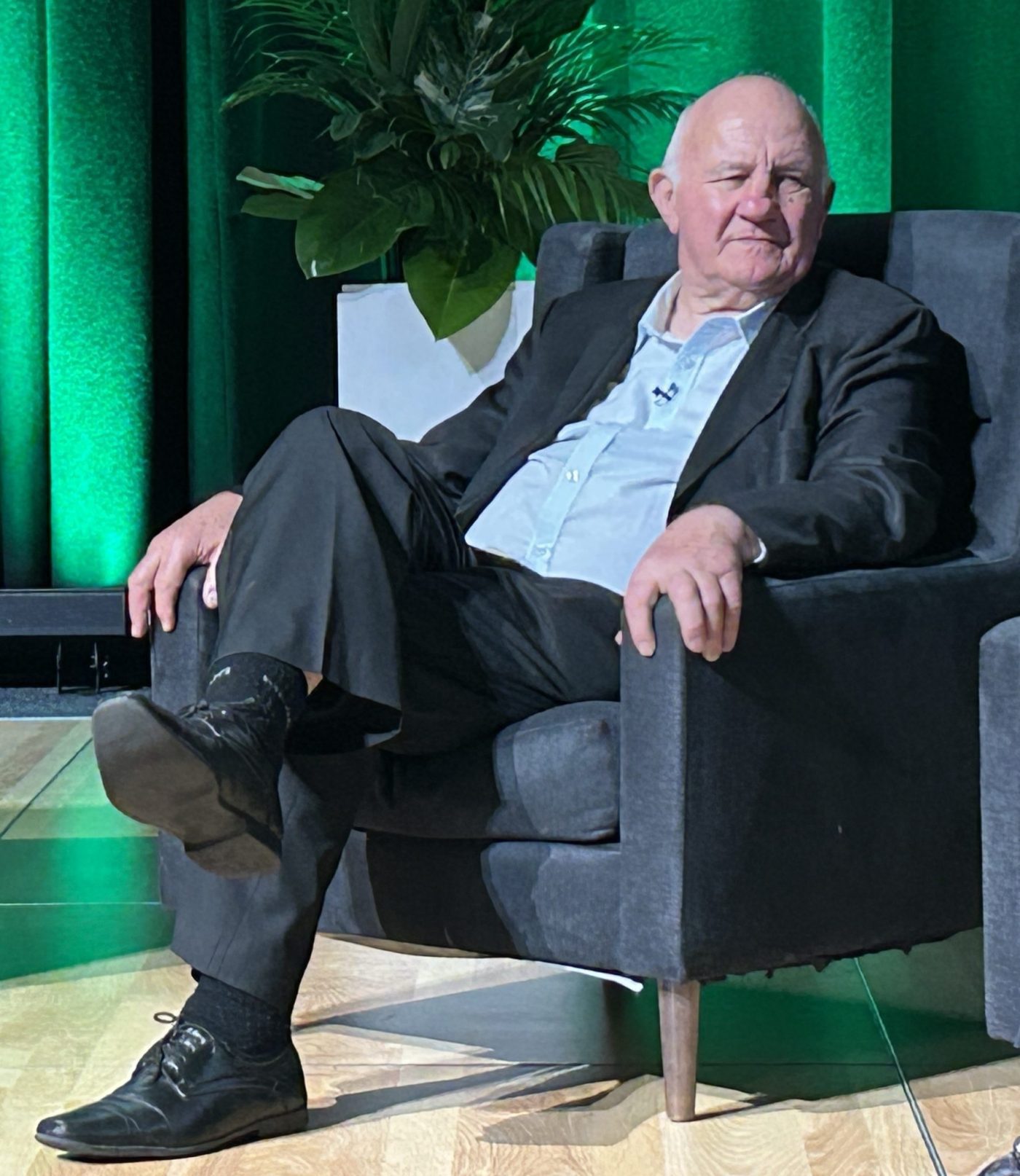
Roger Fletcher at NFF AgXChange
Consumers look for eating quality ahead of sustainability, said Roger Fletcher, MD of Fletcher International Group.
The feedlot and processing veteran said: “People go in with good intentions that they’re going to buy this product or that product. But talking to the big restaurant chains in America, they don’t. No one reads it. no one cares.
“But it’s quality of meat (they want)– quality as is described. And we’ve got to put it out there that the customer knows what they’re getting.
“Australia probably leads the way. Our meat today keeps better than that of any other country in the world and our quality’s gone forward because it’s company-branded and the brands sell the product.”
Roger recalled that about 30- 40 years ago most of the beef and sheepmeat his company processed went to armies around the world.
“We did the Jordan army, the Algerian army, Moroccan army, Egyptian army, Russian army . All those ones. It was just dumped in there as a protein,” he said. “Today that’s completely gone. In terms of sheepmeat – we don’t supply any to sausage-makers or smallgoods. We’ve gone upmarket. We’ve found niches around the world.
Earning eco-cred won’t earn a premium price when consumer specifications vary, he said. “A lamb could end up with 47 different customers, so we’re trying to fit one little piece to get a premium, but it’s only 300-400 ounces. It’s not going to help us.”
Former NFF president Fiona Simson was another panellist who weighed in on the question of premium pay-off. “At some point surely I think there has to be some acknowledgement that, in growing the best, we have to be continually looking for the prices to support that,” she said.
 “I know our produce is sought-after because we have the quality, because of the QA underpinning it. And because of the assurance that customers have that it’s safe and good to eat and all of those things, you can’t do that for nothing.
“I’m not sure how that will unpack in the future, but I think that premiums are due for Australian farmers,” she said.
Held as part of the NFF conference, the Agricultural Sustainability Australia (ASA) Exchange launched the fifth version of the Australian Agricultural Sustainability Framework (AASF).
David Jochinke, NFF president, said: “This updated Framework reinforces Australia’s national reference point for sustainability, helping agriculture speak with one voice in domestic and international discussions.
“Revised principles and criteria, alongside a new look and feel, have freshened up the Framework, which is a national reference point for our industry.”
The ASA Exchange also marked the first step in discussions about the proposed Agricultural Sustainability Australia (ASA) Alliance.
The ASA Alliance is aimed at coordinating efforts across commodities and supply chains, reducing duplication, and strengthening Australia’s sustainability story in global markets.
“It’s vital that we maintain and improve our access to markets,” Mr Jochinke said.
“Supply chain challenges must be addressed in a structured and sensible way, and the vibrant conversations about the ASA Alliance signal our industry’s intent to keep building trust, consistency and credibility together.
“Telling a coherent national sustainability story is vital for market access, investment and community trust.”
You got me with "low-carb" 'cos I immediately saw "low carbohydrate" and wondered what that meant! Maybe "Low C" would be a better description?