
THE head of a research organisation put together to find ways of reducing agricultural emissions has labelled arguments that the beef industry did not need to reduce methane emissions as “rubbish”, prompting calls to stop treating producers with contempt.
Richard Heath is the chief executive officer of the Net Zero Emissions in Agriculture cooperative research centre, the largest CRC ever.
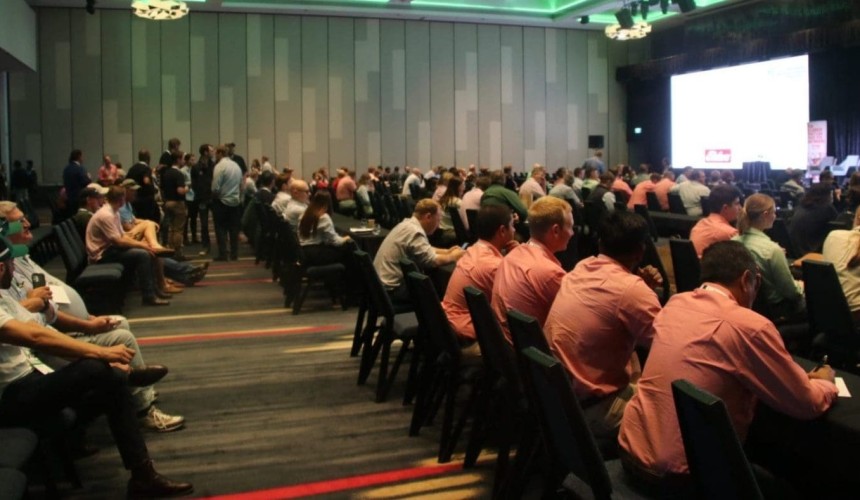
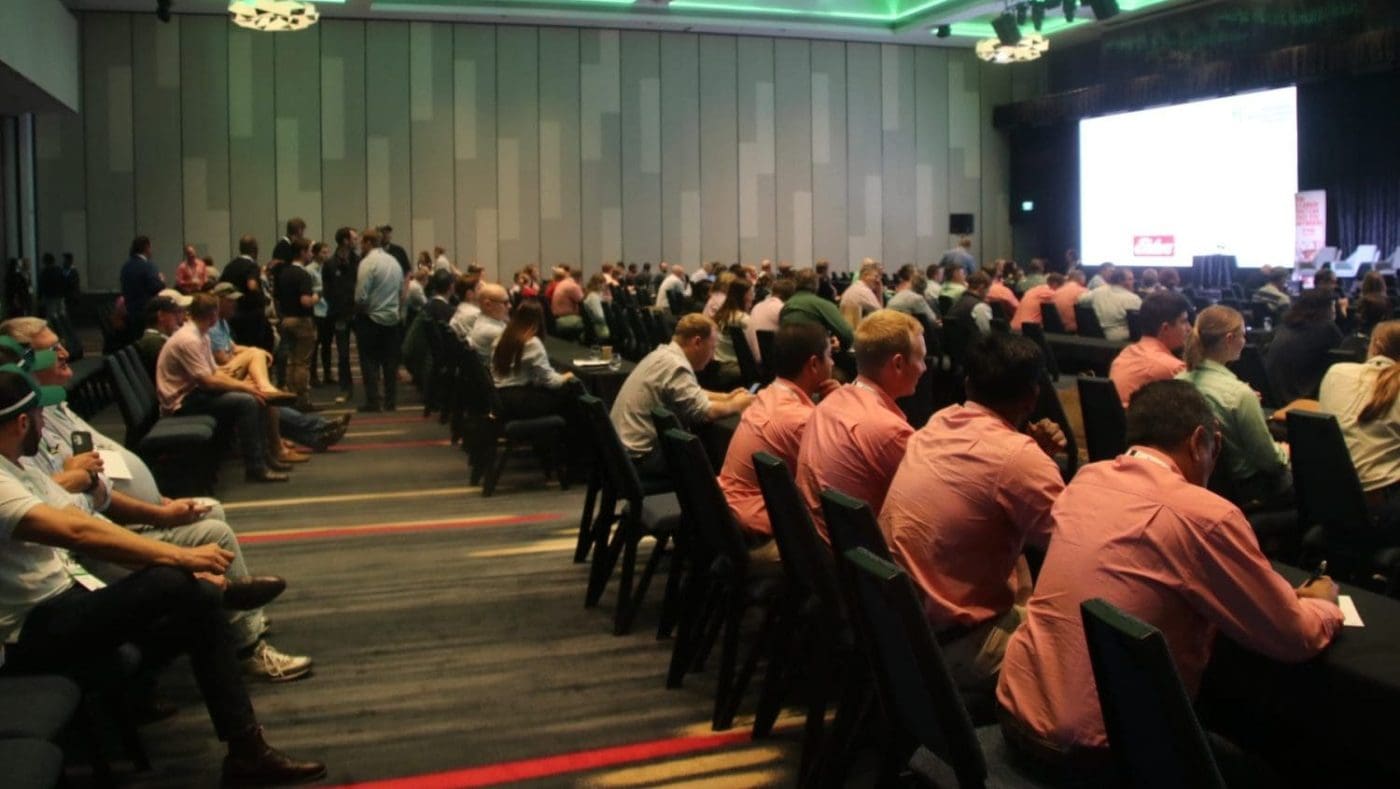
He recently presented to the Australian Summer Grains Conference on the Gold Coast where he ran the crowd through a series of projects the CRC is running and explained what he believes are the benefits of reducing methane emissions.
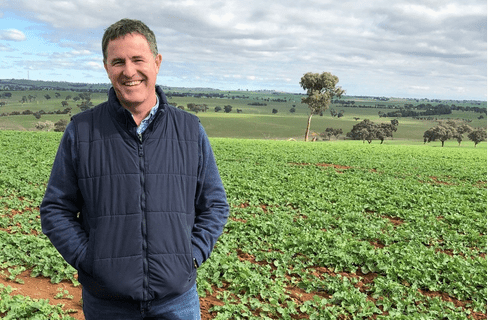
Richard Heath
Mr Heath said methane emissions can be reduced in a profitable and productive way. He also said the CRC was keen to inform ways of giving producers financial rewards like carbon credits and insetting.
In question time following his speech, Mr Heath said there was a large section of the livestock industry who believed methane emissions did not need reducing – which he disagreed with.
“The arguments they use are because methane breaks down quickly and if you are not emitting anymore year-on-year then it is steady and it is not having a warming impact,” he said.
“I think that is rubbish and I think we do need to reduce methane.
“It is still important to recognise that reducing methane is going to have more impact than reducing carbon dioxide, equivalence, over a short period of time.”
Debate about the way methane emissions are measuring has been ongoing for years, with several scientists across the world (including University of Oxford, University of California and the CSIRO) highlighting that stable methane emissions are currently being overstated by globally recognised accounting metrics.
 Mr Heath said the discussion should be more about common values like long-term financial viability.
“It goes off the rails so quickly and people get confused about the science when you start talking about rates of break down and warming potential,” he said.
“The values that we all relate to are that we do want to protect our farms for future generations and those future generations are at risk from climate change – there is no question about that.
“Methane is one of the things we can do really quickly, there are technologies that are available now that we can implement tomorrow that will have a really significant impact.”
Call to stop treating beef producers with contempt
The Australin beef industry recently decided to scrap its target to be carbon neutral by 2030, following a campaign from Cattle Australia to re-think the way the industry approaches emissions.
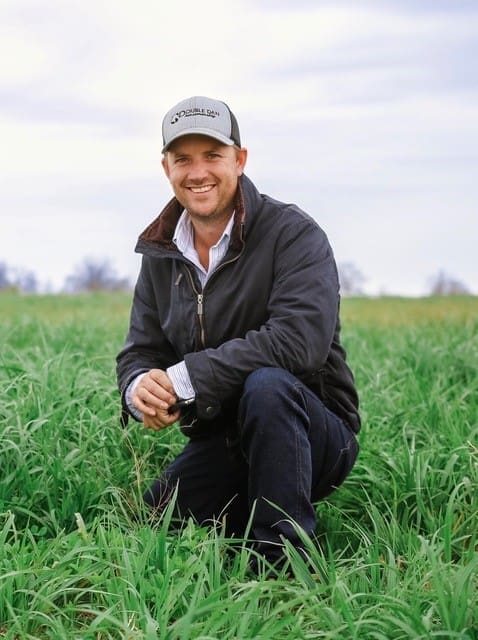 Central Qld producer and CA deputy chair Adam Coffey said he disagreed with Mr Heath’s commentary.
“I’m not sure what stimulates this sort of commentary, no one is saying that emissions reductions within the beef sector aren’t important,” Mr Coffey said.
“We’ve got to get away from ham-fisted treatment of livestock emissions and associated commentary as it’s not helpful. Stop treating beef producers with contempt and maybe we’d find a lot more people positively engaged.”
Mr Coffey said he also disagreed with the idea that reducing methane emissions was more important than reducing carbon emissions from fossil fuels.
“Livestock emissions are scientifically different from fossil emissions yet they’re all lumped in the same bag within government inventories,” he said.
“Yes, our emissions have an atmospheric warming effect but they’re not one-way and they’re generally not accumulative.
“That’s why there’s an R&D focus in the new MLA strategic plan on the biogenic carbon cycle, what is it and how do we positively influence it.”
I think Richard Heath would be up in arms if a faulty speed camera assessed he was doing 150 km when he was really doing 100 km. The cattle industry is simply asking that the warming effect of the Australian herd be documented correctly.
Cattle Australia is not saying that we shouldn't be trying to reduce methane emissions of Australian cattle to help cool the planet. What they are saying is that the warming effect of the herd shouldn't be misrepresented to the broader community.
In 2008 I wrote: "The greenhouse outcomes of agriculture are a reflection of economic efficiency." This is even more so with the red meat industry. Reducing methane per kg of beef produced, increases profit - simply because cattle go to market sooner. Reducing methane emissions from cattle is win/win, so there is no reason cattle producers will choose to not do it.
Richard is correct when he made the following statement. “It is still important to recognise that reducing methane is going to have more impact than reducing carbon dioxide, equivalence, over a short period of time.” However, if this line of thinking enters Govt policy, while using incorrect accounting for the warming effect of cattle methane, there is a quick fix with a long-term worse outcome of increased warming. This is because the focus on CO2 is reduced, allowing it to accumulate more, AND it is CO2 that sets long term temperature.
I now quote the IPCC on the last point (methane is a short life climate forcer):
"Because the effects of the SLCFs (short life climate forcers) decay rapidly over the first few decades after emission, the net long-term temperature effect from a single year's worth of current emissions is predominantly determined by CO2".
IPCC_AR6_WGI_TS page 101
Technical summary.
TS.3.3.3 Relating Different Forcing Agents
Once again the experts are more focused on mother-hoodie statements, bullying farmers and following the CC propaganda than presenting scientific proof about the impact of methane or the carbon cycle. As suggested many times in the past two to three years, if the experts want farmers to get behind any changes on farm, they first need to come clean with what facts are known and what facts are not know. (not modelling with crude assumptions)
Fact - We know there is no science proving that methane degrades in 10-12 years.
Fact - We also know methane from cows is broken down from the time it is burped in a time frame conducive with environmental conditions at the time.
Fact - We know the factors or vectors involved in the degradation process are hydroxyl ions, methanogenic bacteria etc.
Fact - WE know that Australia is supposed (modelling) to have about 500M tonnes of Carbon emissions.
Fact - we know that trees on average sequest about 300-500 kg/ yr and there are 24 Billion trees in Australia. (Net tree sequestration 7-12 Billion tonnes Carbon). plus pastures etc etc.
Fact unknown - just how much Methane is sequestered or broken down by the natural processes before it joins the atmospheric pool?
Fact - our real need is for the CEO of the biggest CRC ever to put some cash up to do the science thats needed immediately instead of bullying with propaganda. Convince with science - There was not one scientific point in this article. We really need the CRC to undertake experiments on farm in natural systems to measure how the natural methane cycle is operating - how quickly the methane is degraded in-situ and not in a chamber indoors. Theres the challenge Mr Heath.
<strong>For more information on these points see Beef Central previous article https://dev.beefcentral.com/news/posing-a-scientific-question-does-methane-really-take-10-12-years-to-break-down/
he would say that. he's just trying to protect and justify his funding. you only get funding for doom and gloom. pretty desperate. cheers Matthew Della Gola