There’s been some significant developments in the methane-reducing feed additives field this week. Here’s a quick summary:
Big money backs cross-Tasman bolus battle
A cross-Tasman showdown is looming in the methane-inhibiting feed additive marketplace with New Zealand and Australian rivals attracting a total $24.4 million in investment this month.
A $14.8m investment boost is likely to see Auckland-based Ruminant Biotech launch its slow-release, long-payout bolus-based product, Emitless, in Australia next year.
Meanwhile, Australian ag tech company Number 8 Bio is in turn eyeing NZ markets after securing $9.6m in funding to accelerate the commercialisation of its bolus-delivered product, BetterFeed.
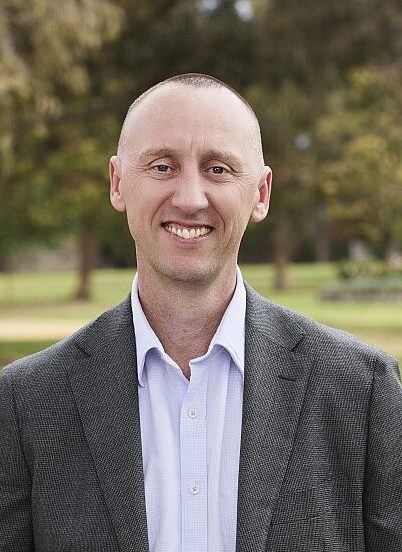
Tom Breen
Citing Lincoln University research, Ruminant Biotech is promising more than 75 percent methane mitigation for 100 days from one treatment, using its product. And CEO Tom Breen believes that a six-month bolus “is very possible.”
Long-payout solutions are seen as critical for methane inhibiting feed additives to gain wide uptake in the extensive, pasture end of the beef industry.
BetterFeed is claiming up to 90pc methane reduction and improved rumen fermentation over a six-month payout period.
Ruminant Biotech already holds patents for Australia, NZ, the US and Europe for its technology delivering tribromomethane, a bromoform-based compound. Bromoform is the active ingredient in asparagopsis seaweed. It is also seeking regulatory approvals for Canada, Brazil and the EU, and has a target of treating 100 million cattle by 2035.
According to Mr Breen the company is working through a distribution agreement with “a large global partner” to increase customer reach and lock into existing offtake programs.
This week the company announced the $14.8m investment from venture capitalists, joining the $9.6m in public research grants it has received from New Zealand Government agencies, plus $3.5m from the Australian Government. Beef Central covered news of that investment, together with the research backing its efficacy claims, in this earlier article
The latest Series A funding round was co-led by existing investors, early-stage venture capital firm Rosrain Investments, agriculture investor Cultivate Ventures and London-based, NASDAQ-listed commodities broker Marex Group, which has also taken a minority stake. The round valued Ruminant Biotech at $132m.
Their product is awaiting final veterinary chemical registration from the NZ Ministry of Primary Industries.
Commercial director George Reeves said: “What is the breakthrough? It’s the mechanism, not the substance. The substance we use is the same compound as is found naturally in asparagopsis. We identified that natural compound and looked at it, put it into a delivery system. The mechanism of putting that into the bolus is the real breakthrough,” he said.
“The bolus came from looking at the challenge of methane emissions from livestock and how it was best solved in the pastoral environment,” he said. “A lot of the potential solutions were for feed additives which are unsuitable to extensive farming systems.”
Boluses placed in an animal’s rumen are widely used for slow-release trace minerals like copper and selenium deficiency.
CEO Tom Breen said his company was not making any claims around productivity right now, but said he wanted carbon markets to reward producers who are investing in the biotech.
“Farmers need to have a direct incentive for the actions they take behind the farm gate to reduce emissions,” he said, adding that insetting and offsetting programs could put dollars behind farmers’ decisions.
Ruminant BioTech buys a synthetic version of bromoform and has developed a method to deliver a precise daily dose for a long period using a biodegradable bolus. “That’s the real challenge and our secret sauce,” Mr Breen said.
The chemistry involves a compound that inhibits methane-generating organisms (called methanogens) from acting on feed in the rumen.
The bolus capsule breaks down into smaller pieces and is eventually ejected from the cow either in the cow pat or via the mouth when the cow is chewing the cud. The casing of the capsule is a plant-based bioplastic that is biodegradable.
Number 8 Bio progress
Meanwhile Sydney-based Number 8 Bio this month announced it is looking at the NZ and European markets after securing $11m in funding to accelerate its product, BetterFeed’s commercialisation.
Founded in 2022 by Dr Tom Williams and Dr Alex Carpenter, the company engineers yeast to produce bromoform and other methane inhibitors in fermentation tanks. It plans to offer methane inhibitors in various forms – boluses, licks and as a powder to be mixed into rations, pellets and liquid feeds. The company has undertaken research with UQ, UNE, Dairy Australia, Agriculture Victoria and the Australian Genome Foundry.
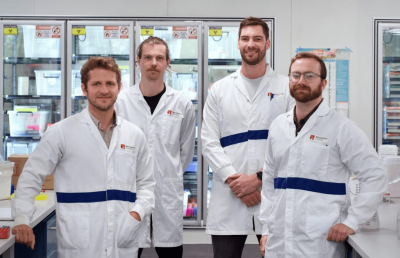
Number 8 Bio team (L to R): Dr Dominik Kopp, Dr Silas Vick, Dr Tom Williams, and Dr Alex Carpenter.
The Series A funding raise, led by NZ’s Icehouse Ventures, will fund regulatory approvals needed for expansion and large-scale animal trials, pre-commercial release in 2026. Patents are being finalised.
Number 8 Bio also plans to introduce a carbon-insetting program to claim verified emissions reductions.
Company CEO, NZ-raised Dr Williams said: “This capital raise shows serious international belief in what’s being built here in Australia. Capital is moving toward innovations that deliver measurable impact and commercial return.”
Support for the fund-raise came from Japanese venture capital firm ONE Innovators and CSIRO-backed Main Sequence Ventures which led a $7m seed round in September 2024. That pitch secured support from the Victorian Government’s venture capital fund, Breakthrough Victoria, which chipped in $1.7m, and Californian-based The March Group.
The latest funding rounds follow a well-trodden path seeking methane mitigation for livestock.
Western Australia-based Rumin8 scored $17m in 2023 from Bill Gates and Twiggy Forrest. CSIRO’s joint venture with Meat & Livestock Australia and James Cook University, FutureFeed, had a $13m raise in 2020. Chipotle-backed CH4 Global’s seaweed-based Methane Tamer is in pond-production in SA, having raised around $100m from investors while Sea Forest (see update below) scored $34m in 2021 for its seaweed growing farm in Tasmania in 2021.
Sea Forest lists on ASX
In other methane feed additive news this week, manufacturer Sea Forest Limited floated on the ASX this morning, under a fully underwritten Initial Public Offering of 10.25 million shares at an offer price of $2 per share, designed to raise about A$20.5 million.
 The shares were trading a few minutes ago at $3.06.
Founded in Tasmania in 2018, Sea Forest describes itself as “a leader in the development and commercialisation of SeaFeed, a livestock feed additive scientifically proven to reduce methane emissions by up to 80pc, providing measurable improvements while supporting healthy, livestock performance,” the company said.
Proceeds from the Offer will be used to fund Sea Forest’s growth, including expanding production in Australia and globally, including new facilities in Queensland, New South Wales, Western Australia, and South Africa. The funds will also be used to support ongoing product innovation, regulatory approvals, and provide cash for working capital needs and pay for costs associated with the Offer.
Sea Forest uses naturally harvested asparagopsis seaweed, while SeaFeed is synthetically formulated to replicate the properties of the seaweed, and and delivers clear commercial benefits to farmers by increasing saleable meat yield per animal, the compoany said.
“By inhibiting methane production in ruminant livestock, it also enables substantial reductions in greenhouse gas emissions, supporting the creation of low-emission supply chains, and helping producers meet sustainability targets.”
Sea Forest has supply agreements with livestock producers and global brands including Chadwick Consolidated Group, Teys Australia, Ashgrove Cheese, Uniqlo parent company Fast Retailing, Grill’d, Orffa, Olsson’s and Morrisons UK.
The company told the market it currently has ‘agreements’ to supplement about 100,000 head of livestock and is in discussions with producers managing an additional 700,000 head.
Sam Elsom, CEO, Managing Director and Co-Founder, said Sea Forest and SeaFeed supported a more productive and sustainable farming industry.
“We aren’t just an environmentally friendly business, we’re one that is driving measurable productivity gains at the farm gate, with a happy by-product being that our feedstock directly leads an up to 80 methane emission reduction. SeaFeed is a win-win for farmers and we’re excited about the opportunity to scale and meet demand at home and abroad following our successful IPO,” he said.
“The business case is compelling and we’re seeing increased interest and adoption in our products because it’s good for business and good for the environment. As we take the next step in our journey as a listed company, we’re focused on scaling our operations, advancing our research, and deepening our relationships with industry and community partners.”
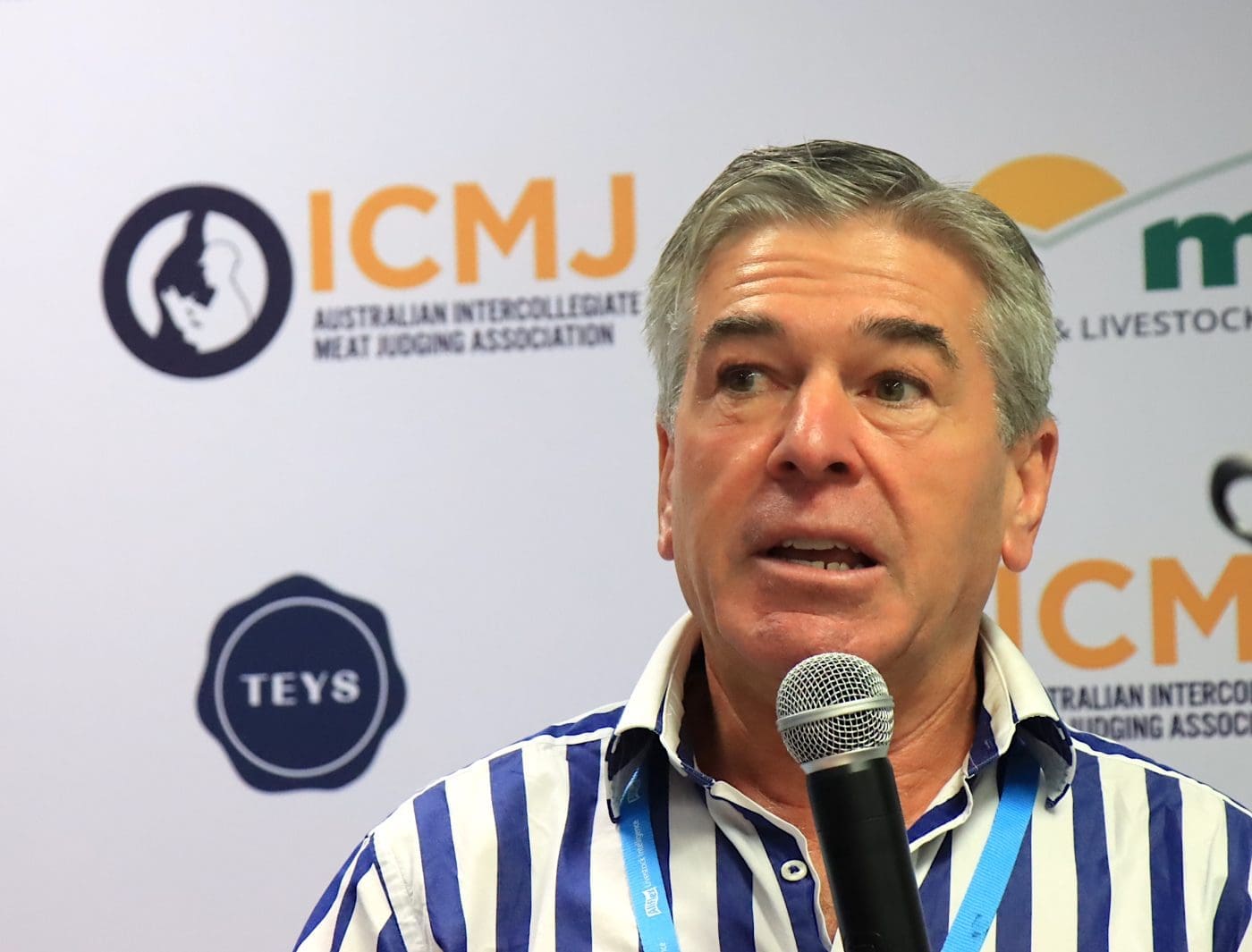
John McKillop
Sea Forest’s, independent chair John McKillop, said having spent his life in agriculture, he had seen his fair share of ‘game-changers’ in the sector, for the most part they had not proven to be the ‘real deal.’
“Sea Forest is the real deal,” Mr McKillop said. “The opportunity that Sea Forest has to impact farming practice and genuinely change the industry is enormous. The agricultural industry is undergoing a transformation, driven by the need to meet the growing demand for sustainable food production. We need to do more with less and do it more sustainably and Sea Forest’s technology addresses these challenges directly.
“We’re enabling farmers and supply chain partners to reduce Scope 3 emissions, and access premium markets for low-emission products. Sea Forest’s achievements so far are underpinned by robust scientific validation, existing industry partnerships, and multi-year commercial supply agreements with large agricultural producers.
“This IPO marks a significant milestone in our journey,” Mr McKillop said.
Today’s public offering comprises:
- An Institutional Offer, which is open to certain Institutional Investors in Australia and a number of other eligible jurisdictions determined by the Company.
- A Broker Offer, which is open to Australian clients of participating Brokers who have received a firm allocation from their Broker; and
- A Priority Offer, which is open to selected investors in Australia who receive an invitation from the Company under the Priority Offer.
There is no general public offer. The Offer is fully underwritten by Ord Minnett.
On completion of the Offer, new investors are expected to hold 18.3pc of the shares on issue, with directors and management shareholders holding 15.8pc, and the remaining 66pc held by other existing shareholders.
Sea Forest is headquartered in Tasmania and the Board of Directors consist of John McKillop (as Chair), co-founders Sam Elsom and Stephen Turner, Brent Wallace, Jules Scarlett and Roger Millichamp.
Sea Forest appears on the ASX under the ticker tag, ‘SEA’.