
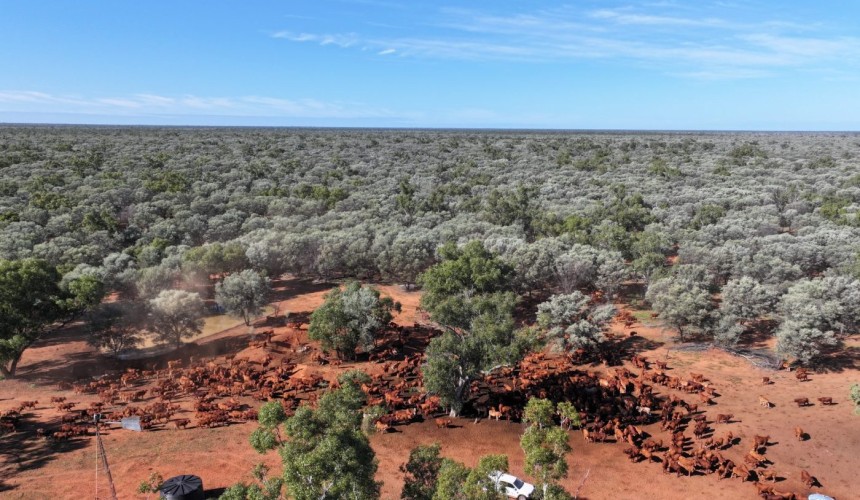
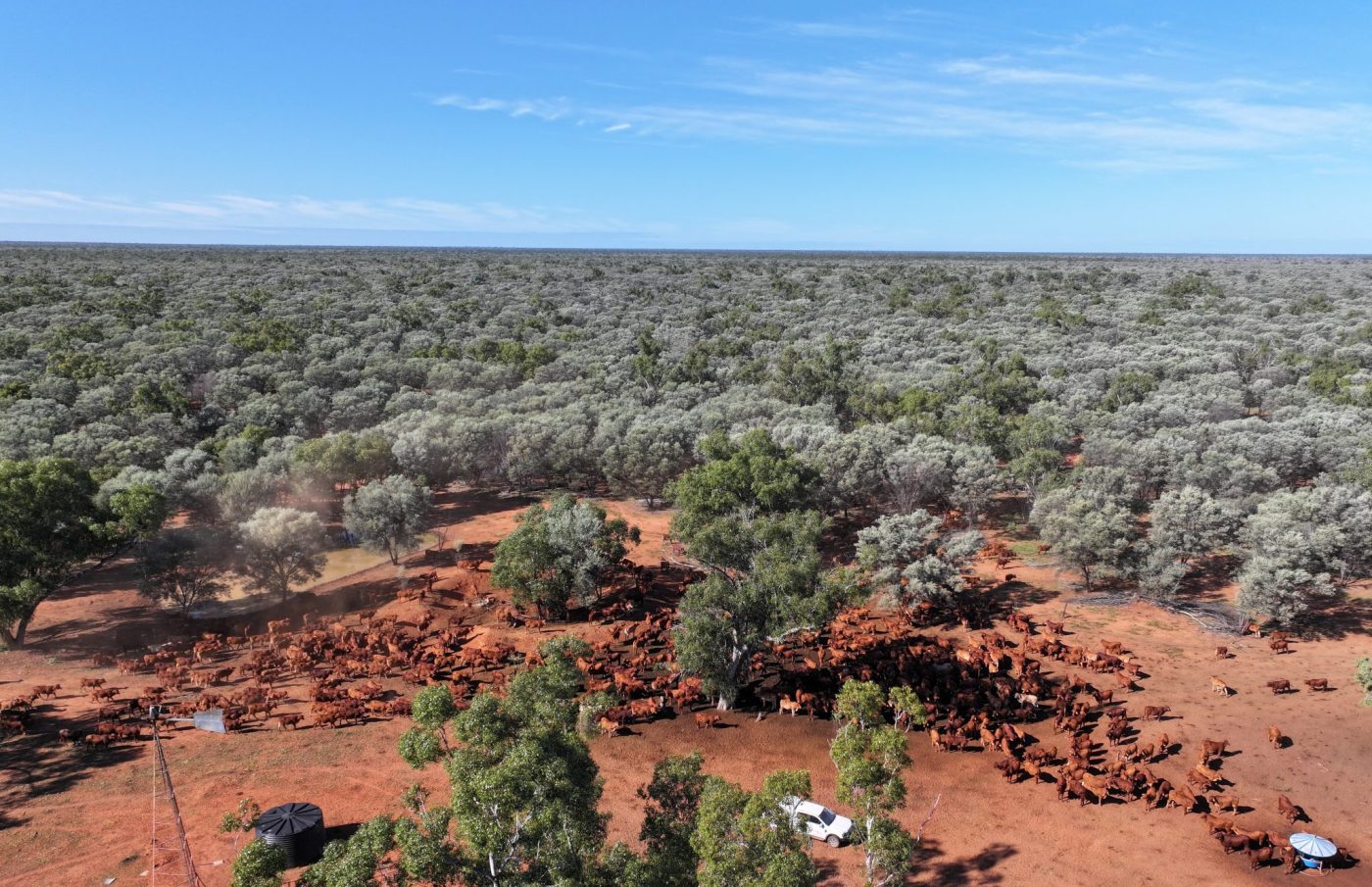
Replacement heifers growing out on Yanna Station, predominantly on low mulga which rapidly grows.
MORE questions are being asked about the Federal Government’s new environmental laws, with producers who may need to push mulga trees for drought fodder this year unsure whether the law will allow them.
Fodder harvesting in the mulga is different to a lot of other areas where cyclical clearing is done to maintain a diversity of pastures. Mulga properties in Western Queensland and New South Wales base most of their value off being able hold onto stock for long periods during droughts.
The shrubs grow in thick forests that producers often refer to as their “hay sheds” that they keep for dry times and push them down in strips with a bulldozer so cattle can browse on the nutritious leaves. Australia’s mulga country covers about 25 million hectares, with three quarters of it in south-western Queensland and the remainder in north-western New South Wales.
“We have had country here for 15 years, we have had some of the worst droughts in history and I have never had to sell a cow,” one producer told Beef Central.
But the lines have been blurred by the updated Environmental Protection and Diversity Conservation act, which will come over the top of state laws and make all regrowth over 15-years-old assessable by the Federal Government.
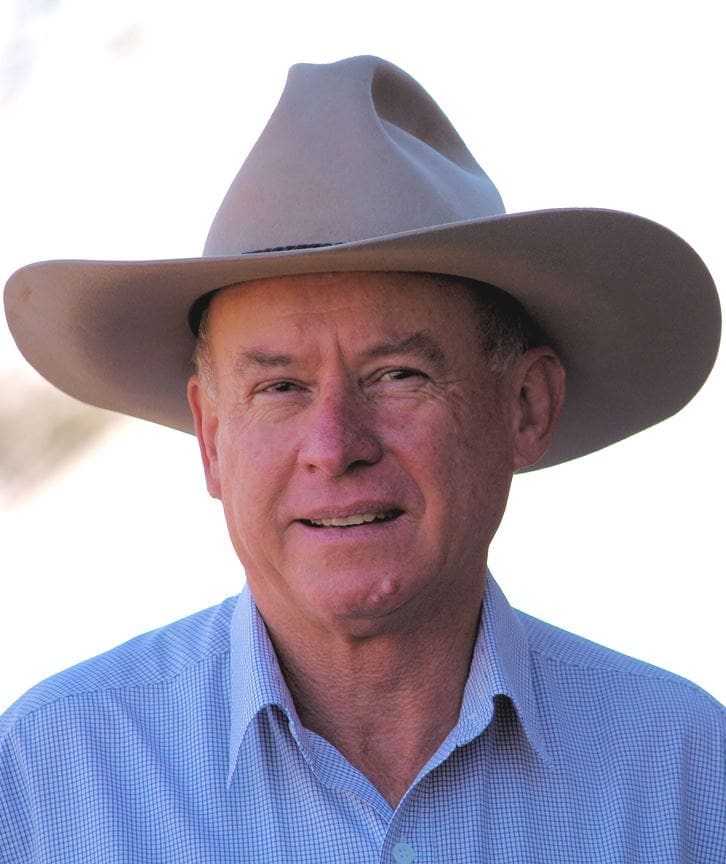
Michael Flynn from Valera Vale Droughtmasters.
Valera Vale Droughtmasters owner Michael Flynn purchased Yanna Station, near Wyandra, in 2021. The property houses heifers behind an exclusion fence to stop neighbours’ bulls getting in and gives the operation a backup in the drought.
“We bought it in the knowledge that we had a hay shed down there. If we had another one of these big droughts, we could take them to Yanna and push mulga, because we don’t have flexible stocking rates as they are all stud cattle.
“The main issue we have with the strip clearing on Yanna is keeping in front of the mulga because it grows so quickly in these good seasons.”
Asked what his knowledge is of the new Federal laws, Mr Flynn said: “We don’t know. Nobody knows because they haven’t made the rules yet.”
Producers potentially pushing mulga this year
There are now concerns that the Federal legislation may create some big problems this year if there is no clarity on what can and cannot be done.
While there was some beneficial rain in the area at the end of last week, many have been looking at pushing mulga again this year. As one producer said: “even if we get some more rain this year, there will always be somebody who has to push mulga.”
With clear state legislation already in place, many of those producers are able to make timely decisions.
How does the state legislation work?
There are two main ways producers in Qld’s mulga country gain regulatory approval to push mulga trees.
One is through the Property Maps of Assessable Vegetation (PMAV), where different areas of a property are categorised – with category x land allowed to be pushed. There are also fodder harvesting permits, where mulga can be pushed specifically for drought fodder with strict conditions around the way it can be done – to stop them from becoming defacto clearing permits.
NSW has a similar system to the PMAVS, called Property Vegetation Plans, but Beef Central understands most of those are about to lapse. There are also processes NSW producers can go through to harvest mulga for fodder.
What are the new rules?
Industry groups have received a briefing from the Federal Government on how the new laws will work.
The Government is planning to put in a self-assessment process, where producers determine whether the activity needs to be referred to the Federal Government for approval.
 In determining whether the clearing needs approval, the producer needs to work out whether it will impact a matter of national environmental significance – which includes protected species habitat.
They then need to retain evidence they have searched for matters of national environmental significance, satellite imagery of past harvesting areas and georeferenced photographs of the areas to be harvested before the works commence.
If producers come to the wrong conclusion, Beef Central was told by the environment department office that “the Department’s response will be informed by behaviour and environmental harm, with strong enforcement reserved for deliberate breaches causing serious damage”.
A Federal Government spokesperson said:
“At a practical level, most activities on developed agricultural land do not need to be referred for assessment because they have low-level environment impacts and are below the level regulated by national environment law.
“The Department of Climate Change, Energy, the Environment and Water has provided examples of routine activities on the EPBC agricultural exemptions webpage that are still likely to be exempt.
“Concerned land managers can also discuss their situation directly with an experienced assessment officer by calling the Department’s contact centre (1800 920 528).
“To date, the Department has provided individual support to over 180 landowners, and this has included several farmers planning to undertake fodder harvesting in Mulga woodlands. In most cases, land managers have been able to undertake a self-assessment and avoid impacts at no cost other than the time taken.”
Is enough political logic being used of the fact that Mulga is a "renewable" asset?
And pushing is essential for animal husbandary, responsible feeding in dry periods without redtape and Govt interferance