
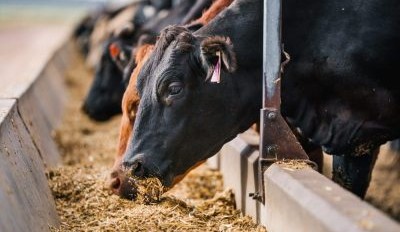
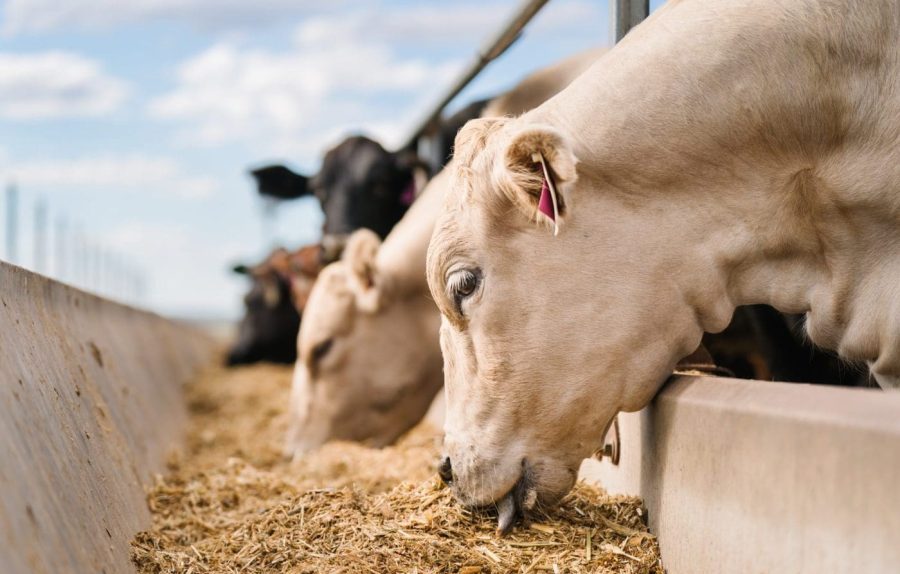
Image Source: ALFA
Latest listings on AgJobs Central recruitment page:
- Head Stockperson – Maryfield Station NT (AAM)
- Cropping Manager – Irrigation, Emerald Qld (Gunn Agri Partners)
- Sales Consultant – Grain Storage (Rimfire client)
- Livestock Marketing Centre Asst Manager (City of Wagga Wagga)
- Team Leader Grounds Maintenance – Livestock Marketing Centre (City of Wagga Wagga)
- Team Leader Asset Maintenance – Livestock Marketing Centre (City of Wagga Wagga)
- Project Manager – Grains Australia (Rimfire client)
- Bovine Livestock Hand – Rockhampton, Qld (Rockyt Repro)
- Livestock Manager/Agent – Yass, NSW (Ray White Rural)
- Machinery Operator & Farm Labourer – Springdale, Qld (Glenisa Cattle Co)
- Farm Manager – Tottenham, Vic (Lucas Group client)
- Working Manager – Yelarbon, Qld (Manana Pastoral)Station Manager – “Paradise”, NSW (Rimfire client)
- Head Stockperson – Paringa Feedlot, Qld (Paringa Gold)
- Safety Advisor – Caroona Feedlot, NSW (JBS)
- Rural Marketing Positions – NSW, Qld & NT (Allied Rural Marketing)
- Production Engineer, Animal Health & Nutrition (Rimfire client)
- Station Manager – Quinyambie Station, SA (Mutooroo Pastoral Company)
- Graduate: Sales and Support Team – Armidale, NSW (Optiweigh)
- Station Manager – Clermont, Qld (CAM Agricultural Group)
Click here to access these and earlier AgJobs Central recruitment listings.
WITH feedlots in Australia varying greatly in size from a few thousand head to 70,000 Standard Cattle Units (SCU), the role of a feedlot manager differs significantly from yard to yard.
The long-term trend has been in expansion of existing yards, and as a result, large-scale feedlots have become more competitive in salary, with one recent example of a business offering $250,000 a year for a feedlot operations manager.
 The grainfed business which advertised the role on Seek is a large operation (it preferred not to be identified), so it is important to note that the salary above is not necessarily applicable to all feedlot management roles. But what is patently obvious on Beef Central’s recruitment platform, AgJobs Central, is that feedlot management positions are disproportionately over-represented among advertised positions. According to MLA’s State of the Industry report released this week, there were only 355 commercial feedlots operating in Australia in 2023-24, so there are not that many people employed in this capacity.
The skillset required really depends on the size of a feedlot, with smaller yards having less staff the feedlot manager is required to be more hands-on, often involved in tasks like commodities purchasing – whereas a large-scale feedlot would see a manager focus mainly on people management, with a team of sub-leaders under them, feedback suggests.
Given there is so much diversity in the lot feeding sector (see Beef Central’s Top 25 lotfeeders) there is a small pool of experienced people in this field, which might be why ‘Feedlot Manager’ is a role that appears as frequently as it does on Beef Central AgJobs Central page.
As a result, the pay rates have scaled up dramatically for people who have experience as feedlot managers.
“Those that are good at it, are incredibly well looked-after,” specialist recruiter Mick Hay, Rimfire Resources chief operating officer said.
“If a feedlot has 10,000 Wagyu cattle in it, you’re talking about a business with huge monetary value and turnover. So, somebody that’s really good at their trade is going to be very well looked after,” he said.

Mick Hay
“Managers have to have all the technical skills – animal welfare management is a huge part of it and on top of that in the large feedlots – it’s all about managing and developing people, so it is not a simple skill set, and I suppose that’s why we’ve got a pretty small pool of people.”
Mr Hay said the typical salary varied depending on the size of the feedlot, but that $250,000 figure was the highest he had heard of.
“There is a limited pool of people with the skillset to run a feedlot of that size, and that is why most larger feedlot managers can demand very healthy salary packages,” Mr Hay said.
“These packages can also depend upon the feedlot location and its proximity to larger regional centres and other services.”
Not a job for the ‘faint hearted’
With record numbers of cattle on feed this year and consistently high cattle prices, feedlots are high-value businesses. But they also are intensive and demand consistency regardless of conditions, staff or other factors.
“What happens today in a feedlot has to happen tomorrow, and the next day and the next day and so on, so nothing ever stops,” Mr Hay said.
“It’s quite a relentless role compared to another type of livestock or production role, where if it doesn’t happen today, you can probably knock it over tomorrow.
“That doesn’t happen in a feedlot. Everything has to happen the same as it did yesterday, and with the same sort of precision. So, it could certainly be a high stress role and often we do hear of people that get burnt out.”
Spreading the load
As a way to lighten the load, Mr Hay has seen companies try changing the structure to instead have multiple people employed at an equal level to break up the responsibilities of a typical feedlot manager.
“One might be in charge of livestock, one might be in charge of feed and so on, what that does is it spreads the risk across the feed yard, because if you have just got a single person that’s the really senior one and they leave or something happens, then there’s often quite a big void between them and the next level.
“I have seen that splitting that risk across two or three job functions has been working well in bigger yards where they have the ability to implement those structural changes.
“Having said all of this, it is important to add that it is certainly a great career for those who have an interest in livestock and have a skillset that is suited to this sort of environment.”
 Hear Mick Hay’s comments about the feedlot management role in this week’s Week in Beef podcast.
I was previously employed at a 10,000hd feedlot and had a great interest in working through the levels and progressing my career in the feedlot industry, however I found the industry (as a whole, generally) to be full of empty promises. I was promised a trainee manager position (after discussion was had around staying on at the feedlot or going back to my previous animal nutrition role), and it never eventuated, despite giving up the other opportunity in nutrition. I have since left the industry, but have looked at management/2IC positions, but have lacked practical experience in a management position. I am not sure how people (especially females) are meant to become experienced in these roles to support the industry's future, when they are not given a go.