
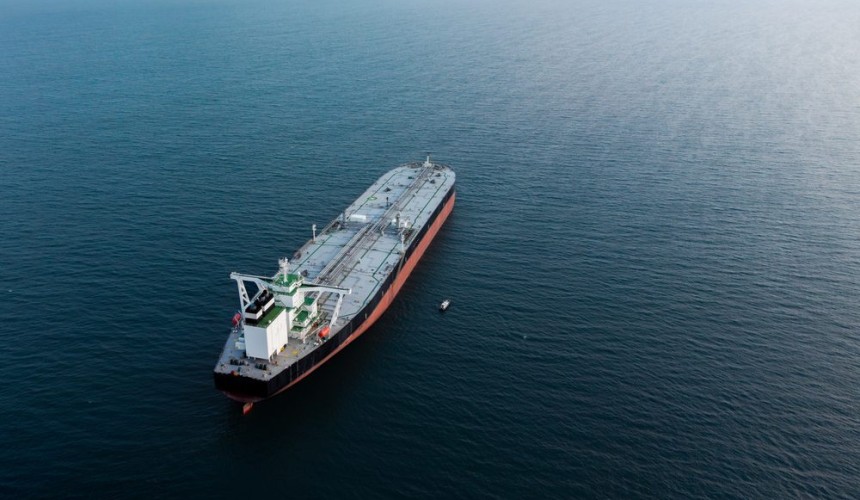
An oil tanker in the Strait of Hormuz. Image: Shutterstock.
THE unfolding conflict in the Middle East is poised to test Australian agricultural supply chains on multiple fronts, with disruptions already occuring to high-value red meat exports to the region and higher fuel and fertiliser costs also seen as potential threats the longer the war lasts.
An end to the conflict within days would likely see impacts prove short-lived and trade return quickly to normal. However, if the conflict continues for a week or longer, significant detrimental effects could begin to flow through Australia’s export-dependent farming sector.
Immediate consequences have already emerged through the closure of shipping routes and air traffic in the region.
 The Middle East imports relatively small but high-value volumes of red meat from Australia, accounting for about 10 percent of Australia’s total sheepmeat exports and 3–4 percent of beef exports.
Sea ports in the UAE, Kuwait, Bahrain, Qatar and eastern Saudi Arabia have all been closed, likely disrupting Australian red meat already on the water.
The shutdown of airspace in the region also means chilled lamb carcases and grainfed beef exported in the holds of passenger aircraft operated by Emirates and other Middle Eastern carriers have been instantly affected.
Given the short shelf life of these chilled products, any disruption beyond a few days would constitute a direct and increasingly significant setback to trade the longer the war goes on.
There have also been immediate impacts on domestic meat sales within the region. The food service sector has been affected, with people unable to attend restaurants and cafes, leaving those businesses holding inventory.
At the same time, with more people staying indoors, retailers and supermarkets are anecdotally reporting a spike in meat and dairy sales, especially online, as consumers stock up amid uncertainty over how long the conflict may last.
The ripples from the war have already been felt in local livestock markets, as Sheep Central reports today.
Crucial chokepoint for global oil and fertilizer at centre of conflict
Shipping traffic has been reduced to a standstill through the Strait of Hormuz, the narrow waterway linking the Persian Gulf with the Gulf of Oman and Arabian Sea, and a crucial chokepoint for global oil and fertiliser transport.
Around 20 million barrels of crude oil move through the strait each day – about 20 percent of global consumption – according to the US Energy Information Administration.
The Persian Gulf produces approximately 30 percent of the world’s crude oil and a similar proportion of the urea used in global nitrogen fertiliser production.
The New York Times reported oil prices had risen by as much as 13 percent as markets opened (US time) on Sunday evening, underscoring the broader economic risks of an escalating conflict.
On Sunday, eight major oil-producing nations agreed to increase April production by 206,000 barrels in a bid to ease global supply concerns.
A surge in oil prices casts a wide shadow over all trade, not just shipping.
Shipping diversions and new surcharges are already generating additional costs for Australian exporters as shipping companies react to heightened conflict in the Middle East (see separate Grain Central article today).
Several livestock carriers that have transported Australian cattle and sheep in recent years are currently positioned in the broader Middle East region. These include the Kuwait Livestock Transport and Trading-operated Al Messilah; the Israeli-owned vessel MV Bahijah, currently in port at Haifa after travelling from Brazil and Uruguay; Ocean Swagman near Cyprus; and Balha One (ex Yangtze Fortune), en route from Spain to Egypt.
Beef Central understands there are currently no Australian livestock on ships in the region.
The Australian Livestock Exporters’ Council (ALEC) said exporters are continuing to monitor the unfolding situation in the Middle East.
“We are working closely with our exporter members and the Department of Agriculture, Fisheries and Forestry to consider any potential impacts, however it is too early to tell what these impacts may be given the evolving nature of the situation. The safety of members of our industry and animal welfare remain our highest priority,” the council said in a statement. “Our thoughts are with our colleagues in the Middle East.”
Meat trade ‘clearly uneasy’
“It’s just adding the the incredible messiness in trading so far this year,” one clearly frustrated trader said this morning.
“Obviously airfreight into the Middle East region stopped virtually overnight, with airports closed, and refrigerated shipping lines have said overnight they are not goin g to be receiving any refrigerated containers at any of the Middle Eastern ports,” the meat trader said.
In some cases, product on the water may have to be diverted, or turned around.
Uncertainty also exists over what impact the Iran conflict may have on beef trade into Europe and the UK, traditionally done through the Suez Canal.
“The Suez was closed for a lengthy period, forcing vessels south around the bottom of Africa to get to Europe. Any Australian shipments to the EU, for example, have already been going via the Cape, meaning nothing will change,” the trade source said.
“It’s still early times, but we’re hearing that there’s no additional impact to our shipments heading into the EU, because it’s all been going around the Cape, anyway,” the trader said.
For beef heading into the Middle East from Australia, however, trade would be “100 percent” impacted by the military action, the trader said.
“It’s a high end market for our products, into restaurants and hotels,” he said.
“I would be surprised if most Australian packers are not directly impacted by this – but it’s impossible to tell how long it lasts. If its anything more than a week or two, product originally destined for the Middle East will have to be diverted into other markets. That applies to particular cuts, from high-end tenderloins to other loin cuts, brisket, bolar blades and other items.
“But time will be critical. If it’s all sorted out in a week or two, trade will get back to normal. If we’re a month down the track and its still going on, its’ going to get messy, with lot’s of diversion going on.”
The trader said the current drama across the Middle East was ‘very, very real.’
“I’ve just got off the phone from our trade rep in Dubai, and he’s sent me photos from his balcony of drone or missile strikes and explosions. He said panic buying is already happening in supermarkets and shops, as people start to hoard fresh food, like fruit and veg, and meat.”
Another exporter said additional pressure would be applied on air cargo routes into Europe, through the Middle Eastern conflict.
“Availability for air cargo for chilled meat going up into Asia has already become very tight,” he said.
“That’s now became the alternate route into Europe, for Australian airfreight beef, but it has already become heavily congested.”
“Instead of going via Dubai into Rotterdam or London, for example, it now has to go via Singapore, Bangkok or Hong Kong.”
Australian export beef trade into the Middle East region, where the main customers are Kuwait, Oman, Qatar, Saudi, Abu Dhabi, Dubai, Bahrain, Yemen and Jordan, collectively accounted for 40,522t last year.
Initial impacts fuel then fertiliser, longer term a stress test for Australian national food security
AgSecure principal and food security export Andrew Henderson told Beef Central that the short-term implications of the conflict will primarily relate to price – liquid fuels first and foremost then followed by fertiliser.
The longer the conflict dragged on, the greater the impact from both a supply and price perspective.

Andrew Henderson
“We are currently gearing up for winter crop planting around the country and the current rainfall we are seeing is likely going to drive the appetite of farmers to get going – that means we will see an uplift in demand for critical inputs at a time when supply is going to be disrupted. We have to remember we are reliant on these long, just-in-time supply chains and any disruption can cause delays – so I think we can expect to feel that impact along with the price increase.