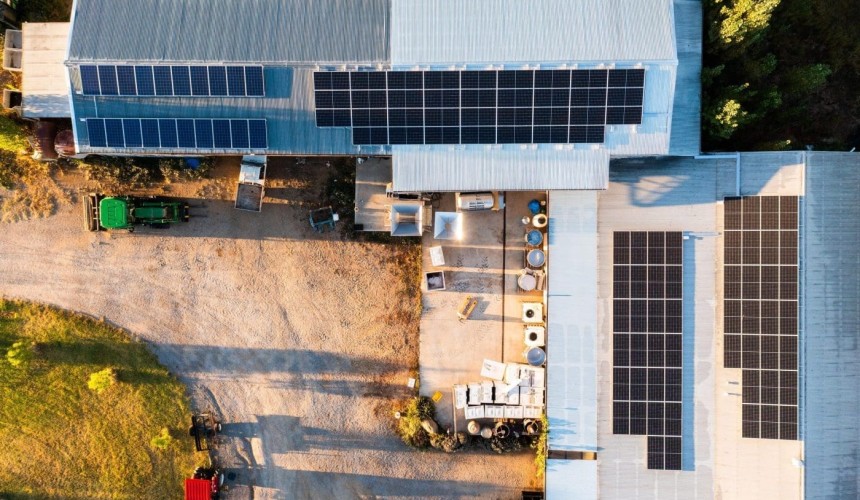
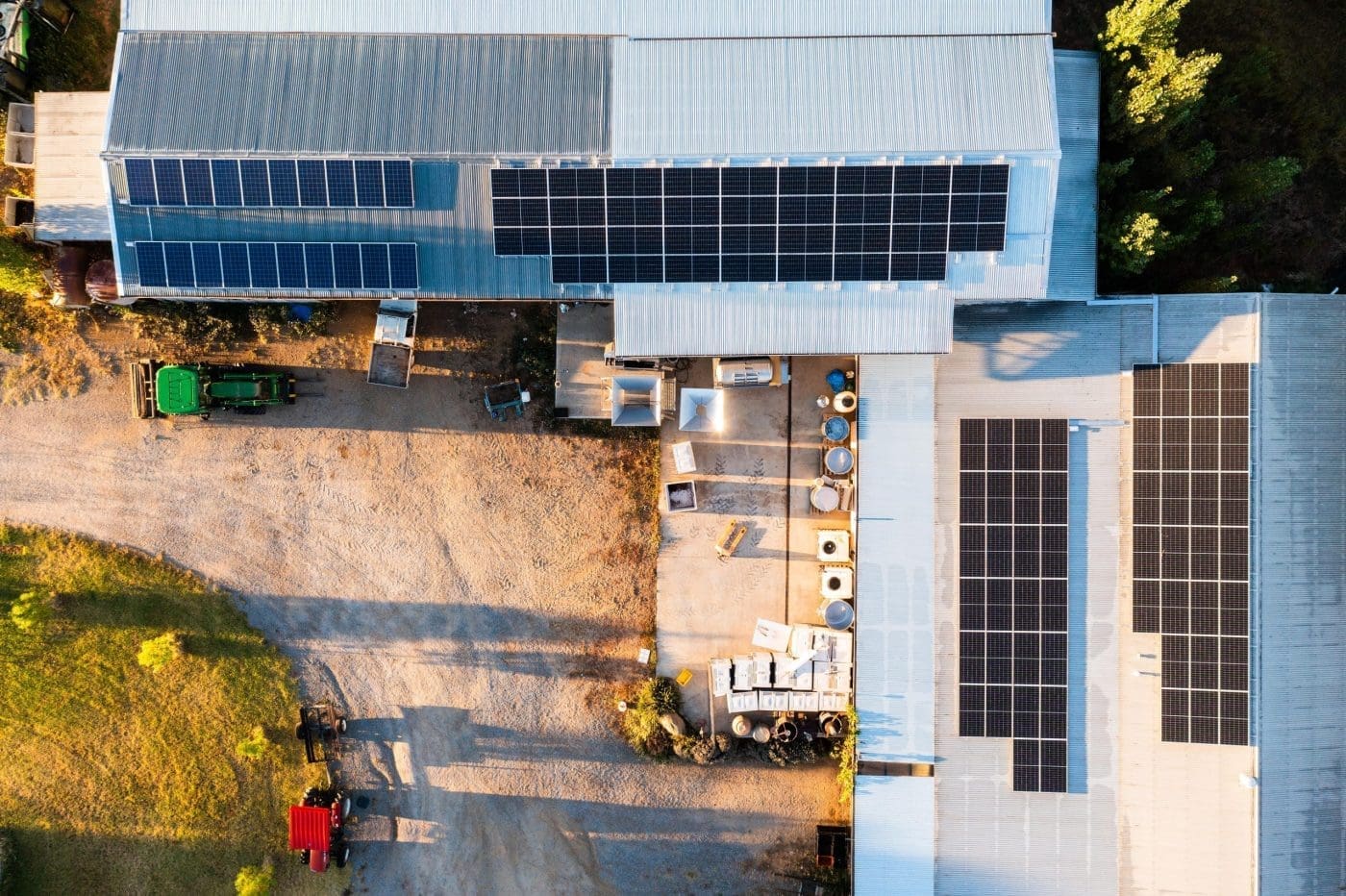
Agrifutures Australia has released an eight part factsheet series to help landholders looking to transition to renewable energy. Photo: Agrifutures Australia
A new campaign urging the government to invest in ‘Local Energy Hubs’ has kicked off today voiced by three regional Australian farmers’ experience with the shift to renewable energy.
RE-Alliance has today released a film demonstrating the need for Local Energy Hubs: local outreach centres in energy shift regions staffed by trusted local experts, who can answer the questions being asked by their local communities. Wellington merino sheep farmer Tony Inder, Singleton farmer Sophie Nichols and Narrabri farmer and Managing Director of Geni.Energy, Sally Hunter, illustrate this need via their personal stories.
RE-Alliance, Community Power Agency and Yes2Renewables have joined forces to call on the Federal Government to fund Local Energy Hubs for regional communities in the upcoming Mid-Year Economic and Fiscal Outlook.
The groups says the Local Energy Hubs would:
- Provide easy access to facts in local communities by hiring trusted and experienced local experts, across subjects such as renewable energy developments, transmission projects, home electrification and battery storage, electric vehicles and more, tailored to the region
- Serve as outreach centres, providing services to support communities in understanding and participating in the shift to renewable energy
- Be a crucial touchpoint for developers, helping to foster trust in communities for their projects through quality communication and engagement.
- Address barriers to the electrification of households, small businesses and farm businesses such as lack of time or quality advice
- Tackle complex challenges like ensuring communities know exactly how to have input into large-scale projects proposed for their regions.
RE-Alliance National Director Andrew Bray said: “Australians support our move to renewable energy, but our understanding of how far we’ve come, where we’re heading and what needs to happen to get to the end point is almost non-existent,” Mr Bray said.
“From hosting a large-scale solar farm on existing grazing land, to working out how to install the best solar and battery system for on-farm use, to filling an empty shop front to build local knowledge around renewables – all three stories in this film show how Local Energy Hubs could have made each journey easier,” he said.
“We need governments to proactively support and resource communities to understand, participate in and benefit from the energy transformation – and we think Local Energy Hubs could be a big part of the solution,” Mr Bray said.
Wellington merino wool grower Tony Inder said: “There was no one really to talk to about it when we were looking at hosting the solar farm, because there weren’t many people that had done it. It wasn’t something that you could walk into the local pub and say ‘G’day fellas, anyone know anything about solar, I’m going to sign the farm up?’ You’d have got run out of town! If there had been a Local Energy Hub, it would’ve been beneficial. It definitely would’ve helped us and it would’ve made our decision making it a lot simpler.”
Singleton farmer Sophie Nichols said: “I would say to any farmer, young and old, invest in renewables because it’s something that can lower costs and will ensure that the farm is much more resilient into the future. But it is confusing. And farmers are time poor. If we had somebody in my town that I could go to who was knowledgeable within the energy space, it would’ve cut the length of time we had to spend on researching.”
Narrabri farmer and Geni.Energy Managing Director Sally Hunter said: “It’s a very complicated space. You can easily get caught up in the technical issues and the market issues and also in the regulatory issues. Which is why Geni.Energy was created – which is the template for Local Energy Hubs across Australia.”
Source: RE-Alliance
I agree with the idea and think it would be a great start to untangling the confusion.
We are livestock producers in the Hughenden (Flinders Shire) area.
Our region has been heavily targeted for wind farms and grid lines.
Through an underhanded and secret process by players, there is a lot of confusion. When not presented with the facts we run on emotion and gossip, which is what is happening in our area. There have been absolutely no proper public community discussions about proposed sites for sola and windfarms.
This proposed development could possibly be the biggest change to our environment in the past 200 years, and the conversations are not being had about the impacts it will have on communities. (both positive and negative) I think as impacted communities we deserve a process that gives us facts about something that is going to have a huge effect on us for a very long time.
Some simple questions:
How do we deal with our already stretched services like medical, mechanical, electricians, builders, rural workers etc?
What's the effect on land values, enviorment and the like, the list goes on.
I also acknowledge there are positives as well.
I ask the people pushing these projects, would they like a windmill in, or next to, their back yard without some conversation around it.
The approach at the moment is causing divide in our communities.
After the problems mining, coal seam gas etc. caused on rural businesses and the environment, I thought we may have learnt a better way to approach such matters, obviously not!!
Thank you to the above-mentioned people and Re-Alliance for your ideas, hopefully someone will listen.