
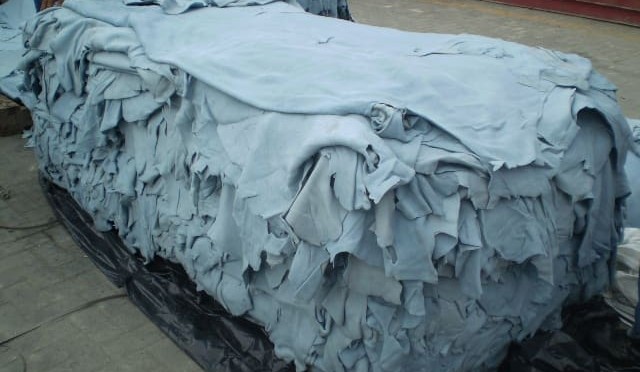
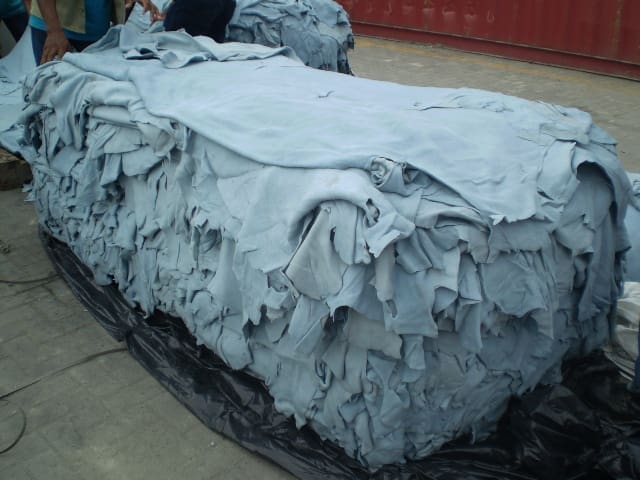
Wet blue hides being prepared for export
AUSTRALIA risks losing access to its highest-value cattle hides market, unless there is a swift and comprehensive response from cattle producers to new environmental regulatory requirements for hides and leather entering European Union countries.
Under the EU’s Deforestation Regulation (EUDR) law, companies placing a range of products including beef and lamb (as well as their products, including hides) into the EU market must conduct due diligence and ensure those goods were not produced on land deforested or degraded since 2021.
Australian exporters need to provide the geo-location coordinates of where all cattle have been kept from birth to slaughter for each export consignment – either beef or hides.
The new requirement is due to be enacted from 1 January, but due to lengthy shipping times, it means it will need to be applied to all shipments from 30 September.
While for chilled and frozen beef, access to the EU market is limited to Australian cattle producers who hold EUCAS accreditation, the same does not apply for hides. All Australian cattle hides can be exported to the EU – either directly or indirectly via hides processors and tanners in countries like China – provided they are linked to properties that have agreed to provide EUDR geolocation coordinates.
The executive officer of the Australian Hides, Skins and Leather Exporters Association, Dennis King, said the new regulation would affect both wet-blue and raw salted hides. About 60pc of Australia’s market into the EU is in wet-blue treated hides, all destined for the high-end fashion industry.
 Europe is regarded as the ‘absolute premium’ market for Australian hides, Mr King said, and its loss through not being able to supply under the EUDR regulation would significantly impact local hides value.
Significantly, the EUDR regulation will ultimately also apply to Australian hides processed and tanned in China, and then on-sold to European customers. The only part of the market to escape the EUDR regulation is leather that is turned into value-added shoes, handbags, coats or other fashion items, and then sold to EU markets.
The EUDR regulation will inevitably be a hot topic for discussion at the Shanghai Leather & Hides Show being staged next week, as few Chinese hides companies are yet fully aware of the developments, Beef Central was told.
Already, some Italian leather tannery and manufacturing companies are talking about shifting their businesses out of Europe, to escape the impacts of the regulations, because they are concerned that they will not be able to source the volume of EUDR-eligible hides and leather they require..
“It really is a huge problem in the industry at present,” Mr King said.
Slow uptake
Currently, only about 1200 Australian cattle producers have authorised the release of their geo-location coordinates data, for hides purposes. That means the overwhelming majority of Australian cattle hides will no longer be eligible for use in the EU, unless things change rapidly.
When cattle producers consign cattle for slaughter, there is an option on the National Vendor Declaration to disclose geo-location for hides trading purposes.
Because of the lengthy shipping times involved due to congestion in Singapore and the Suez Canal-Red Sea area extending transit time to 90 days, Australian hide and leather exporters will need to apply the new EUDR requirements from September 30.
“Essentially, there won’t be any hides or leather shipments from Australia to Europe after 30 September that are not covered by EUDR,” Mr King said. “That’s little more than a month away.”
Competitive advantage for Australia
Through its use of the mandatory National Livestock Identification System, Australia in fact held a distinct competitive advantage over other beef-producing countries in future hides and leather sales to the EU, Mr King said. That is provided enough producers agree to share their geolocation data so their hides are eligible.
In contrast, the US export hides market is currently in disarray, because overseas customers are not prepared to buy US hides, for fear of huge jumps in tariffs under Trump’s policies.
“Australia is in a really good position to increase our direct hides sales to the EU, knowing that as Chinese buyers better understand that to sell leather to Italy or Germany for car seats, it’s going to have to be compliant with EUDR legislation,” he said.
“But that’s provided enough producers agree to share geo-location information.”
Mr King agreed that concerns over privacy might be one of the key reasons why more Australian producers have not yet shared geolocation information, but equally, complacency or lack of understanding were also factors.
“Many may believe that because they are not EUCAS-eligible for beef, it does apply to them,” he said.
“But this is beneficial to the producer, because those hides – particularly those exported direct to Europe – are worth three or four times what they are in other markets,” Mr King said. “A typical good quality medium Victorian salted hide into China might bring $9-$10, whereas the same hide sold wet-blue into Europe might be worth $35 to $40.”
Unless the data is available the value of high quality hides will drop significantly come the end of September.
The main products under duress at the moment are high quality hides for wet-blue leather processing from both the Geelong Leather wet blue tannery in Calcairn and Gunnedah Leather Processors’ wet blue tannery.
Significant impact
Andrew Hassall from Geelong Leather, one of Australia’s major wet-blue hides and leather manufacturers, said his business could be significantly impacted by the EUDR regulation.
“For our tanning business, 90 percent of our production goes to Europe,” he said.
“In Australia, we actually have a hide that is very suitable for the European fashion industry, especially the handbag market, due to their size. A lot of the big fashion brands around the world have identified that, and specifically target Australia as the supplier,” he said.
“We rely on that market for most of our sales, at a premium price,” Mr Hassall said.
“There’s actually an opportunity for Australia under EUDR, if we play our cards right,” he said.
“No other country has a system like NLIS. We are so far ahead of the rest of the world, with what we have, and we should be getting premiums for our hides (and cattle) as a result. But unfortunately we have not been able to capitalise on that.”
“Producers have to opt in for EUDR geolocation disclosure, and despite emails to producers encouraging them to do so, most people probably don’t know what it is about, and have simply ignored it. As a result, uptake has been very very low, to this point.”
Privacy issue
He said for other producers who had not yet agreed to the EUDR terms, it was probably about privacy concerns, and “not knowing where the data might end up.”
“But the reality is that the data is in fact not being shared. We as exporters simply have to be able to provide proof that we have done due diligence over the origin of the hides we ship to Europe, and that it did not come from a farm that had been ‘deforested’ in some way.”
“The geolocation declaration provides that.
China could get swamped
Another potential issue with the new ERDR regulation was the risk of China getting swamped with hides, because of non-compliance for the EU market.
“For a lot of other cattle producing countries that cannot do the traceability that Australia can, they may have to switch their hides sales from Europe to China. Suddenly, China has extra product thrown at it, which could impact prices. Those farmers will be adversely affected, because their hides are worth a lot less money,” Mr Hassell said.
He said the new EUDR rules were going to be complex to apply, and there was some possibility of postponement of starting dates.
“Last December, the EY authorities put a 12-month delay on, because they just weren’t ready. There’s some chance that they may do that again – but we just don’t know until December,” he said.
For information about the NVD declaration for EU hides supply go this ISC webpage
Since when have we been paid for the hide the animal wears to the slaughterhouse? Looking at my kill sheets, it is meat value only. Until that changes, I don't really care.
<strong>Processors consistently say hides and offals etc are already built into the price they are prepared to pay for cattle, Helen. Remove the value of the hide, and the c/kg price adjusts by the same amount. And consider this: some low quality hides are virtually unsaleable in the current market environment, and end up in landfill. Should the processor be charging the producer to provide that service? Editor</strong>
I think you will find the other really big elephant in the room for beef and sheep producers is that there is no incentive in current, future or past pricing of this commodity. I am from the west so if I've missed something for the east coast, i apologise. the fifth quarter that the other side squirrel away for themselves has always been of interest for true price discovery. the sheep and lamb market is frustrating enough. atleast they price the skins in when they are profitable. we are told to trust that our hide and offal is included in our beef price. but even the longest bow cant be drawn to identify where we get that value, either at the very bottom of the price cycle or when they are desperate at the top. it would be hard for me to see why I would want to help when I'm not clearly being paid for something. cheers Matthew Della Gola