
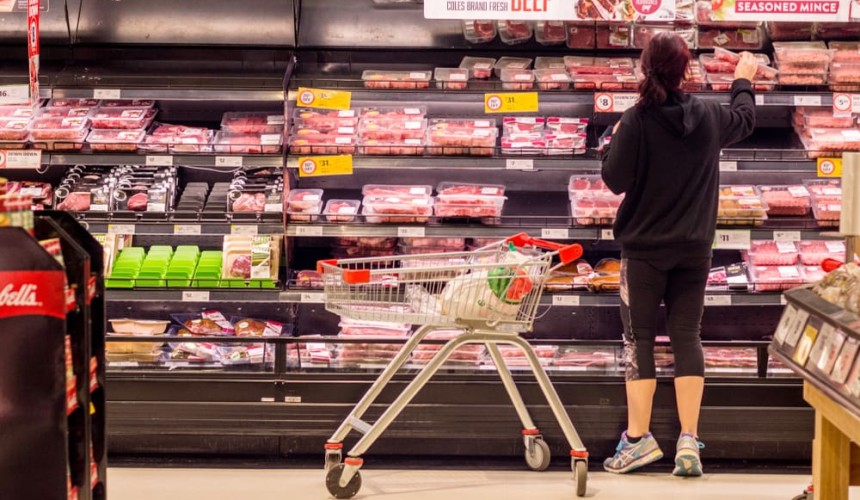
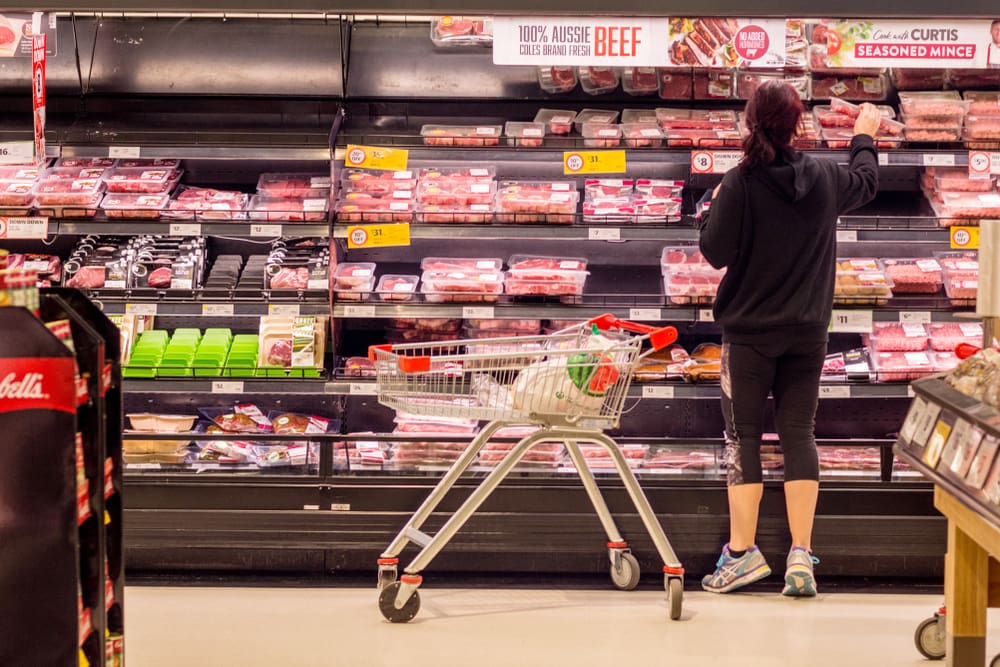
FIFTEEN years of consumer preference tracking by Meat & Livestock Australia continues to underline the dominant role price plays in red meat purchasing decisions.
This year’s consumer survey has recently been completed, and Meat & Livestock Australia’s Group Manager, Adoption and Commercialisation, Sarah Strachan shared some of the early findings in a presentation to university students at last Friday’s Intercollegiate Meat Judging conference in Wagga.
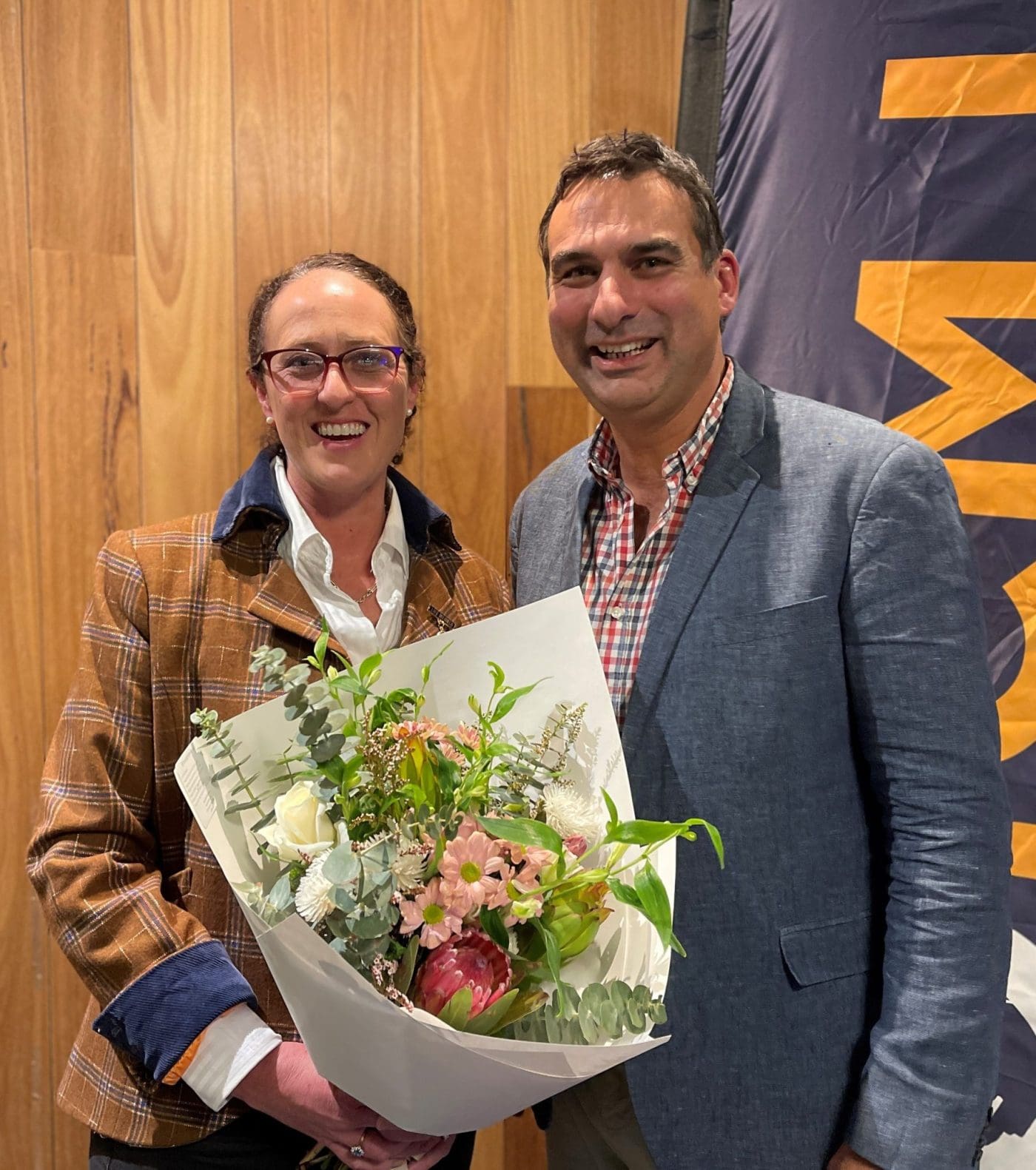
MLA’s Sarah Strachan was awarded ICMJ Life Membership for her significant contributions to the organisation over many years at a function Wagga last week, She is pictured being congratulated by ICMJ chair, Peter McGilchrist.
She said the surveys also provide a valuable opportunity to learn more about the factors that drive consumers who say they are increasing their red meat consumption and those who are decreasing their red meat consumption.
“We’re pretty interested in why those people are doing those things,” she said.
Reasons given by those who are increasing their red meat consumption are strongly connected to nutrition, she said.
That in turn helps to guide marketing campaigns which promote the nutritional advantages of red meat over other proteins.
On the flip side, those who say they are actively reducing red meat consumption are often basing that decision on price.
“When you really get underneath that, it is just price driven more than anything,” she said.
“The cost of living, we hear that a lot, those pressures have really had an impact on red meat consumption, and so by and large, when people are standing in front of red meat options in a supermarket, we really have got to convince them that red meat is good value.”
This came down to reinforcing the messages that meat is a highly nutritional and versatile choice.
The surveys also showed that the population of vegetarians is remaining in line with long terms trends and is relatively static at around 5 percent of the population.
Also of interest, around 51pc of people who declare themselves to be vegetarians also admit to still eating meat occasionally.
Sustainability and environmental concerns were much lower on consumers’ minds when standing in front of red meat in a shop, with people mostly thinking about what they want for dinner and how convenient it is to cook.
However there was a group of consumers that are thinking a more about those issues than others, and when asked what it is about animal production they are most concerned about, animal welfare came to the top of mind for those consumers.
“So that then drives us to how do we make sure that we are actually (maintaining high standards of animal welfare) to keep that trust in those consumers as well,” she explained.
“So that will drive a lot of our adoption programs about how do we increase the use of pain relief for those husbandry practices or how do we use genetics to move to a non-mulesed flock.”
She said when consumers were asked about the red meat industry’s commitment to reducing its emissions, the industry’s goal of achieving net zero by 2030 had a positive impact on consumer perceptions.
The consumer tracking work also continues to underline the high levels of trust Australians place in the agricultural sector, with farming still regarded as one of the most trusted occupations.
“It is quite obvious that consumers really trust the agriculture sector, and they put farmers up there as a trusted occupation, not far behind engineers and teachers and scientists,” she said.
Price most influential, nutrition second, animal welfare thrid .. sustainability & environment last.
Same results for the past 15 years.
HAVE THEY LEARNT YET?
Exciting data MLA. Interestingly, Price is the main driver of reduced consumption. Overlap the requirements to reduce CH4 and it tells a story we should be reading.