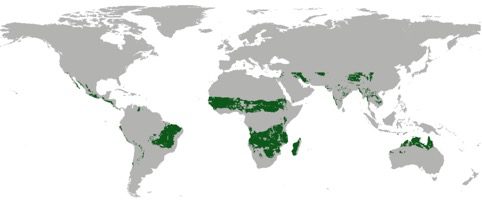
Eligible woody savannas where this methodology is applicable
THE United Nations wants land managers in northern Australia to have their say on a world-first global savanna fire management methodology.
Developed by Australian-headquartered climate technology company Maki Planet Systems, the methodology provides the first pathway for applying savanna fire management across woody savannas worldwide.
The announcement follows a call to action to galvanise integrated fire management and wildfire resilience, signed by over 50 countries at COP30 held in Brazil, 10-21 November 2025.
A holistic and adaptive approach, integrated savanna fire management combines traditional and Indigenous-led knowledge with policy and modern science to reduce wildfire risk, while delivering key benefits to many stakeholders including communities in the world’s most remote regions.
Inspired by the principles of Australia’s successful savanna fire management methodology, developed by Maki Planet Systems with support from the International Savanna Fire Management Initiative and the Darwin Centre for Bushfire Research, the proposal creates a clear pathway for recognising emissions avoided through early dry-season burning in woody savanna ecosystems worldwide.
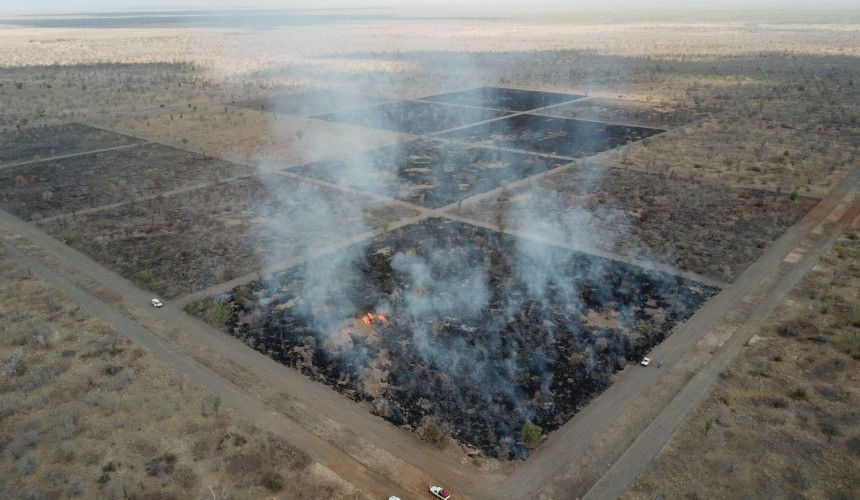
“Crediting reductions in methane (CH4) and nitrous oxide (N2O) emissions from prescribed biomass burning the proposed new savanna fire management methodology quantifies the emission reductions from shifting fire regimes in woody savanna ecosystems from intense, widespread late dry season wildfires to earlier, cooler, more controlled early dry season burns,” explained Robin Gonzalez, Head of Carbon Services at Maki Planet Systems.
“It reflects more than a decade of scientific progress and real-world application across northern Australia, now adapted for international use.
“By providing a consistent and globally applicable framework the proposed methodology aims to incentivise a fire paradigm shift and unlock new opportunities for communities and land stewards across fire-prone savannas to participate in carbon markets, strengthen cultural fire management, and deliver long-term climate resilience.”
Stakeholders including all land managers in applicable regions1, as well as the Integrated Fire Management community, are encouraged to provide input here before the consultation closes on 11 December 2025.
Source: Maki Planet Systems
Over the last 50 years the Australian Northern Dry Tropics has experienced massive timber thickening.
This has severely impacted grass growth cattle productivity and effective ground cover. In reef catchments this has resulted in elevated soil movement into waterways.
Winter burning and resulting cool fires have been used on cape York for approx 100 years to facilitate easier mustering( cattle are attracted to burnt areas which speeds up mustering) and the resulting timber thickening has just about stuffed cape York for cattle grazing. Numerous properties have been sold for the carbon credit business as they’re useless for a grazing business.
Winter burning for cool fires and carbon credits speeds up timber thickening