
The United States Government has elevated agriculture as a key element of national security for the first time in history with the implementation of its new National Farm Security Action Plan.
US Secretary of Agriculture Brooke L. Rollins and US Secretary of War Pete Hegseth have signed a Memorandum of Understanding that “memorialises the relationship” between the US Department of Agriculture and the US Department of War (DoW) for the purpose of implementing the National Farm Security Action Plan.
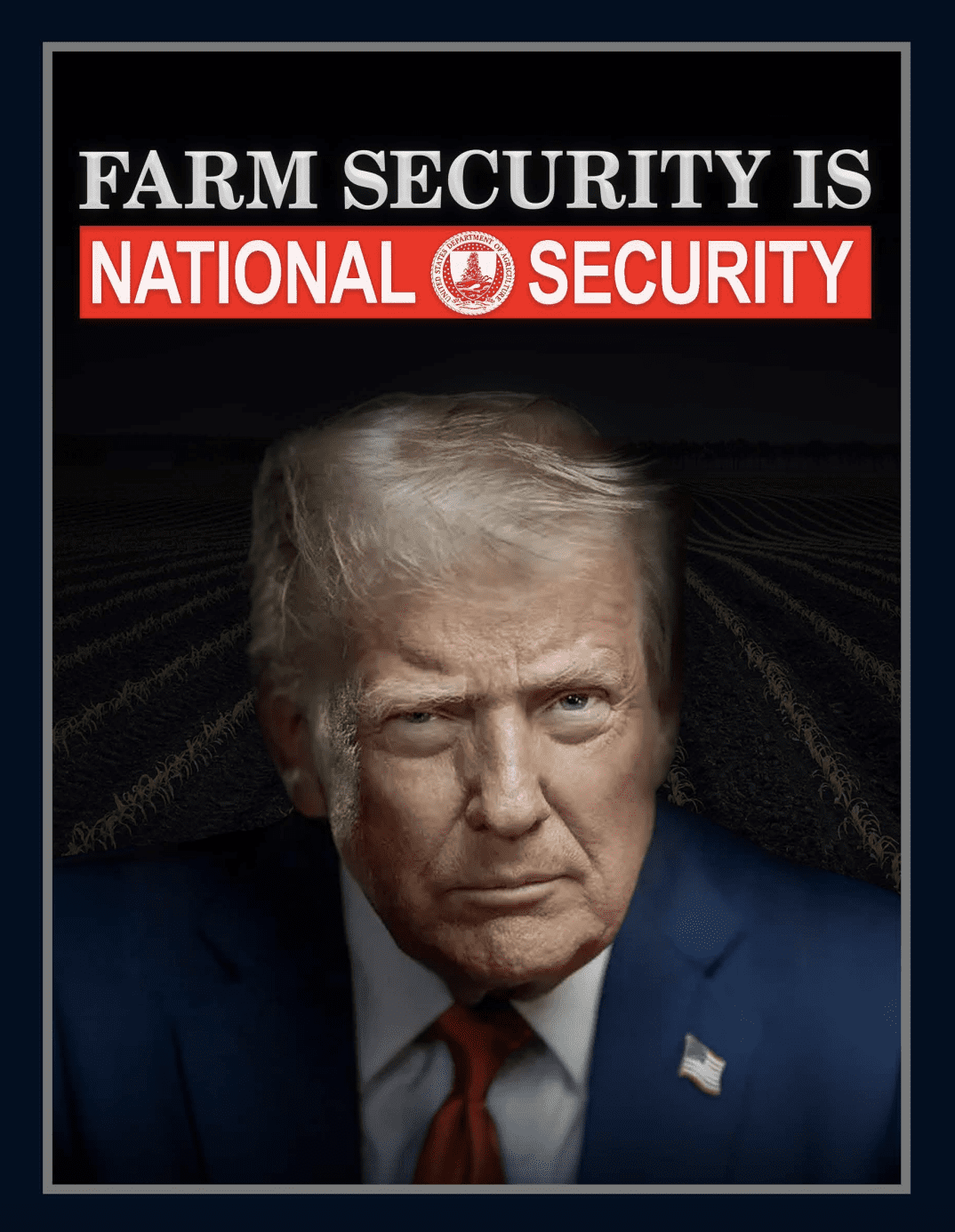
The front page of the US National Farm Security Action Plan. To view full document (PDF 1.2MB) click here.
The MOU establishes a formal framework for USDA and DoW agencies to collaborate more closely to defend the nation’s food and agricultural systems.
Under the plan the USDA says it is taking decisive action in seven crucial pillar areas, which are to secure and protect American farmland; enhance agricultural supply chain resilience; protect US’ nutrition safety net from fraud, abuse, and foreign adversaries; enhance research security; evaluate USDA programs to ensure America First policies; safeguard plant and animal health and protect critical infrastructure, recognising that on agricultural companies, including cybersecurity threats, can disrupt essential operations and cause significant losses.
“President Trump is putting America First and that means ensuring our government is working as one to defend the safety, security, and resilience of our food supply and the land that sustains it,” said Secretary L. Brooke Rollins.
“In the face of growing threats from adversaries who seek to undermine our food supply and agricultural independence, the Department of War stands ready to defend America’s farms as vital national security assets. This Memorandum of Understanding with USDA, particularly through partnership with DARPA, will drive innovative solutions to protect our farmers and ranchers from cyber attacks, foreign intrusions, and biosecurity risks. Together, under the leadership of President Trump and collaboration with Secretary Rollins, we’re ensuring that American agriculture remains resilient, productive, and a cornerstone of our nation’s strength,” said Secretary of War Pete Hegseth.
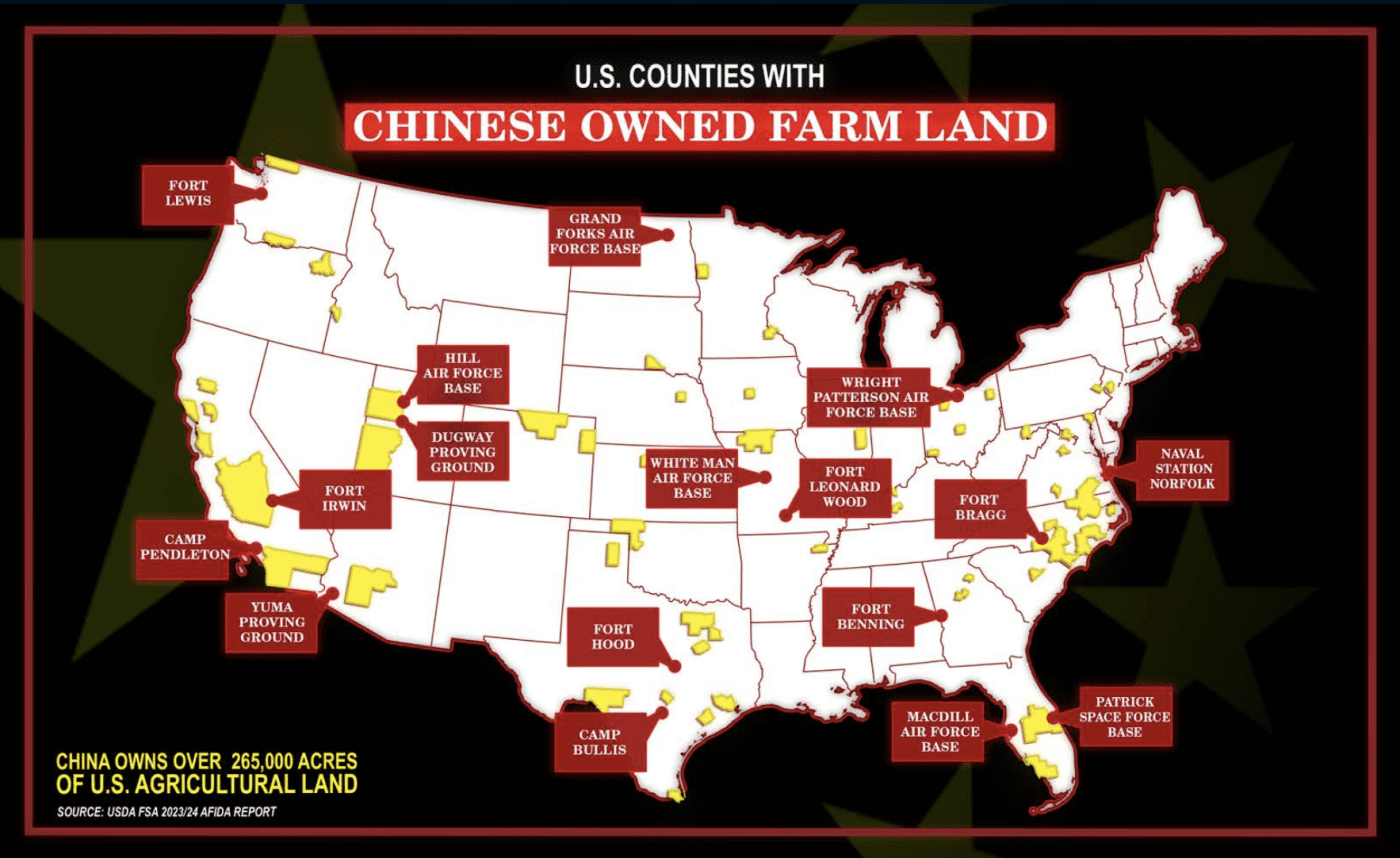
Source: US National Farm Security Action Plan, USDA
The USDA has also announced the creation of the Office of Research, Economic, and Science Security within the USDA Office of the Chief Scientist. The new office will be responsible for coordinating research security efforts across the entire USDA research enterprise.
“Together, these actions announced today underscore USDA’s continued commitment to treating agriculture as a cornerstone of national security and ensuring that America’s farms, food systems, and research institutions remain secure and resilient,” a USDA media release stated.
Recognition agriculture as a domain of defence key turning point
Andrew Henderson Principal of Agsecure and a senior fellow at the Australian Strategic Policy Institute, wrote last week said the US development was an important turning point in the push for food and agriculture to be elevated to the level of importance of national security and defence.
 “Australia’s most important strategic ally has put its food system in the domain of defence and national security,” said strategic policy expert, Andrew Henderson,
“For years, I and others have argued that food security is national security.
“The US policy agreement ends the debate. The United States has not just acknowledged the link; it has institutionalised it.”
The memorandum explicitly linked the United States Department of Agriculture (USDA) with the Department of Defence, and formalised a partnership between USDA scientists and the Defence Advanced Research Projects Agency (DARPA) to develop technological solutions to agricultural vulnerabilities.
“The National Farm Security Action Plan is the blueprint we have been waiting for and it confirms the importance and urgency of Australia’s own National Food Security Strategy,” he said.
He said the plan’s seven pillars represented the “unapologetic securitisation of the agricultural supply chain”.
 “Of critical importance to Australia is the second pillar, regarding supply chain resilience. The document effectively mandates the identification of non-adversarial partners to work with when domestic production is unavailable.
“This is the friend-shoring of food on a doctrinal scale. The US is building a fortress, and it is drawing a circle around the partners allowed inside.”
For Australia, this presented a complex strategic challenge.
While the US was its principal security ally, its agricultural sector was deeply integrated with markets that Washington is increasingly fencing off.
“The challenge for Australian policymakers is to navigate this bifurcation.
“We must ensure our supply chains are sufficiently hardened to guarantee our own sovereign and regional capability, while maintaining the interoperability required to partner with our major ally.
“We cannot simply be a compliance-taker; we must build a system resilient enough to survive on its own terms, regardless of the demands of our trading partners.”
Australia cannot afford to leave its own institutions exposed
Another confronting aspect for Australian policymakers was the fourth pillar, regarding research security.
In moving to prevent collaboration with countries of concern and ensure that agricultural innovation remains a sovereign asset, the US was framing agricultural research and development as high-grade intelligence.
“If the US is protecting its laboratories and linking them with defence research agencies such as DARPA, Australia cannot afford to leave its own institutions exposed. However, we must be careful not to import the innovation tax that currently plagues our defence sector.
“Simply applying the heavy compliance burden of the Defence Trade Controls regime to every grains trial or cattle study would suffocate the very agility that makes Australian agriculture world leading.
“We need the protection without the paralysis.
“This requires a bespoke security model, one that builds high walls around critical dual-use technologies while keeping the gates open for the general research that drives our productivity. We must reclassify agricultural research and development as a national security asset, but we must carefully consider how to secure it.”
Mr Henderson said that in prioritising ‘risk-informed resilience planning’, the US plan moved beyond aspirational goals of sustainability and demanded “a hard-headed quantification of vulnerabilities”.
“This is precisely the mechanism we have been actioning off the back of the National Food Security Preparedness Green Paper, which ASPI issued a year ago.
“The US has now validated the need for that methodology. They are not planning for efficiency or just-in-time delivery; they are planning for survivability.”
Mr Henderson said Australia had made progress towards recognising the importance of food production to national security but was not there yet.
“Our agricultural leaders are still too often viewed as stakeholders in the economy rather than partners in national defence.
“The developments in the US have changed the standard. If our Department of Defence does not have a formal, operational link with our agricultural sector – like the new nexus between the USDA and the US Department of Defence – we are operating with a structural blind spot.
:The US has legitimised the role of food supply in national defence. It has recognised that in a world of rupture, a nation that cannot feed itself cannot defend itself. The National Farm Security Action Plan is not just a warning; it is a roadmap. The question is no longer whether Australia should treat food security as national security; it’s how quickly we can catch up.”