
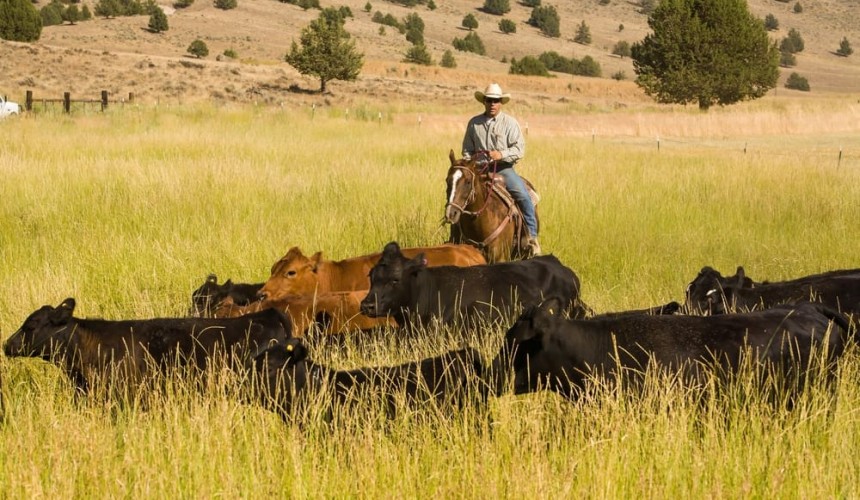
FACED with a national beef herd at 75 year lows after drought, while consumer demand for beef has grown 9pc over the past decade, the United States Department of Agriculture yesterday launched a plan to help strengthen the nation’s domestic beef industry and moderate retail prices.
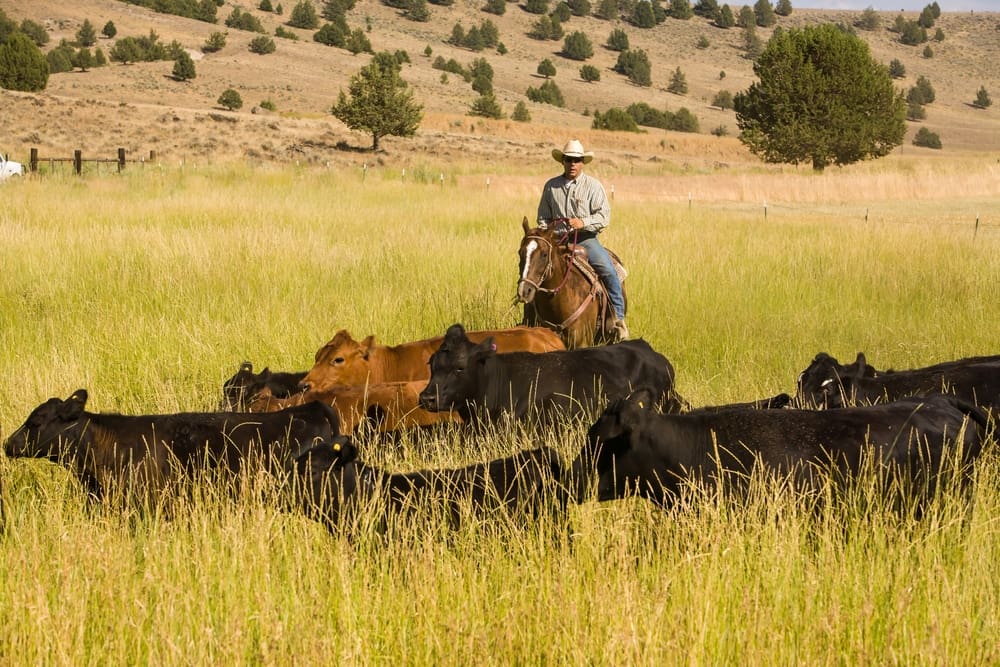
A cowboy iherding cattle on a ranch in eastern Oregon. Picture: Shutterstock
US Agriculture Secretary Brooke Rollins and Secretary of Health and Human Services Robert F. Kennedy Jr announced a suite of actions designed to “reinforce and prioritise the American rancher’s critical role in the national security of the US,” the department said in a statement.
“Since 2017, the US has lost 17pc of family farms, more than 100,000 operations over the last decade,” Secretary Rollins said.
“Because increasing the size of the domestic herd takes time, the USDA is investing now to make these markets less volatile for ranchers over the long term and more affordable for consumers.”
“America’s food supply chain is a national security priority for the Trump Administration. We are committed to ensuring the American people have an affordable source of protein and that America’s ranchers have a strong economic environment where they can continue to operate for generations to come,” Secretary Rollins said.
“At USDA we are protecting our beef industry and incentivising new ranchers to take up the noble vocation of ranching.”
She said USDA would immediately expedite deregulatory reforms, boost processing capacity, including getting more locally raised beef into schools, and working across the government to fix longstanding common-sense barriers for ranchers like outdated grazing restrictions.
“Additionally, the Department is slashing red tape and restoring grazing access on public lands to support the livelihoods of hardworking Americans in the ranching industry,” the statement said. “This administration is taking decisive action to support America’s farmers and ranchers so that they can support American families with high quality beef.”
The program aimed to grow the US domestic herd while boosting domestic and international demand for US beef, so that ranchers were not trapped in the boom-bust cycle that had defined past cattle markets, the statement said.
“We face a chronic disease epidemic in this country largely tied to the foods we eat,” Health and Human Services Secretary Kennedy said.
“Under President Trump, we are restoring whole foods as the foundation of the American diet and ending the decades-old stigma against natural saturated fat in beef and dairy products,” he said.
“We will strengthen America’s ranching industry so families can choose nutrient-dense, minimally processed foods. Bottom line: we cannot Make America Healthy Again without America’s farmers and ranchers.”
“Ranches and farmers are the original small businesses. Over generations, they carry on the vital legacy of feeding, clothing, and fueling America,” said SBA Administrator Kelly Loeffler.
“Today, this Administration is taking major action to strengthen our food supply and the beef industry by offering more security for the hardworking ranches our nation depends on.
“The SBA is committed to doing its part by cutting burdensome regulations and supplying government-guaranteed loans to support our producers as they work to strengthen the American beef supply – for consumers, our national security, and the proud American tradition of ranching.”
Under other measures announced overnight:
Protect and promote American beef through transparent labelling: Only products that have been born, raised, and slaughtered in the United States will be eligible to make US-origin labeling claims, ensuring any premiums derived from those claims only benefit producers and processors utilising American beef. Further adoption of state and local labeling claims could lead to additional premiums for those producers and processors providing high-quality, local beef products to American consumers, the statement said.
Making risk protection tools more affordable and prioritising new and beginning ranchers: Decreased overhead and decreased risk for the population of producers who are most inclined to invest in their herd. Increased participation in risk management products reduces financial volatility in cattle markets, allowing all ranchers to better manage their business.
Promote fair and transparent beef markets: USDA’s Agricultural Marketing Service will make public cattle and beef market information under the Livestock Mandatory Reporting program and will make available the Cattle Contract Library and other reporting tools to ensure producers have clear, timely market information. These coordinated actions will help ensure that producers can competitively market products to support stable, affordable beef prices for consumers.
Need to get rid of the mandatory electronic ear tags that the government wants every cattle farmer or rancher put on his cattle. Enforcement and break up of the monopolies by the BIG 4 PACKERS and allow small producers to brand and package their own meat to the general public without the governments controlling greedy hands in the small businesses, like the Omish man that was sell his products to the community with better regards to safety of his products that the government standards are!
<strong>Mr Foust is a US-based reader. Editor</strong>
I have a big Question about selling a portion of pasture land I had previously purchased, for buying family farm land from a cousin. Why does the USA Government not let me buy from my Cousin's family farm land with money from My sell of My land with use of Capitol Gains money savings?
Interestingly, despite the US rhetoric around beef food security, it is largely a mirage as they never were a net beef producing nation.
Between 1990 and 2009, the USA never had a beef trade surplus and was always a net importer.
Between 2010-2013 they had 4 straight years of being a net exporter, however those 4 years were a unique convergence of a significant drought, a depressed currency, and gradual reopening of export markets after the BSE scare of 2003.
Since 2014, they have only had 3 years of beef trade surplus (2018, 2021, and 2022).
To put this even further into context, in 1990 ("the good ol' days of ranching) the USA had a national herd (inc. dairy) of 95.8mn head. They still had a 93.8mn head herd in 2020 when the current period of drought-induced turnoff started. A drop of only 2mn in 30 years.
Yes, the USA has lost small "ranchers" from their production system. However, this has been a result of their own Government's policy decision - by subsidising corn and soy production it has made it far more lucrative for ranchers to convert to cropping or to sell outright and let a cropping operation take over the family farm.
But its not all doom and gloom, yes they've dropped 2mn head off the national herd between 1990-2020, but the average US carcase weight was 213 pounds in 1940 and was over 700 pounds in 2025, so their beef production has actually increased by over 25% since 1970.
They want to subsidise and protect croppers to the detriment of ranchers, but then also try and protect ranchers through subsidies and NTBs. The USA needs to pick a policy; do they want to protect farmers with subsidies and through NTBs and tariffs, or do they want to protect consumers and their back pocket at the supermarket?
What the USA will shortly rediscover is the value and importance of free trade agreements which has always been the most sensible approach for their country. Secure FTAs and preferrable quota access to premium markets so that they can export high value and premium cuts so their farmers make a good profit. Then import lower cost trim for grinding to keep prices low in supermarkets and at fast food restaurants.
Unfortunately, they're not currently pursuing any sort of sensible overarching policy right now that will benefit both their ranchers and consumers and there's only so much trim for grinding Australia can supply to make up the shortfall being blocked out of Latin America due to the recent tariffs.
Need to have 60% tariff on beef imports.
<strong>It appears Charles may be a US reader. Editor</strong>