
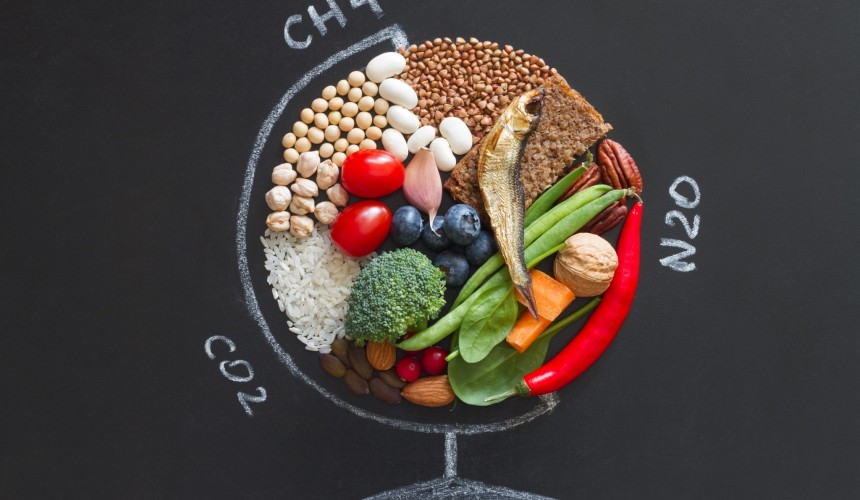
An updated “planetry health diet” released last week (known as EAT-Lancet 2.0) recommends red meat intake be restricted to 15 grams per person per day (which equates to an amount of meat about one half the size of a matchbox) while recommending higher allowances for refined sugar. In this Science Digest article, a group of scientific researchers clarify the significant far-reaching implications they see from the EAT-Lancet’s so-called “great food system transformation” for humans and the planet.
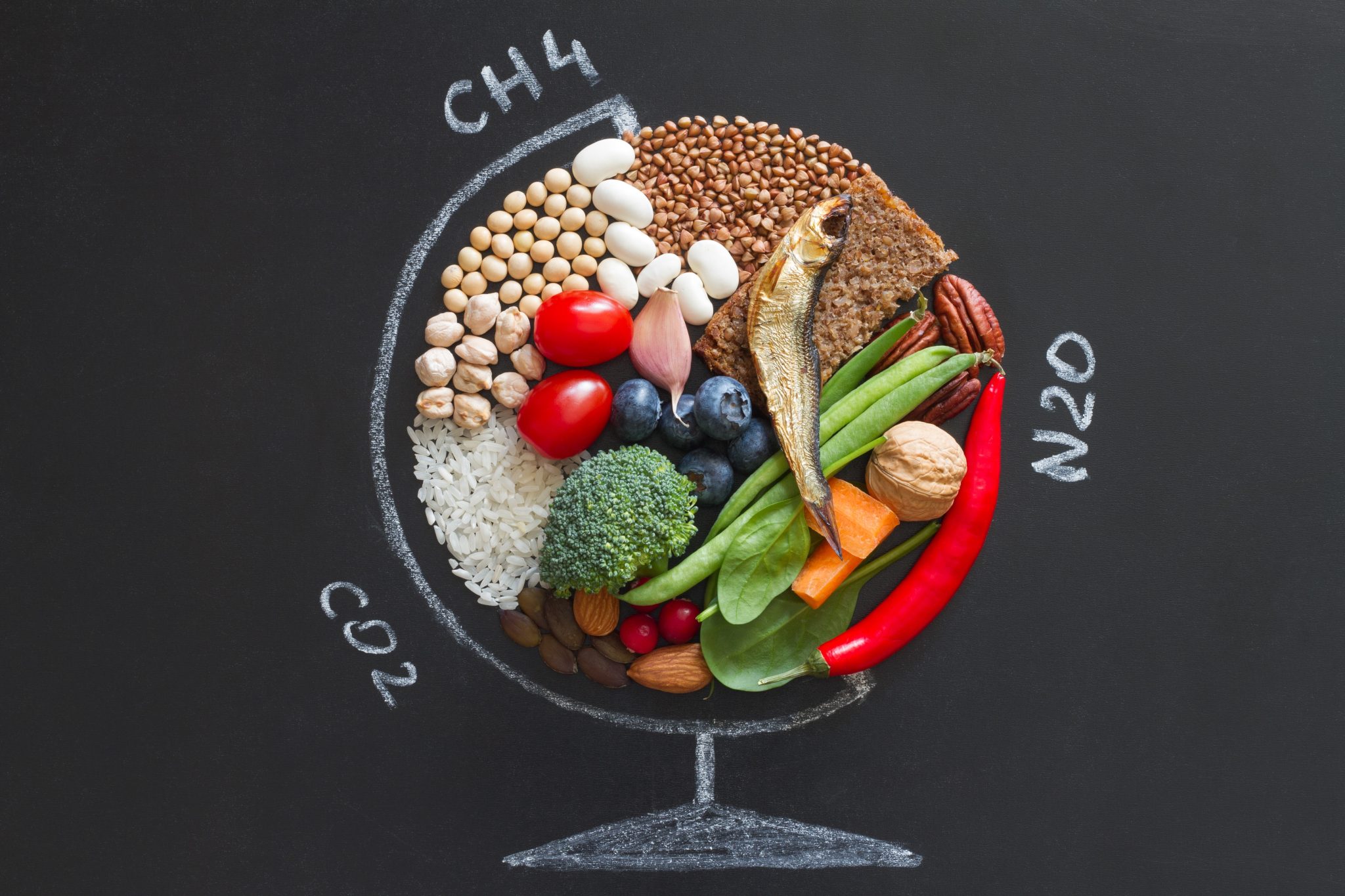
In some ways, activists have an advantage over farmers, graziers, communities and businesses in that an activist does not have to implement their own ideas. “The Great Food Transformation”, as presented by the EAT-Lancet collaboration has at its core some important ideas including the need to ensure all humans have access to sufficient nutritious food.
In a recent peer-revied scientific paper, The Systemantics of Meat in Dietary Policy Making, or How to Professionally Fail at Understanding the Complexities of Nourishment, international experts Frédéric Leroy, Peer Ederer, Michael Lee and Giuseppe Pulina unpack the assertions of the EAT-Lancet prescriptions and the theories, conspiracies and assumptions behind the campaign.
Through an exhaustive literature review of scientific, economic, environmental, health and social science sources, the authors have given an informed and nuanced critique that calls for localised, sensible and science-based approaches to ensuring adequate nutrition for all.
One of the key issues with the EAT-Lancet campaign is the reliance on technological, political and regulatory measures to define and enforce a “reference diet” that is not suitable for a large proportion of the world’s population.
This diet, branded as “The Great Food Transformation” suggests a semi-vegetarian diet with allowances for animal proteins including meat, fish, dairy and eggs that are unrealistic in most contexts, and rely on quantities of grains, vegetable oils, fruit, vegetables and nuts that are not economically or environmentally realistic in many parts of the world.
The targets set are:
• Red meat at 5 kg/person/year (within a window of 0-10 kg/person/year) and a total meat intake of 16 kg/person/yyear (within a window of 0–31 kg/person/year, for red meat and poultry combined).
• Suggested caloric contribution by all animal-sourced foods is a mere 14%.
• Only small daily rations of beef or pork (each at 7 g) and eggs (13 g) are prescribed, in addition to some poultry (29 g), fish (28 g, but limited to 40 kcal), and dairy (250 g, limited to 153 kcal).
• For comparison, the limit for refined sugar was set at 31 g (120 kcal).
• The EAT-Lancet Commission also endorses a meatless vegetarian or vitamin B12- supplemented vegan approach as a valid option.
It is important to consider that the above-mentioned dietary estimates were “not set due to environmental considerations, but were solely in light of health recommendations” [as per EAT’s former science director, Fabrice DeClerck; Mitloehner, 2019].
The prescriptive food regime also makes no allowances for cultural, economic, social and environmental differences.
The smallholder growing their own goats for milk and cheese and gathering eggs from their chickens, is held to the same nutritional standard as the urban Sydneysider who has the luxury of high-tech processed vegetable protein from the supermarket.
This further disenfranchises people in agrarian and self-reliant communities, and Indigenous cultures including those of the Australian arid regions, the Arctic Circle, Pacific Islands, Southern Europe and the steppes of Asia, all of whom have enduring practices around animal foods in the diet.
The assertion underlying the anti-meat campaign is that all animal products are the output of so-called “Big Meat” and are ethically, nutritionally and environmentally inferior to the outputs of industrialised faux meat and milk products, ultra-processed vegetable, grain and fruit-based food products.
In coverage and narratives, the health aspects central to the medical experts published by the Lancet are conflated with supposed environmental benefits, to deliver a notion of a diet that is healthy for people and planet.
This is not a science-based coupling of perspectives.
The health theory is based substantially on the work of one Western expert, Walter Willett from Harvard in the USA. The evidence, however, is flawed as the health data is not sufficiently spread across a variety of cultures, contexts, nations, climate zones and economic systems. The results cited also do not meet accepted standards for transparency and replicability.
If the crux of the issue is ensuring that the world’s growing population are all nourished within ecological constraints, then it is necessary to acknowledge the role of animal agriculture in providing high quality calories, protein and nutrients in rangeland, semi-desert and arid landscapes where the growing of grains, vegetables and nuts would be environmentally difficult and require massive inputs of scarce water and other resources.
The EAT-Lancet approach pushes to one side questions of access to land, traditional practices and economic aspects of malnutrition and environmental damage.
Technocratic nutrition, reliant on patented, industrialised and highly processed products including faux meats and lab-grown muscle protein is central to the campaign. It is noted that the World Economic Forum, which is backed by many of the world’s biggest corporations and wealthy individuals, has been an advocate for lab-grown muscle protein and industrialised faux meat. Clearly there is a likelihood of economic self-interest on the part of WEF donors and participants in this.
The environmental and health impacts of ultra-processed faux meat and lab-grown protein products has not been disclosed, and in terms of the health impacts of regular consumption of labgrown muscle protein there is no current medical evidence available for its potential risks and benefits.
A connection is made with ethical principles to justify lab-grown tissues, which argues this enables consumers to enjoy the taste and sensation of muscle protein without harming sentient animals. What is ignored in that discussion, however, is the same campaigns promote the value of insect-based protein and ignore the biodiversity impacts of broadacre agriculture and other activities. In essence, the arguments are not about animal wellbeing per se, they are about an ideological opposition to traditional animal proteins.
The authors state that we are witnessing, “…The converging agendas of ecotopian and animalist ideologies, both of which tend to impose prescriptive moral frameworks onto food systems. While the former promote technocratic dietary reform for planetary health, the latter frame livestock farming as ethically illegitimate, leveraging the concept of sentience to justify the systemic elimination of animal-based foods.”
‘A thought experiement that ignores realities’
Furthermore, the campaign explicitly calls for government intervention to force dietary changes, arguing that “consumers” will not make appropriate choices of their own free will.
Again, this is a thought experiment that ignores cultural, social, economic, environmental and health realities in most global communities. Attempts to regulate diet have met with minimal success and in some cases triggered massive civil unrest.
It is also vital to recognise that livestock are deeply interwoven with both socioeconomic and nutritional security in many global households, especially in the low- and middle-income countries. Livestock also play a role in converting low-grade biomaterials such as weeds, straw and produce unsuitable for human use into high-grade human nutrition. By-products of animals including manure are also essential fertilisers for other crops.
The authors argue for a more sensible approach to resolving the challenge of ensuring all human beings have adequate nutrition within the ecological limits of this shared Earth.
This is one of the key calls to action in the 2022 “Dublin Declaration of Scientists on the Societal Role of Livestock,” which was supported by over 1,200 scientists including members of United Nations expert bodies such as the Food and Agriculture Organisation.
In 2024 this was reinforced in the Denver Call for Action, which introduced a Nourishment Table to snapshot a culturally responsive approach to understanding a nourishing human diet. This means aiming for a diet that includes less ultra-processed foods, and a larger share of high-quality fresh foods including grains, fruit, vegetables and where culturally suitable, animal-derived proteins along with fish, dairy, eggs and animal fats.
Ultimately, what is needed to ensure nutrition for all is sustainable, context-specific transformations of time-tested practices including animal agriculture, adapting to meet future challenges through evidence-based innovation.
New global livestock information hub to launch
A new international initiative, the Real Food Research Hub, is set to launch in late 2025 as an online global science platform to support evidence on animal agriculturand its role in human health, community wellbeing, and planetary sustainability.
“The rise of mis-information and dis-information around animal agriculture including the food it produces has been identified by leading scientists internationally as an urgent issue,” said Dr Rod Polkinghorne OAM, co-Founder of not-for-profit International Meat Research 3G Foundation which is developing the Real Food Research Hub.
“There is a need to return to the use of rigorous, evidence-based scientific research as the basis for decision-making by all stakeholders – including government, industry and consumers – rather than simplification, reductionism or zealotry.”
Topic Summaries will span health, nutrition, climate, environmental impact, ethics, economics and other societal issues around animal agriculture, and address the big questions that need answering. From “Should we eat meat?”; “What is the impact of meat on cardiovascular health?”; “Is the farming of animals for food ruining our environment?”; “What is the impact of synthetic and ultra-processed foods?” to “How do we deal with the ethics of eating animals?”. Each Topic Summary will draw together the key components of a topic, and breaks down the science behind it.
It will house thousands of credible references from scientists and subject matter experts around the world.
In the Reference Library users will be able to browse by topic area or conduct a detailed search by multiple criteria to find references on their area of interest. Each item in the Reference Library will provides summaries and key information about the work, plus a link to the authors’ source location of the full reference – to go on the free mailing list for updates when they occur click here
As a beef producer I thank these scientists for their continued vigilance and reports of self interest and nonsense. I just have to go about my daily jobs and choose to take home these two points. 1. "Clearly there is a likelihood of economic self-interest on the part of WEF donors and participants in this". And: 2. "Attempts to regulate diet have met with minimal success and in some cases triggered massive civil unrest". Bring it on .