
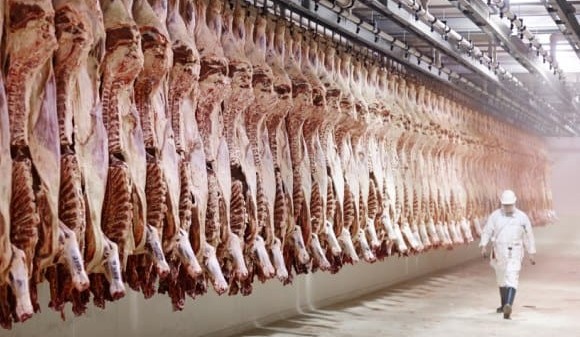
THE Queensland Government has declared the proposed Iona Beef Processing Project in Central Queensland a ‘prescribed project’, fast-tracking the development that it says has the potential to boost beef processing capacity and competition in the state.
Located in Emerald, the proposed Iona abattoir would feature a state-of-the-art beef processing facility powered by cutting-edge technologies, including robotics, automation and artificial intelligence, enhancing processing industry innovation.
Behind the project is a company called Northern Australian Agrifoods, headed by Emerald-based managing director Martin Laffer. His LinkedIn page lists his other interests as managing director of land regeneration specialist, Wild Earth Agricultural Co; managing director of Gadawon, an agribusiness advisory firm; and MD of engineering firm MTL Pivot.
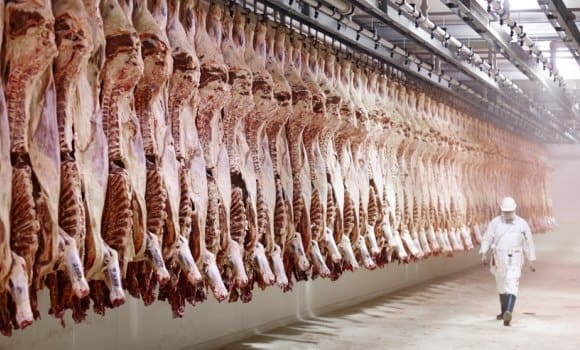 If fully developed, the proposed facility could process 200,000 head of cattle annually and the project proposes to include a feedlot, rendering plant, cogeneration and biogas facilities, bio-nutrient processing, and a water treatment plant.
Queensland deputy premier and minister for state development, infrastructure and planning, Jarrod Bleijie said the prescribed project declaration provided the Coordinator-General with the necessary powers to ensure timely approval processes, working in partnership with the local government to fast-track the project.
“Queensland is Australia’s greatest cattle producer and the LNP is backing our graziers and beef industry by partnering with the private sector to further grow the industry,” Mr Bleijie said.
Minister for Primary Industries, Tony Perrett said this project is a shining example of the potential for the growth and development of primary industries across regional Queensland and an exciting development for central Queensland beef producers.
“We are determined to increase the value of primary industries to $30 billion by 2030 and it’s the prioritisation and development of projects like this that will see us surpass this target and grow regional economies,” he said.
“The proposal to use industry leading, state of the art technology to overcome challenges the processing sector currently faces, is further evidence of the sectors capacity to embrace technology, adapt and grow.”
Assistant Minister for Primary Industry Development and Member for Gregory Sean Dillon welcomed the declaration, highlighting its potential impact on Queensland’s agricultural industry and regional economies.
“This project represents a significant opportunity to boost productivity and profitability across our beef supply chain while ensuring Queensland’s producers remain globally competitive,”Mr Dillon said.
“Ensuring this capacity can be developed at Emerald will help deliver expanded processing numbers in Queensland instead of that being exported to southern states.”
Martin Laffer, Managing Director of Northern Australian Agrifoods Pty Ltd (NAA) said the Iona Project represented a significant milestone for not only Queensland’s beef industry but the state’s agricultural sector.
“The benefit involved in a Project such as this far outweighs the risk, it future proofs our existing businesses and helps insure market access for the future,” Mr Laffer said.
“By integrating advanced technologies such as automation, robotics, and artificial intelligence, we are setting a new standard for innovation and efficiency in beef processing.
“With sustainability at the core of this project, we are committed to minimising environmental impact through initiatives like cogeneration, biogas facilities, and advanced water treatment systems.
“This project reflects our confidence in Queensland’s beef industry, and we are excited to work with the Queensland Government to deliver meaningful benefits to regional communities and position Queensland as a leader in sustainable agriculture.”
There was a rash of beef processing business proposals in Queensland between 2013 and 2019, most of which never went beyond the drawing board. Proposed sites included Emerald, Gladstone, Roma, Goondiwindi, Charleville, Toowoomba, Moranbah, Hughenden, Julia Creek, Charters Towers, Innisfail, plus Batchelor in the NT. Much of it was fuelled by perceptions of rivers of investment money flowing in from China.
Batchelor NT plant has been operating for 5 years employing 100 staff & processing 180 cattle & buffalo daily from March to December,
Ongoing modern upgrades & newly gained market access into Indonesia & USA has enabled the plant to continue to grow its footprint as the only commercial Export / Halal registered operating abattoir in NT.
Regards
Hakan Koyu
Oh for more decentralization of the Australian workforce!! We often travel from Moree to Brisbane and are amazed by the number of cattle trucks taking live cattle for slaughter to the Qld metropolis. Almost every each way drive we pass 25 - 30 trucks, in our five hours on the road, with four decks of live cattle each.
In these days of all this renewable energy promotion, and its being generated inland, surely it is better used where generated, precluding the immense losses in transmission.
Our inland communities are dying, because everyone is goaded to the beach, where it appears the greens and environasties seem to think deforestation is 'A Okay' if East of the Great Dividing Range.
The near finished product from our primary production should be the only one to cross that range, and this should be done by rail, IF we can ever get someone to just build the Inland Rail, and stop worrying about what anyone else thinks about its construction! Just as an add on, this line should go to Gladstone, and not just short of the port of Brisbane.
While it is unlikely to happen something will have to happen eventually. All the processors have been booked out for 4-6 weeks for many months now and this would be considered a normal season on the back of a few normal seasons in a row.
With the massive increase in feedlots and more already fully approved like the 30 000 head Mort and co Gogango feedlot, it has been mentioned that Southern Qld plants are processing more and more feedlot cattle leaving less and less space for generic pasture fed.
When the next drought hits what will happen if there simply is no longer enough processing capacity because of feedlots taking up most of the space? Would live export suck up a lot of cattle away from the processors as we saw in 2018-19, then there was a shortage of cattle post drought as people sold two year numbers in a single year, which is not good for processors either.
It seems obvious to me from that feedlots in Central Queensland are only going to increase in number as time goes on and they have to go somewhere.