
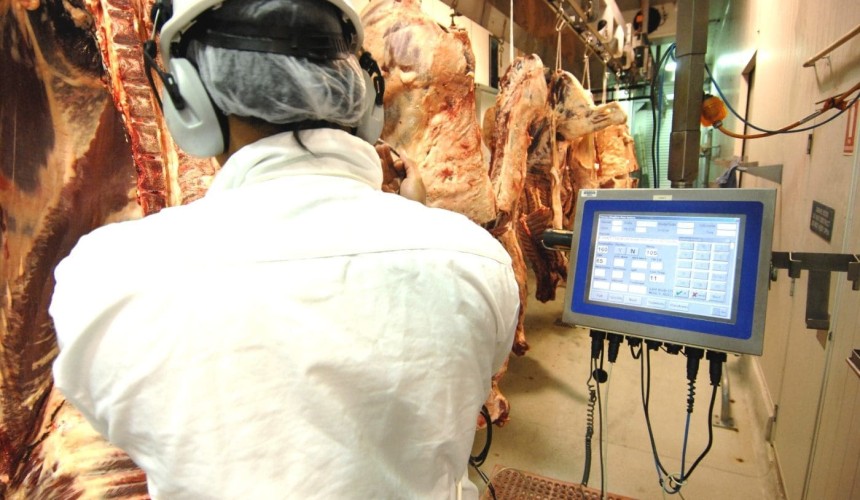
HOT, dry weather in large parts of Eastern Australia is coming back into calculations, as the beef processing sector heads into its final production quarter for the year.
With less than 11 working weeks left for many processors before they take their Christmas/New Year break, suddenly the weather is exerting a stronger influence on cattle turnoff decision-making.
BOM’s optimistic three-month outlook through to December published last week has left many producers wary, after the Bureau got it so wrong this time last year.
St George (Qld) based agribusiness consultant Bec Lindert summed it up nicely with this LinkedIn comment:
“Day 34 of spring. And despite all the forecasts saying it was meant to be a wet start… we’re still waiting.
No fires being lit. No real break in the season. Just a dry start that’s stretching further than most expected.
Its not drought, yet. Not like where we’ve been before. But it’s another reminder of how much of agriculture runs on prediction… and how rarely those predictions play out neatly.”
 As a result, there’s clear evidence of some producers, especially those in the northern half of the continent, taking steps to lighten off numbers, while direct consignment and saleyards prices remain relatively strong.
Most processors spoken to for this report in Queensland now have available spaces reasonably well covered for the remainder of this month, at least up to week commencing 27 October. That will leave only seven weeks’ kills left before many plants turn out their lights on Thursday, 18 December (killfloor) and 19 December (final boning room shift).
If conditions remain dry in the interim, congestion is definitely on the cards, and there is little sign of significant rain relief in the current forecasts.
Some grids soften
In Queensland this week, some processors have taken 10c/kg off their cow and heavy grass steer offers since Friday, re-aligning with competitors who last week looked a little out of the race. Plants in southern Queensland this week have offers of 690c/kg on heavy cows (some at 700c last week) and 760c with a pill (some offers 770c/kg no HGP).
Central Queensland plants are 20c/kg behind those rates, in what is the first weather-related drop in price seen for quite a while.
“The weather is definitely bringing numbers forward,” one Queensland processor contact told Beef Central this morning. “I think there is few early signs of panic out there, and nobody wants to leave it too long to respond,” he said.
 In some southern NSW plants, as much as 20c/kg has come off some cow and steer grids this week, with 830c/kg still available on four-tooth export ox and 760c/kg on good heavy cows.
Eastern parts of South Australia are unchanged this week, with offers seen for 780c/kg on good cows and 850c/kg on four-tooth ox.
Saleyards prices (see summary below) are following a similar downwards trend this week, despite the absence of Monday sales yesterday due to holidays.
More reports are emerging of oats crops starting to fail due to the dry weather, bringing forward oats-finished turnoff dates by a few weeks.
Slaughter numbers
No weekly NLRS slaughter report had been issued by the time this item was published, but it will be added here when it arrives. The trend has been a gradual decline in throughput, nationally, over the past couple of months, led mostly by smaller kills in NSW and Victoria.
This current week’s kill will be impact by yesterday’s Public Holiday in most states, although some Queensland processors scheduled working days yesterday, despite the gazetted break.
Saleyards trends
There’s been a general downwards price trend in slaughter cattle sold via saleyards over the past week.
Gunnedah sale this morning yarded 3815 head, down about 1300 on last week. Prices were much reduced through most categories. Three and four score cows were significantly cheaper making 275-395c/kg back 28-35c/kg. Medium processor heifers were much cheaper selling from 370-460c/kg. Grown heifers +540kg sold form 400-456c/kg.
Wodonga sale this morning yarded 1080, up 20pc on last week. Demand fluctuated around quality and breed with only limited numbers of stock in each category. On the export side heavy steers suitable for processors were limited and sold from 430-475c/kg. Heavy cows were well supplied, with the bulk making from 375-424c/kg. Leaner cows less than 520kg were very mixed, selling from 300-382c/kg.
Warwick yarded 1260 this morning. There were large variations in quality especially in the cow section. Most classes sold to within a few cents of the previous weeks sale however heavy cows lost 15-20c/kg. Heavy grown steers made to 448c the bullock portion made to 445c to average 431c/kg. Medium weight score 2 cows averaged 311ckg. Heavy weight score 3 cows averaged 348c and the best of the cows made to 375c to average 366c/kg.
Roma store sale yarded 9028 this morning, down 600. A quality yarding with heavy feeders stronger and weaners not as competitive, bullocks firm to slightly dearer. Grown steers 400-500kg averaged 490c selling to 494c/kg, while grown steers 500-600kg sold to 484c/kg. Grown steers +600kg sold to to 438c/kg, while grown heifers +540kg sold to 410c/kg. A better quality yarding of cows presented and sold to similar prices as the previous sale. Score 2 cows 400-520kg sold from 205-372c/kg, the score 3 cows +520kg made to 408c/kg.
I think the BOM work on probability.Its the 'chance' of above average rain
Its not going to rain every year.
Try and plan for that!