
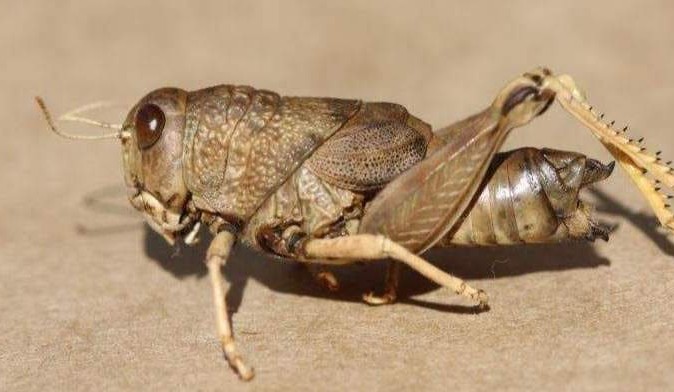
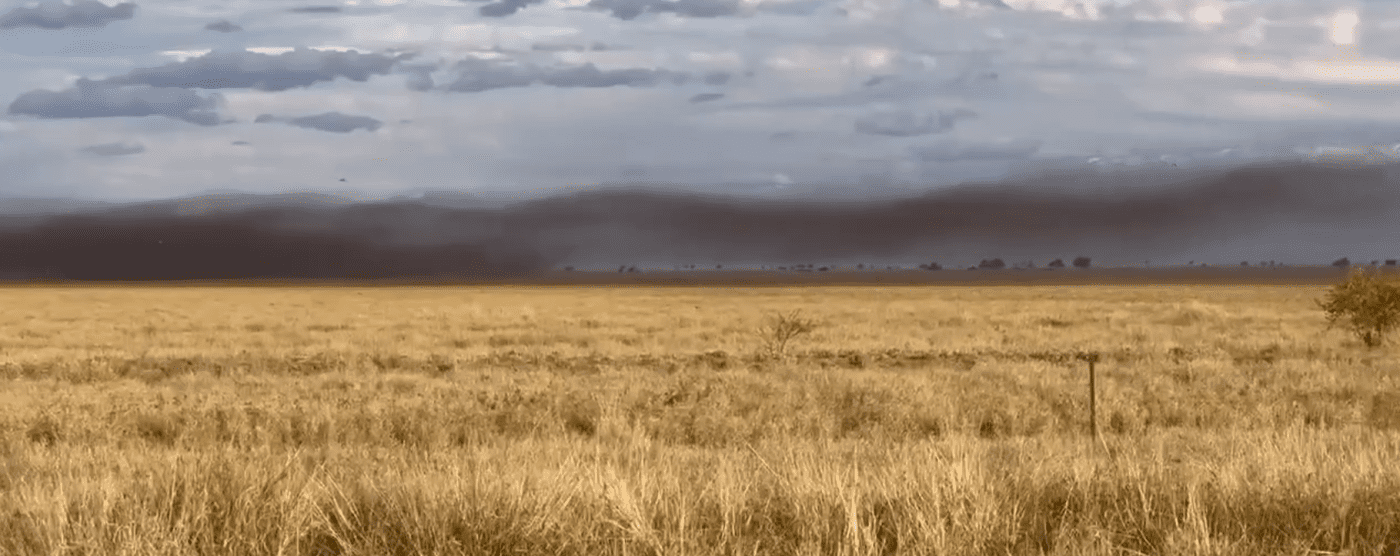
The black mass on the horizon in this image is not a cloud, but a locust swarm
QUEENSLAND farm lobby group AgForce is calling for swift action on locusts with swarms starting to appear in the west of the state.
Outbreaks of migratory locusts have been reported in the Aramac, Muttaburra, Corfield and Longreach areas in Central Western Qld and Hughenden and Prairie in North Qld. Timely rain and a slightly warmer winter have largely been attributed to the outbreak.

Shane McCarthy
Speaking to Beef Central, AgForce general president Shane McCarthy said the big concern was the potential for a more significant outbreak in Spring, when the weather warms up further and conditions become more conducive to locusts.
“The more that we control them now, the less of a problem we are going to have in Spring because Spring is when numbers will explode,” Mr McCarthy said.
“We need to get something happening as soon as possible. I have been speaking to people from the DPI and I heard that they have been on the ground in that Winton and Corfield area and there are more people coming next week.
“The biggest thing they need to do is map where the nymphs will hatch. Where the locusts have been is where they lay so it is about finding where the locusts have already been.”
Mr McCarthy said producers in the area had been proactive in reporting locusts. He said it was now important to react quickly with locusts, because it is a lot harder to control locusts while they are mobile as opposed to locusts that have not hatched.
“If I have locusts on my property, the locusts that are on the wing are the biggest concern because they are costing me money,” he said.
“But if you don’t control the nymphs, you will have the next problem come through in eight weeks’ time. The department is getting active, but it would be good to see things happen a bit quicker.”
View this post on Instagram
Government issues locust advice
With reports of the locusts in Western Qld, the Department of Primary Industries issued a guide for impacted producers through the FutureBeef website.
Monitor the situation:
- Regular inspections: Monitor your property for signs of locust activity and treat any nymphs found. Unusually high bird activity may indicate that nymphs or locusts are present in your paddocks.
- Collaborate with neighbours: Work with neighbouring landholders to coordinate monitoring and control efforts.

- Report detections: If you detect large numbers of locusts or nymph bands on your property, it’s essential to report this activity to the DPI by calling 13 25 23, sending an email to locustreports@dpi.qld.gov.au or reporting online at Report a biosecurity pest or disease form on the DPI website. Early reporting allows for coordinated control efforts, reducing the risk of widespread damage.
Chemical control: Best practices
Chemical control is a common method for managing locust populations. Whether using ground or aerial applications, it’s essential to follow best practices to ensure effective and safe treatment.
- Choose registered chemicals: Always use chemicals registered for locust control and follow the label instructions carefully.
- Calibrate equipment: Ensure your spray equipment is properly calibrated to deliver the correct dosage.
- Adhere to withholding periods: After chemical treatment, strictly observe withholding periods to ensure the safety of livestock and crops. These chemicals can pose a risk of residue contamination in livestock if not managed correctly.
- Consult professionals: For aerial applications, work with a licensed operator to discuss appropriate chemicals and risk management strategies.
Next steps
While locust control is primarily the responsibility of landholders, government and industry bodies play a vital role in supporting these efforts.
We will conduct targeted surveillance to monitor locust activity and provides resources to assist landholders in meeting their GBO.
Australian Plague Locust Commission (APLC) will implement control measures when locust numbers threaten two or more states or territories, ensuring a coordinated national response.
Stop spraying the crops and poisoning everyone.
Just realease about 500 chickens into rhe area!
They'll sort out anything that moves!
AND you get free fertiliser!
Australia should also use goats to clean up weeds and excess grass too. They do it overseas. We really need to catch up..