
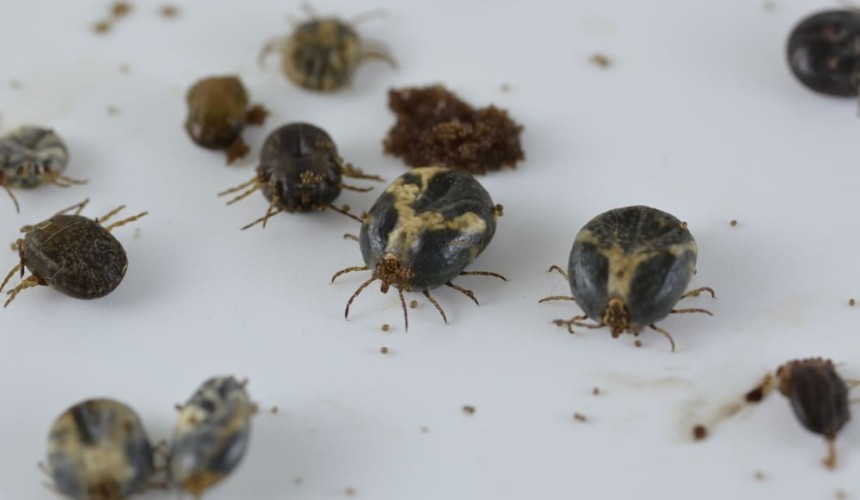
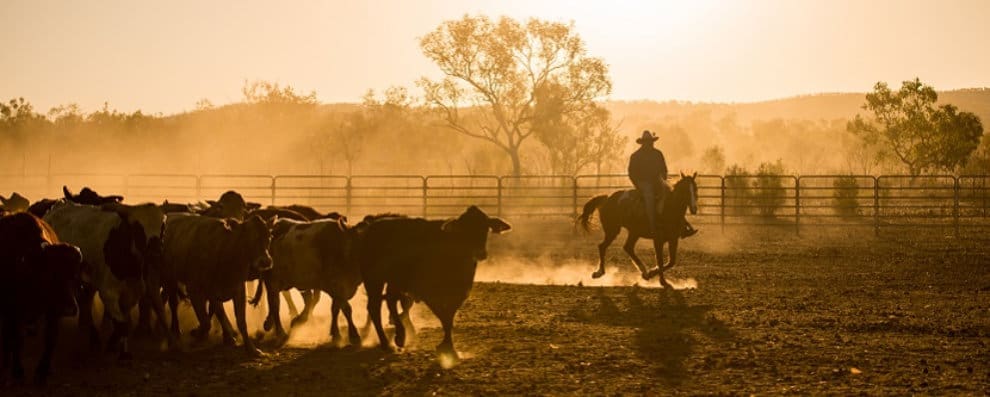
AFTER years of struggling with cattle tick chemical resistance, Bill Tranter has found a product that’s very effective for his Simmental and Belmont Red cattle in north Queensland.
Dr Bill Tranter is a cattle producer on the Atherton Tablelands, a veterinarian and university lecturer at James Cook University
“The butchers like my cattle, I have won carcass competitions, so I am happy with my cattle but because there is still some European, non-tropically adapted genetics in them, they don’t have as much tick resistance as say a Brahman,” Dr Tranter said.
 “Controlling ticks has become increasingly difficult with ticks developing resistance in the last few years, so nearly 12 months ago when Coopers released its Exzolt Pour-on for cattle I started using it to reduce the parasite on my property.
“Because it’s a new product it gave me instant control because all the ticks were susceptible.
“So, in the pure European bred cattle you get about 60 days protection and in the crossbred cattle I probably get close to four months* protection.”
* Editor’s note: Dr Bill Tranter’s quoted experience in relation to cattle tick control “In the crossbred cattle I probably get close to four months protection” is longer than the registered label claim for Coopers Exzolt Pour-on for Cattle. The registered label claim states: “Coopers Exzolt Pour-on for Cattle controls: Cattle Tick for 56 days.”
How the fluralaner based product works
Coopers released its Exzolt Pour-on for cattle at the end of 2024, as the first and only cattle product in Australia that contains fluralaner – a class of chemical which delivers breakthrough control against external parasites and has no known resistance.
Cattle tick and buffalo fly are the two parasites of greatest concern, estimated to cost the Australian cattle industry more than $290 million annually.
The pour-on product works through absorption into the blood stream via grooming and via direct contact with a five-litre pack treating 200 x 500kg cattle.
According to Coopers the Exzolt Pour-on delivers:
- 56 days control of cattle ticks – The longest lasting registered claim against cattle tick compared to any other pour-on product in Australia.
- 21 days control of bush ticks – The longest lasting control of bush ticks in Australia.
- 21 days control of buffalo fly – Long-lasting buffalo fly control.
“This product offers cattle producers flexibility of when to treat. They can treat cattle with it when the tick season begins coinciding with the spring rise, later in the tick season to control both cattle tick and buffalo fly as the fly season begins, or later in the season when the buffalo fly season is potentially at its peak,” Michelle Dever, MSD Animal Health Technical Advisor said.
“Producers just need to remember to rotate chemical groups and the retreatment interval for Coopers Exzolt Pour-on is 88 days.”
Dr Tranter explained he is using the new product in a rotation with other tick treatments to reduce the exposure of ticks to the new active chemical, and in this way, slow down the rate of resistance development.
Better tick control means more susceptibility to tick fever
The better cattle ticks are controlled the more risk there is of young cattle getting tick fever Dr Tranter said.
“I will have to then take into account are my young cattle getting natural vaccination from ticks carrying the tick fever organism or should I protect them by giving them a vaccination to make sure they acquire effective immunity,” he said.
“It is also important to note that producers might be tempted to use the wrong dose by using a little bit less because it is quite expensive, but that is a good way to encourage the development of resistance, so I certainly won’t be doing that.”
Good to have a new active ingredient to break the resistance stranglehold, but the reprieve is temporary - the resistant individuals are being selected as we speak.
Somewhere in my dusty memory is a statement that a Barber's Pole Worm population needed 13 exposures to a new chemical before resistance appears.
With a WHP of 38 days, I can't see this is of any value to northern producers selling to meat works?
It may be far simpler to break the tick cycle by intensive rotational grazing with short duration graze and long rest periods of minimum 40 days to 60 days rest. No issues with resistance.