
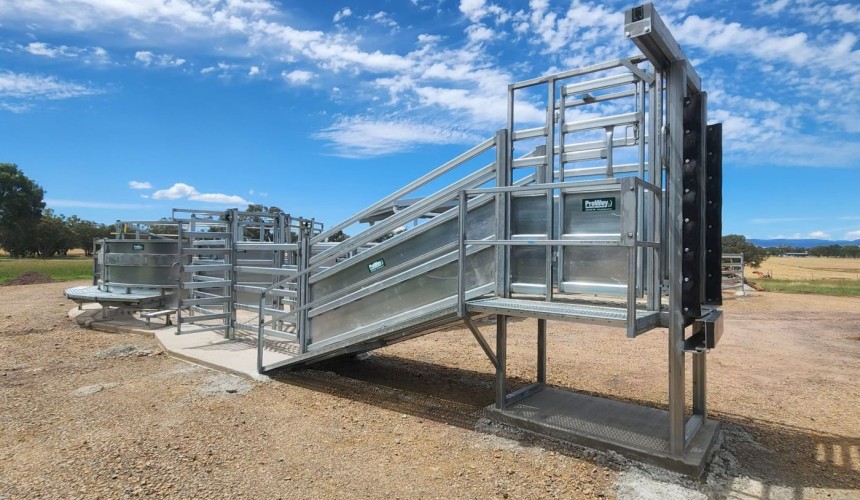
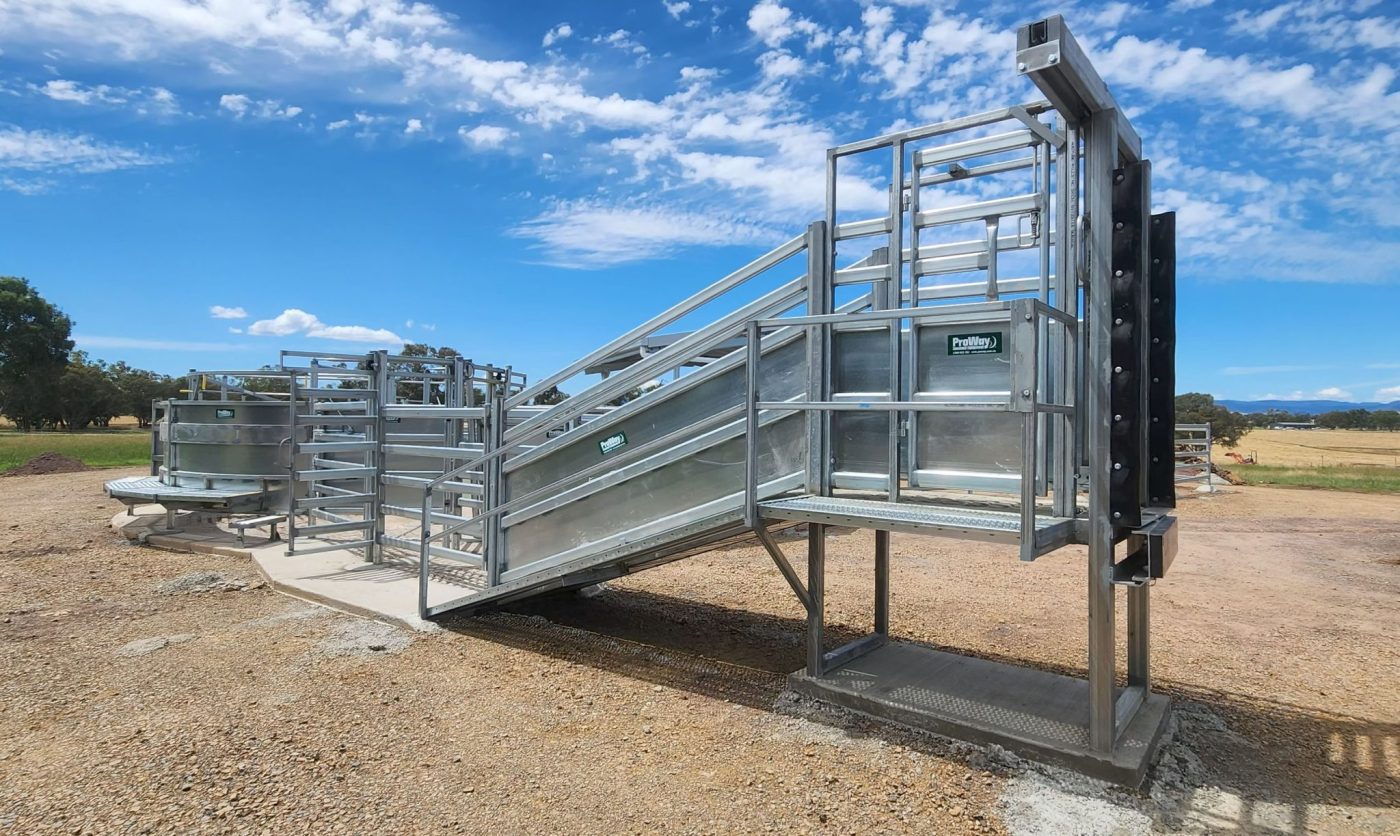
LIVESTOCK producers planning to build new livestock loading infrastructure on their properties can access a National Standard developed in 2020 to guide them – but they have to pay $136 to access it.
In 2020, an Australian Standard for Livestock Loading/Unloading Ramps and Forcing Pens was officially released, setting out practical design principles intended to reduce safety risks for livestock producers, handlers, transporters and animals alike.
It followed years of lobbying and industry collaboration led primarily by the Australian Livestock and Rural Transporters Association, which had published its own national guidelines for loading ramps five years earlier in 2015.
The 2020-released AS 5340:2020 national loading ramp standard is based on the key principle of keeping people and cattle safely separated during loading and unloading. It was hailed as a step forward for safety after the tragic death of a transport worker in 2013 which at the time brought new urgency to ramp design reform.
 At a recent field day in North Queensland focused on loading ramp design and safety, a number of speakers called for a national standard to be developed, apparently unaware the 2020 Standards Australia loading ramp standard even existed.
Perhaps the fact few people in the industry are aware of it is no surprise, given it sits on a page of the Standards Australia website behind a paywall and can only be accessed by paying $136.
If information is locked away, the concern is that the people it is meant to protect may never see it.
Questions also arise about the need for the independent, non-government, not-for-profit standards development organisation to charge for the disbursement when it reported $300 million in assets/reserves in its financial reports last year.
In 2021 the ALRTA wrote to the Federal Government asking for relief from the Standards Australia ramp standard fees, pointing out that its own earlier guidelines were made freely available across the supply chain.
Beef Central has asked Standards Australia why a document designed to improve safety for producers, livestock handlers, transporters and livestock is not made freely available to reduce barriers to uptake and encourage widespread adoption.
In its response Standards Australia said it is non-government, not-for-profit organisation, and it funds the development of standards through the sale of publications.
“Many of these serve niche or marginal industries and may not be high-volume sellers, but they meet a demonstrated need and are developed under the principle of delivering a Net Benefit, as outlined in our standards development framework.
“AS 5340:2020 was developed through broad industry collaboration under Technical Committee SF-054, with input from groups like the Cattle Council of Australia, ALRTA, and the Victorian Farmers Federation. It was approved in October and published in November 2020.
“We share the industry’s commitment to improving safety for producers, handlers, and livestock. This standard reflects that shared goal and was shaped in partnership with key stakeholders across the sector in accordance with our processes.
“We are also actively working on more affordable access models, including recent initiatives aimed at unlocking productivity through a national standards access model.”
The spokesperson for Standards Australia encouraged industry groups or stakeholders with concerns or ideas about how standards can better support their sector to contact the Standards Australia Sector Engagement team at sem@standards.org.au
Asked about the standard this week, Australian Livestock and Rural Transporters Association (ALRTA) CEO Anthony Boyle told Beef Central producers were welcome to contact the ALRTA for basic guidance on ramp safety principles (ALRTA contact details provided at the end of this article).
Not every property needs a “rolls royce” ramp
A focus of last week’s field day in North Queensland was a “gold standard” double deck, extra wide loading ramp.
However Mr Boyle stressed that not every property needs a “Rolls Royce” double-deck ramp.

ALRTA CEO Anthony Boyle
“Double deck is great, and very much needed in high volume locations like saleyards, feedlots and processors, but a well-designed, good quality single deck ramp will still do the job very well,” he said.
“It is the cheap ramps without a slide gate or walkways that are not up to it.”
Many Australian manufacturers also make a range of existing smaller ramps in accordance with the national standards, including “dump ramps” which incorporate a narrower single width ramp which helps to ensure stock don’t turn back around while loading, and a wider double-width ramp which helps to ensure the smooth flow of stock while unloading.
Hidden standard highlights growing disconnect
The situation highlights the growing disconnect between national safety expectations and the practical reality on the ground,” Mr Boyle said.
“It’s ironic that while the National Heavy Vehicle Regulator is currently consulting on a revised Master Code of Practice – one that encourages industry-wide uptake of safe loading infrastructure – the very standard that outlines what a safe ramp looks like remains hidden behind a paywall,” Mr Boyle said.
“Operators are being asked to lift safety performance, but are denied the blueprint to do it. Having said that what price do you put on someone’s life? Is $136 to seek quality advice too much?”
The Master Code, which sets out best practice guidance under Heavy Vehicle National Law, places significant emphasis on site design, loading procedures, and infrastructure risks.
“That includes references to compliant ramps and separation of people and livestock – exactly what AS 5340:2020 provides,” Mr Boyle said. “If regulators expect producers and consignors to meet these expectations, then the standard must be made accessible to all “
Mr Boyle added that ALRTA continues to offer free guidance to producers and facility operators through its state member associations. “We’re here to help people build safer facilities,” he said.
- Click here to view ALRTA loading ramp safety standard brochure
- Click here to view MLA’s Livestock Transport Hub
ALRTA contact details
Phone: 02 6247 5434
Email: office@alrta.org.au
Website: http://alrta.org.au
No !
It's another Government fee that's been introduced because of their insane greed .
Every farm is different and Farmer's know what their farm needs , they are hands on 24/7 . They battle through year after year. Some haven't. Yet here's another unnecessary money grab on the same people who the Government happily export the farmers livestock and make a big profit. The Government could clean up $$$ in no time if they listened to the Australian people instead of condemning their right to be heard and stopped making it so hard to survive in what once was a Great Country .
The Good Old Days.
Why do we have to pay?
Standards Australia has had its numerous name changes and directions from 1922 to the current day. In 2003 they sold an exclusive license to publish and distribute Australian Standard® brand standards for an initial term of 15 years to SAI Global Limited, a newly founded company that was floated on the Australian Stock Exchange. Once again, an organisation funded largely from Government has been sold out to an ASX company to profit from the people who need multiple accesses to these documents as part of their workday. People have to pay ridiculous fees to access important information for their business needs which should be free as it was prior to 2003. The question is, "Is the priority here profit or safety"?
Thanks
Russell Wells
well stated
IS IT SAFETY OR PROFIT