
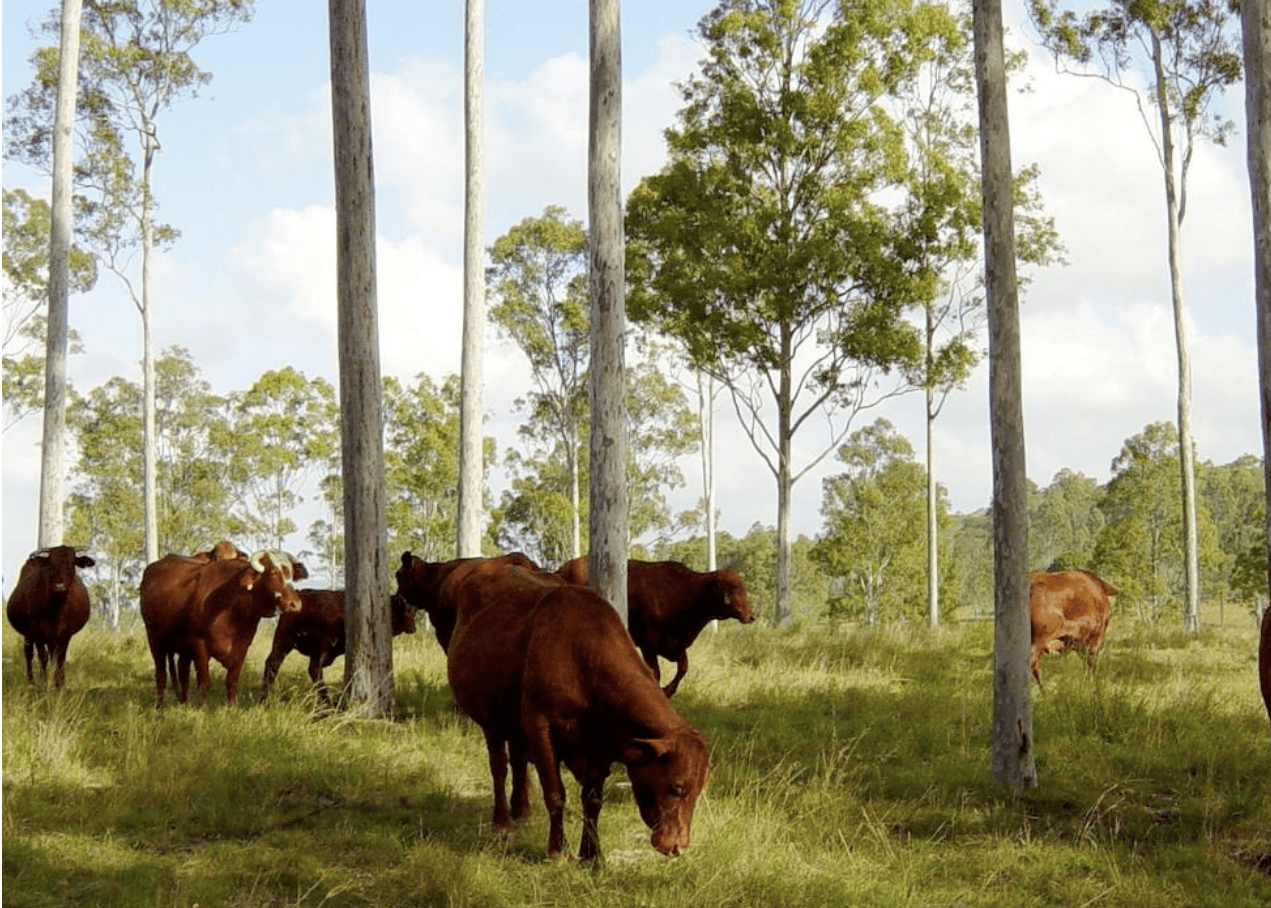
Cattle grazing in a paddock with Spotted Gum. Picture: Timber Queensland
AUSTRALIA’S growing dependence on imported timber has sharpened calls for the cattle and forestry sectors to work more closely together to fill looming supply gaps.
But policy settings that fail to protect the right to harvest timber are stifling opportunities from being realised, a cattle and timber industry conference in Brisbane on Tuesday was told.
Despite vast forest resources, Australia imports more than $2 billion worth of timber and forest products each year – many from countries considered to be a high risk of illegal deforestation or forest degradation.
A joint Timber Queensland and AgForce conference on Tuesday highlighted the significant potential for graziers in the State to integrate timber production with livestock through silviculture. This involves agroforestry practices which combine trees, forage and cattle in ways that can diversify income, improve soil, water and pasture health, enhance productivity and animal welfare and capture carbon.
The conference heard that more than six million hectares of native hardwood forests exist on private land in Queensland, much of it on grazing country.
Managed well, this could dramatically improve future timber supply to help fill the national void.
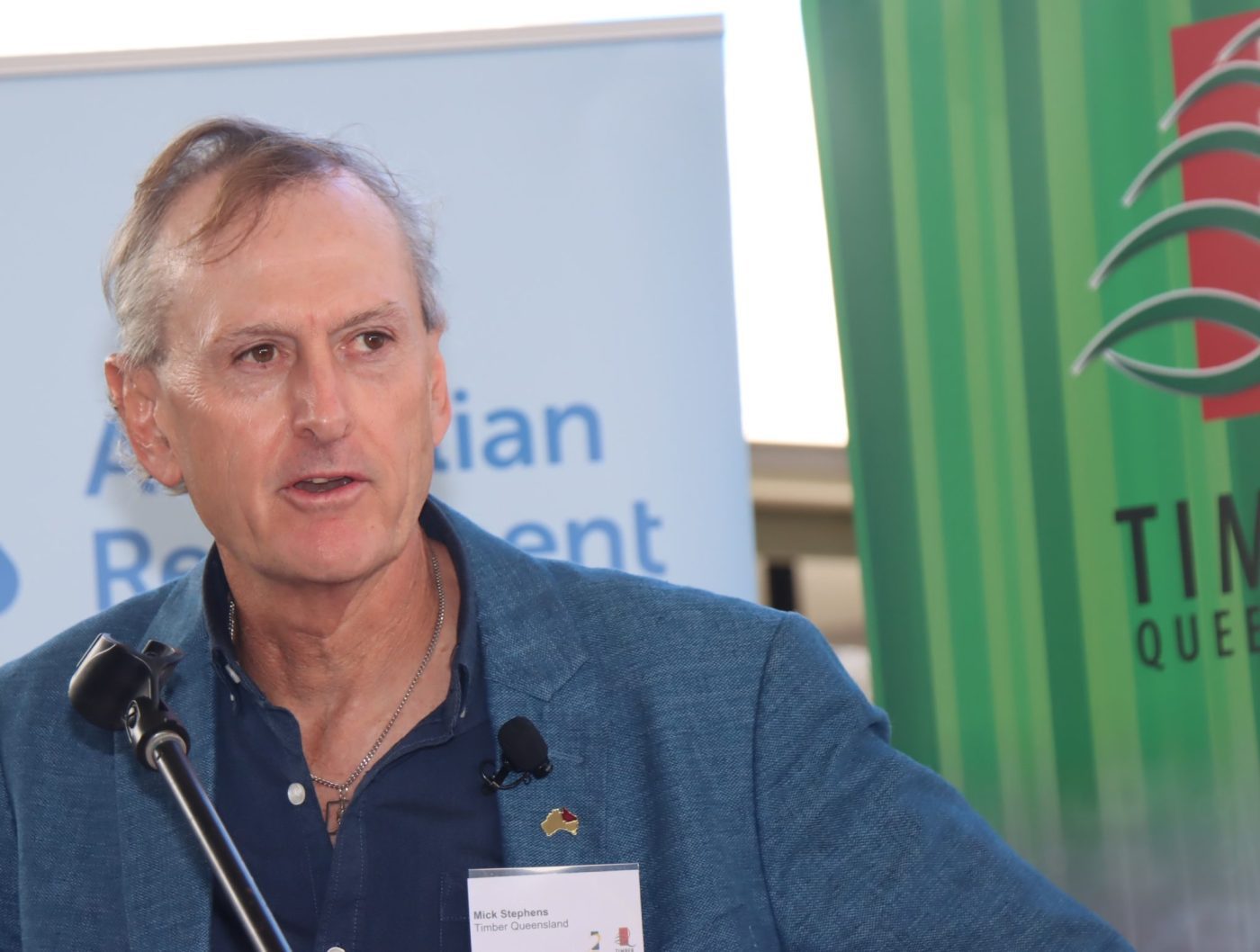
Timber Qld CEO Mick Stephens
Timber Queensland CEO Mick Stephens said Queensland’s surging population would require enough timber to build one million new homes by 2044, alongside public works, 2032 Olympics infrastructure and the strong ongoing renovation market.
“Queensland is bursting at the seams with population growth,” he said.
“If we can increase the proportion of farmers that are harvesting those private native hardwood forest areas and providing best management, we can get a four-times-increase in our sustainable yield from that area.”
However, policy uncertainty remains the biggest barrier.
Landholders are reluctant to invest in silviculture without a guaranteed right to harvest in future.
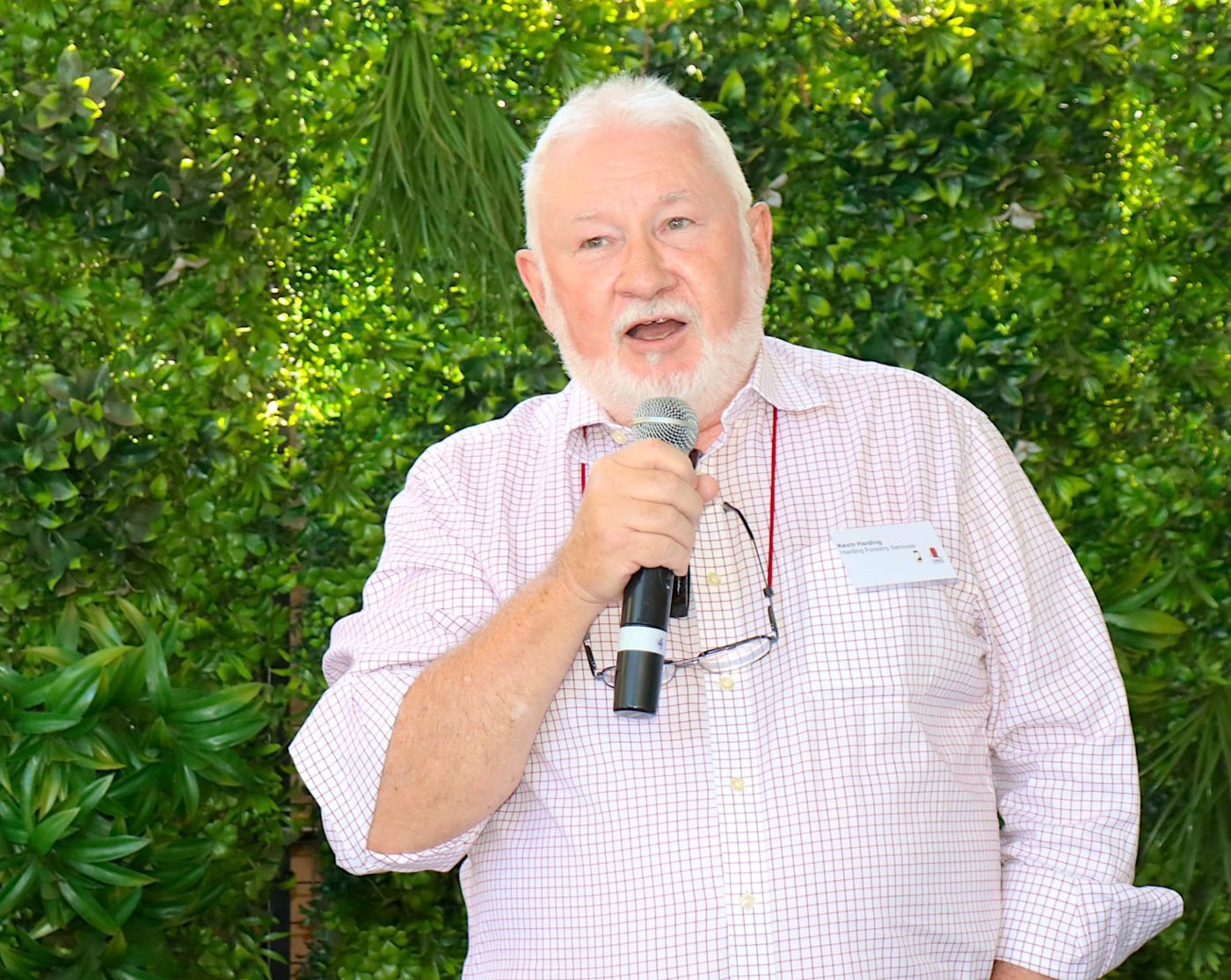
Dr Kevin Harding
Forestry consultant Dr Kevin Harding noted that CSIRO-backed research showed that landholders who invested $2000/ha in silviculture practices could yield returns of $10,000/ha over a 20-year cycle.
However, many were taking the “quick buck” instead and choosing to sell their best timber for returns of around $2800/ha now.
Dr Harding said that when asked why they would prefer $2800/ha in the short term compared to $10,000/ha in future, the common response from farmers was that “they didn’t have the confidence to invest $2000 today, because they may not be allowed to harvest in 20 years time”.
“I have got a forest genetics background – that is the typical situation out there,” he said.
“You take out the best trees, what you are leaving it with is a very degraded genetic population.
“And that is the worst possible science scenario going forward, because it is like taking your very best breeding cattle to the abattoirs, and then trying to restock and create another breeding population with your second best. Now what sensible person would do that?”
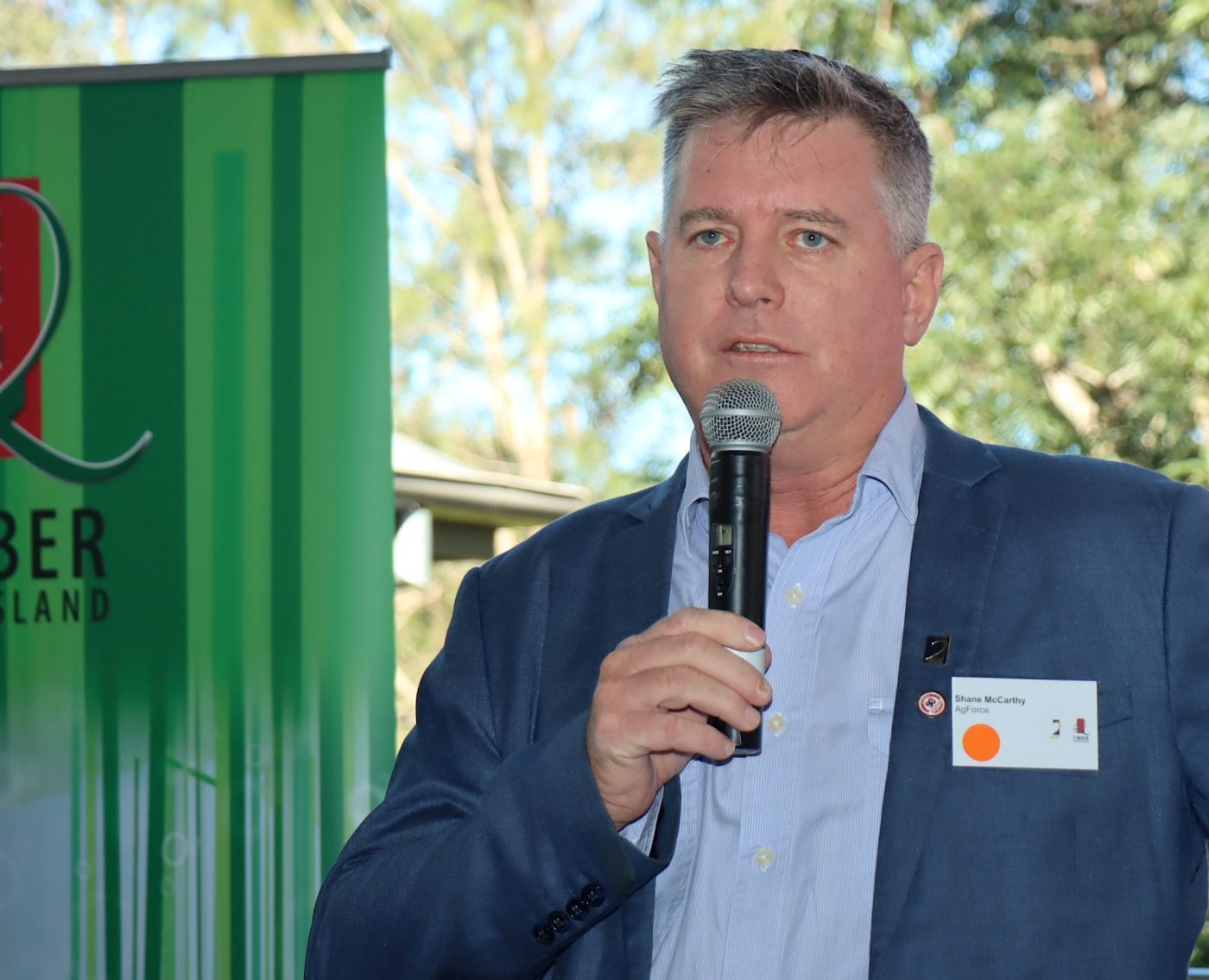
AgForce President Shane McCarthy
Timber Queensland and AgForce Queensland have long been advocating for the State Government to introduce a new “Category F” (‘F’ for forestry) in the Forest Act to guarantee harvest rights on private land.
‘Why don’t we have a carbon method for that?’
Industry leaders are also pressing for carbon policies that reward active forest management, thinning and regrowth for both timber and carbon credits.
Landholders cannot currently earn ACCUs on managed regrowth, meaning there is no incentive to keep regrowth for carbon storage and timber harvesting.
“What we’re pushing for is active forest management methods where you can have a range of activities such as grazing and harvesting, that will give you more abatement compared to the baseline,” Mr Stephens said.
“We think there’s large scope for uptake but there are no methods at the moment that include the ability to harvest thinned native forests and get credit for it.
 “If you thin those trees, you can actually increase the growth and yield of that forest, and actually lift the overall sequestration and growth rate of that forest, so why don’t we have a method for that?”
Research trials of hardwood plantations and private native hardwood forests incorporating silvopastoral systems on grazing land under Meat & Livestock Australia’s “Steak N Wood” presented by Nahuel Pachas of QDPI demonstrated substantial increases from the trials in pasture production and carbon sequestration.
Farm forestry has enormous potential to reduce reliance on imported wood products
University of Queensland forest scientist and economist Dr Tyron Venn told the conference Australia has a serious wood supply problem, following a dramatic decline in the area devoted to production forestry in Australia from 1996 to 2024.
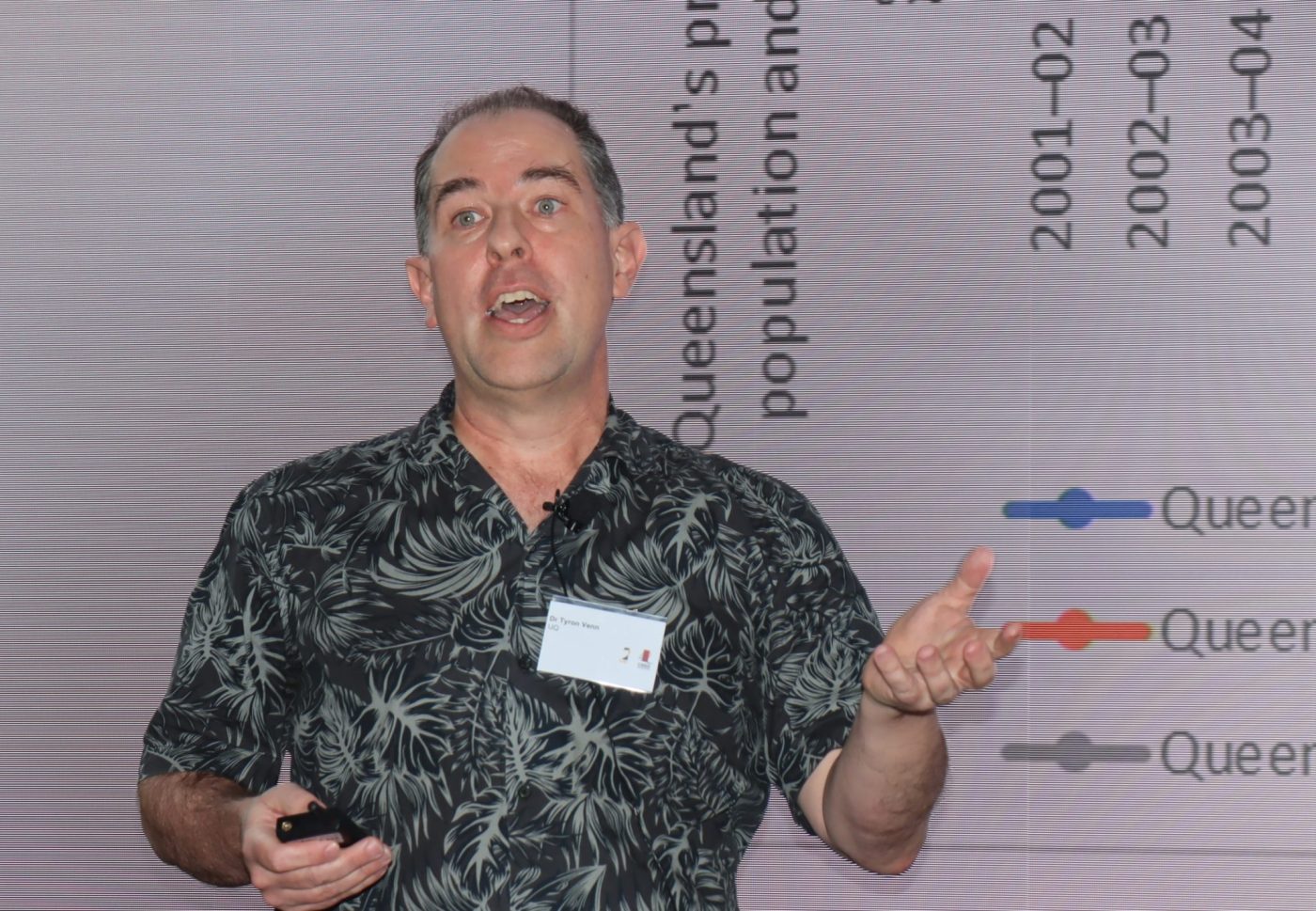
Dr Tyron Venn from the University of Queensland
Almost half of the wood consumed in Australia is now imported, and much of that product is from countries with a high risk of illegal harvesting, deforestation or forest degradation, he said.
“So this, for me, is a major motivator for getting our own house in order and trying to improve timber production in Australia,” Dr Venn said.
“Queensland can’t shirk its responsibility.
“If we’re going to mitigate the climate and extinction crises, we need to supply more of our own timber domestically, rather than rely on high risk countries to grow the wood for us.
“Farm forestry has got enormous potential to reduce our reliance on imported wood products.”
Dr Venn presented financial performance research at the event showing silvopastoral systems can lift livestock productivity by up to 100 percent and increase timber yields by 200–400 percent when managed to code.
Draft Future Queensland Timber Plan welcomed
After a decade of “public under-investment” and a misunderstanding of the benefits of timber sector by the previous State Government, Mr Stephens said the industry welcomed the Crisafulli Government’s recently launched draft Queensland Future Timber Plan which aims to secure the State’s timber supply for the next 25 years as a positive step forward.
The industry has estimated that $200 million in Government support is required over the next 20 years, including a $40 million extension and advisory program with farmers, graziers and indigenous land owners to fast track adoption of silvopastoral systems in Queensland.