
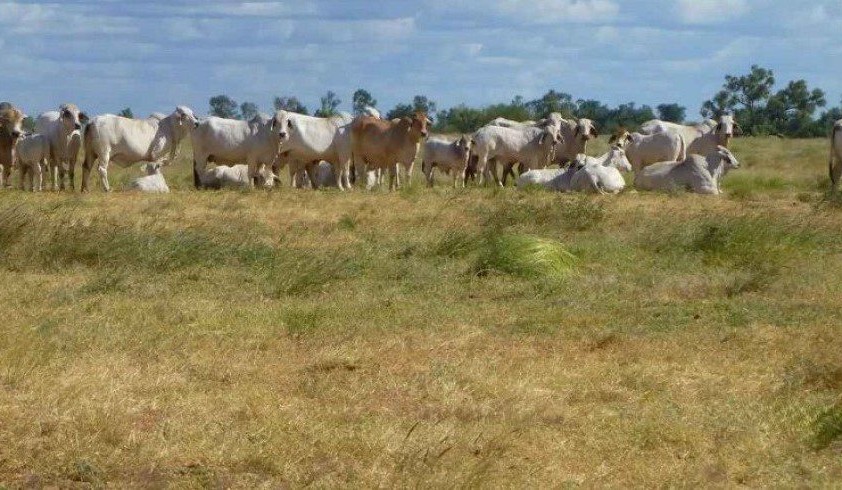
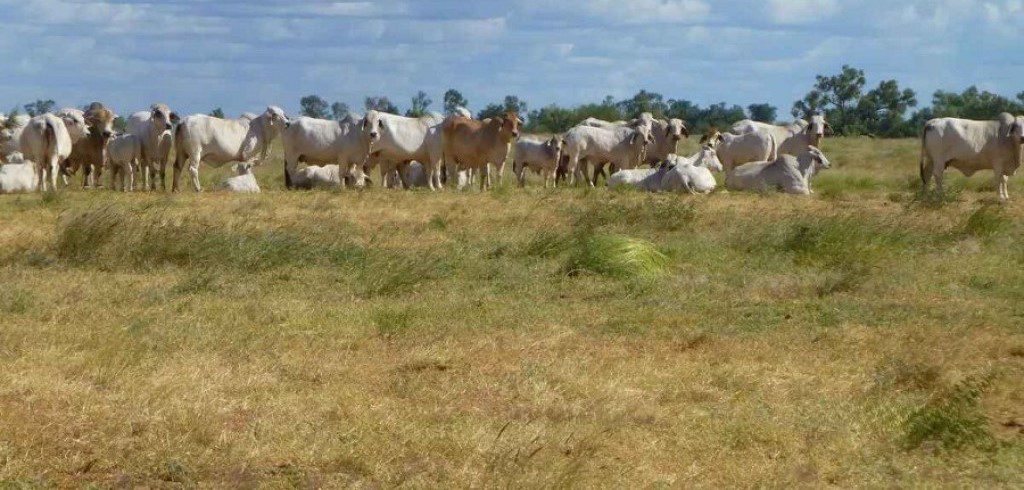
Brahman cattle on Ernestina Plains near Cloncurry
THIS week’s property review examines the north and north-west Queensland grazing property market which has been described as a ‘mixed bag’.
A sluggish start was caused by the Queensland floods and a widespread wet season from late January into early February. Since then, there have been differing pricing outcomes and varying successes in the marketplace.
Roger Hill, partner in valuers Preston Rowe Paterson – Regional North Queensland said PRP sales data showed 24 property deals in the region to date.
This ranged from smaller grazing blocks near Molongle on the coast through to larger operations like May Downs near Mount Isa, Tulmur, Tranby and Owens Creek near Winton.
Mr Hill said marketing periods have been mixed.
“Of the properties that have sold, some were marketed for up to three months, some for up to a year and a couple were on the market for two years.”
In terms of sale volumes, he said 2025 had been a much better year than last year.
“The combination of lower interest rates, better cattle pricing and a good season have spurred the market activity. As well, there have been some good quality stations on offer.”
Southern buyer trend
Six of the 24 sales this year (representing one quarter) have been to southern buyers.
Some of the 24 grazing property sales have been privately negotiated, however the following property sales have been reported by Beef Central:
- 23,800ha Glencoe (Charters Towers) – sold to Pentland’s Rhett Camm, Lolworth Station, for $35.5m WIWO.
- 45,500ha Burlington (Mount Surprise) – purchased by a CQ family for $17m WIWO.
- 11,354ha Ernestina Plains (Julia Creek) – purchased by Dirranbandi’s Doug & Jacque Hemming (Hemming Farming) for $14.8m WIWO including 962 cattle.
- 74,660ha Tulmur, Tranby & Owens Creek (Winton) – sold to two locals for around $20m.
- 9387ha Reedybrook and 25,200ha Hopewell Stations (Greenvale) – sold for a combined $20m.
- 9269ha Barragunda (Hughenden) – purchased by two Far North Queensland producers for more than $9.5m bare.
- 233,000ha May Downs (Mount Isa) – purchased by the McMillan family for $47.5m including 8000 cattle.
- 21,277ha Brookdale (Burketown) – purchased by John and Sue Clarke and family from Almora Station for $14.5m WIWO including around 2754 head of cattle.
- 11,264ha Raelee Downs (Corfield) – currently under offer.
- 10,312ha Moonby (Hughenden) – purchased by Theodore’s Darren Childs for $10.5m ($1018/ha).
Mr Hill said the consistent theme is local sales (ie. between local parties) are reflecting similar parameters to 2022 – before cattle prices slumped in 2023.
“Compared to local established parameters, sales to southerners are up to 35 percent higher. In some instances, northern properties are perceived as being ‘cheap’ and as having more reliable rainfall.”
Mr Hill said typically, a wave of southerners comes to the north every few years and outbids the locals.
“Over the next year or so, the market will choose whether to raise to those new levels or disregard those sales as outliers and maintain the existing values. Certainly, one sale doesn’t make a market, but 25 percent of market volume does have some sort of impact.”
He noted that recently, a successful southern agricultural businessman outbid local buyers paying $14.8m WIWO for Ernestina Plains near Cloncurry.
“A few weeks later, locals bid for Glencoe and Brookdale at prices that reflect the existing market parameters. You cannot pick which vendor is going to benefit from such a deal.”
Interest rates having impact
He said interest rate cuts, improving cattle prices and good seasons were boosting local property market confidence.
“There is more country coming onto the market and some are very good properties. As stock increases, any general value increase is unlikely unless demand starts to outstrip supply. That is certainly not happening as there are properties still on the market that have yet to sell.”
Mr Hill said the Mitchell grass downs market was taking a bit of a break this year.
“It is what occurred in the forest breeding country last year. Demand for Mitchell grass downs country usually increases when it is dry down south or in the Northern Territory.”
“This year, with the widespread season growing such good feed, there is not a lot of demand other than from local families. Like the forest did last year, marketing periods may well extend into next year or vendors may have to lower their expectations to achieve a deal,” Mr Hill said.
Buyers/demand
He said not every property in the north or north-west was selling to strong local or southern demand.
“At times, the northern Mitchell grass country looks appealing to buyers when it is dry in the south and they have no grass down that way. Currently, there is good grass down south, so the buyers from down there are not under pressure to come up and buy blocks near Hughenden and Julia Creek. That may change next year.”
The mixed bag market condition continues, with three Mitchell grass downs properties currently on the market – Hughenden’s 10,086ha Mugwee and Julia Creek’s 6124ha Spellary Creek and 10,062ha Helen Downs.
Mr Hill reported most of the buyer inquiry from successful producers from southern Queensland looking for geographic diversity to complement their existing holdings and who saw value in the north due to its reliable rainfall and scale.
“North and north-west Queensland offer good opportunities for business expansion and diversification. There are development opportunities as well.”
He is also fielding interest from southern Queensland and northern New South Wales farmers.
“They are making sensible inquiry around value parameters, soil types and potential for cropping. Outpriced in their local market, they are willing to take a risk and move north, getting what is perceived to be a cheaper land alternative across a larger area.”
Mr Hill said such a move involves considerable risk and investment, so the buy price could not be too ‘outlandish’.
“Sensibly, these farmers are willing to sit down and work together to correctly price a property considering the risk they are taking.”
He predicts the mixed bag market conditions are likely to continue until the next wet.
“Some good quality properties are coming onto the market, and it will be interesting to see what impact the southern buyers have on those transactions with cattle prices increasing and interest rates now lower.”
A good update and summary from Roger