
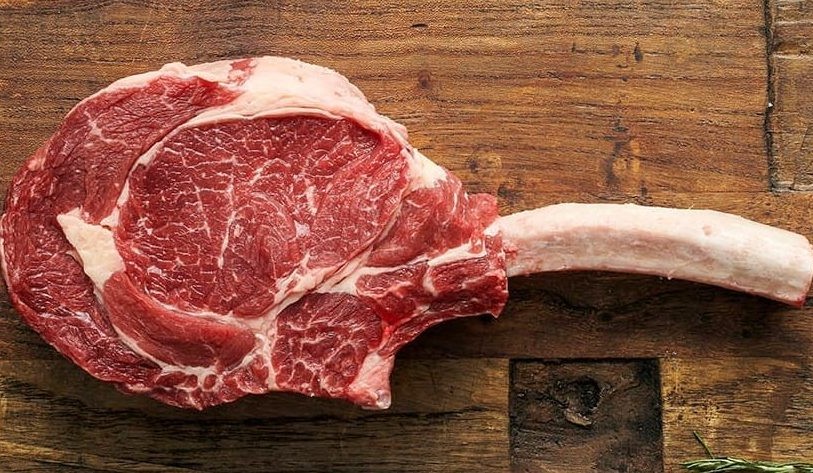
IF commercial reality has anything to do with it, there will be zero beef trade out of the United States into Australia any time soon, following the Australian Federal Government’s recent approval for US beef imports – including that produced from cattle bred in Mexico or Canada.
Using readily available data from sources like the Expana Benchmark price report (formerly known as Urner Barry Yellow Sheet) published on Friday, we’ve done some back-of-the-envelope sums on what US beef looks like, landed in the Australian market. And the numbers don’t look pretty.
Given the blistering prices being recorded for cattle and wholesale beef in the United States at present, any US exporter consigning shipments to Australia would ‘need their head read’ (to quote a trade source), this like-for-like price comparison has shown.
USDA Prime likely candidate
Following the Federal Government’s announcement last week that US beef trade into Australia can resume, after a 22-year absence due to the detection of BSE in the US herd, there’s been industry speculation about what type of product might be involved in early trade, and into which segment in Australia it might flow.
All trade sources we’ve spoke to think that high-end USDA Prime grade steak cuts would be the likely target.
End-users would likely be higher-end Australian steak restaurants and hotels, looking for some ‘novelty factor’ in being able to feature an ‘Omaha rib-eye’ on their menus for the first time in two decades. National supermarket chains Woolworths and Coles both carry clear ‘Australian product only’ messaging in their beef offerings, ruling them out. But warehouse retail chain Costco has been suggested as a possible user, given the company’s US origins.
But how would a US product like this stack-up, price wise in Australia?
 For the purposes of this comparison we are using two examples, each based on four grilling cuts: striploin, cube roll (lip on), tenderloin (strap/on) and rump. Worth noting, the comparisons for rump contrast a little with the other cuts, because unlike the US market, Australians enjoy rump as a grilling cut, and thus are prepared to pay relatively more for it. Nor do US consumers value tenderloin in the same way that Australians do.
US prices are based on Expana Benchmark data, while Australian prices come from wholesale trade sources this week.
Yellow Sheet prices are FOB – but in this case that does not mean Free-On-Board an export shipping vessel, but FOB a refrigerated truck, somewhere in middle-America beef heartland.
US product costings are based on shipping Nebraska/Kansas to the US West coast ports (A10c/kg); containerised sea freight to eastern Australian ports (A50c/kg); plus AQIS inspection charges and clearing costs in Australia into a domestic coldstore ready for sale and distribution (10c/kg – total A70c/kg). Note that we have adjusted the figures to reflect the fact that tenderloins in the Australian domestic market are mostly sold strap-off – not strap-on like those in the US.
Example 1: USDA Certified Angus Vs Australian Grainfed Angus

The costings clearly show that in the closest possible ‘like-for-like’ comparisons, US Certified Angus beef would be anywhere from 29pc (cube roll) higher than Australian, to 71pc higher (rump). The price advantage to Australian product in $/kg terms would include A$10/kg (rump); $16.44/kg (tenderloin); $12/kg (striploin); and $9/kg on cube roll.
Example 2: USDA Prime Vs Marbling score 4+ Australian grainfed

The costings show that USDA Prime beef Vs Australian grainfed would be anywhere from 27pc worse off (cube roll), to 65pc (rump). The price advantage in $/kg terms to Australian product would be almost A$11/kg (rump); $15.30/kg (striploin); $10/kg (cube roll); and $12.60/kg on tenderloin.
The comparison does not include shelf-life performance, for example, where independent international analysis shows that Australian chilled product has much greater shelf-life than equivalent US beef. That comparison is only made worse when US has to spend three weeks on the water to get here.
US marbled beef no longer a novelty
An export trade source said prior to Australia’s ban on US beef in 2003, very small quantities of US grainfed grilling cuts were occasionally seen in the Australian markets – much of it driven by the ‘novelty factor.’
“It’s similar to the interest the upper-end of the Australian food service trade has shown in Japanese-produced Fullblood Wagyu beef, where the demand is extremely limited due to price,” he said.
“But its important to recognise that when US beef like this was last coming into Australia back in the 2000s, the Australian industry was not producing large amounts of Wagyu or longfed Angus marbled beef. But that’s all changed, and USDA Prime product like this would no longer stand out, like it once did,” he said.
“And the equivalent Australian Wagyu and MB4+ Angus product – from supply chains like Rangers Valley or Jacks Creek, for example – is now readily available, and at much lower prices than current US price levels.”
“Any US product arriving on these shores in coming months would absolutely struggle to compete, under any realistic commercial comparison,” the trader said.
Forecasts made in this earlier Beef Central article last week suggested that if it arrives at all, the first US product shipped to Australia is unlikely to clear customs before around mid-October. The only exception to that would be an attempt at air-freight shipment, made to steal the limelight for ‘symbolic’ reasons.
Stand by for the breathless articles in the metropolitan media if/when that happens.
There would not be a hope in hell of me purchasing Americn meat of any description, the main reason would be that we are starting to importing American beef and only because our prime minister is to weak to tell the the Bully of America to shove his beef apart from that why would I buy it when we have the best meat in the world.
I don't believe US Beef will be bought in Australia as like most Australian consumers when they shop, be it for fruit, seafood or meat or other food items look for the "Australian" grown phrase to support our own farmers and industries as we know it is the best product anyway.
And this is the way the Australian Government treat Australian farmers what a sad state of affairs.Why on earth would a true Aussie buy US beef when it does not even come close to the taste of Aussie beef.I will not be buying it,and if i go to a restaurant i will ask if it is US beef and if so i will leave without ordering.The question i ask is why are the Australian people allowing this pathetic government to get away with this?
Surely this is not about beef, and everything about keeping the US on side, given the expansion and growing influence of the PRC across the region. Who knows when we might need a western ally?
I've watched some of Trump's superficial comments recently.
His knowledge of Economics appears very deficient & even worse for currency comparisons ?
He's been reported as contributing $11T Global Stock losses in the past few months, even worse than the estimated 2T Russian/Ukraine War losses to date !? He certainly knows how to burn OPM at an unprecedented rate; Lord spare us please !!
is anyone thinking that higher cost beef from the US might provide excuse for local suppliers to raise prices?
I would have thought the US beef is not our risk it is the Mexican crossed border meat that poses the risk. Beef from Mexico, Portugal and Brazil. Its all going over the border into the US, cheaply processed using migrant labour and guess what on sold as US Beef? What is its price? Yes a portion is sold after being lot fed in the US, but some must just get processed direct. If they never have ever had much control over the border how realistic or realiable is traceability going to be. Personally i could trust the US traceability on their own grown Beef, I can't on the over the border Beef. No science based study could trust traceability either, in fact it could only be, on a weight of evidence, classified as extremely risky given the South American diseases and their ability to follow rules.
You are also ignoring the obvious disgust the average Australian consumer has for the United States under Donald Trump.
We won't buy American beef because its inferior, more likely to carry disease, more expensive and because America has become a hostile country that doesn't understand respect and doesn't believe in friendship or alliances.
Disingenuous, all money value need to be in the same currency which would best be the subject country, $AU. This is sloppy work.
<strong>All the comparisons ARE in Australian dollars, Leonie. As clearly described in the tables, the only column not using A$ is the domestic US price. That would make little sense. Editor</strong>
The ignorant lazy media outlets harp about competition. I believe this is not the issue. The BIG issue is the real risk of exotic disease introduction.
Hi Beef Central,
Your breakdown comparing Australian grain-fed beef to imported US Prime grade beef is right on the money.
And your “Trader Joe” nailed it with insider precision—if it’s even possible to be more accurate, he’s pulled it off.
From the vantage point of someone who’s spent years observing US beef flows into Asian markets, here are a few points worth reiterating for the record:
1. The Prime Illusion
Less than 3% of all US beef qualifies as Prime, and virtually all of it is consumed domestically. What’s labeled as Prime in export channels—especially into Asia—is often sold as Choice grade, if not lower. Let’s call it what it is: aspirational branding.
2. Symbolic Promotion, Minimal Impact
Sure, we might see a showcase effort—a ribbon-cutting campaign by the US Embassy or an American Chamber activation—but that won’t dent the market. These promotions are designed for the un-educated media, (unlike Beef Central,) not impact, and they won't change the purchasing behavior of Aussie buyers who know their cuts and more importantly their price points.
3. Supply, Demand, and Burger Economics
Trade flows are guided by simple economics. US buyers want what we have: lean manufacturing trimmings to balance with their high-fat domestic supply. That’s the secret sauce for their burgers—on average, 22% of Americans eat one daily. Sure, the US buys some grain-fed or grass-fed beef and even lamb, but not in quantities that warrant a dramatic story line.
So, while the media may seek a narrative, it’s just supply meeting demand. Australia produces what the US needs, and the numbers do the talking.
Finally, and in my opinion, again, the extra tariffs put on our beef will not change anything one iota either.
Penty of headline grabbing news stories but the real focus by all those involved in the meat industry and government is the previous two stories I have read with the headlines. “CALLS FOR REVIEW AS AUSTRALIA OPENS THE DOOR TO US BEEF” How the hell that did it get through and who rushed it through the fast lane? The other one is “AS THE US CRITICIZED AUSTRALIA’S BEEF IMPORT RESTRICTIONS, IT QUIETLY REMOVED LIVE CATTLE IMPORT PROTOCOL” Again who let this through to the keeper without the batsman knowing the ball had been bowled?
We are not afraid of competing with imported product and. It’s not the current trade environment we are worried about that will not remain like this for long. Look how quickly our commodity prices fluctuate.
All the media outlets and advocacy groups seem to be missing the point that it is the BIOSECURITY risks we are terrified of.
- There is no punishment for importing illegal product as demonstrated last month
- There is zero effort being made buy AQIS to protect us from the exotic diseases from the north
- The transmission threat will come from feral animals not domesticated animals should an outbreak occur but there is no practical way to manage this risk. Ear tags certainly won’t help.
Ask the prawn farmers how warning the government against a white spot incursion went for them !!!!
And then there would be the yield difference and the freight and the hassle, you have nothing to fear but fear itself.