
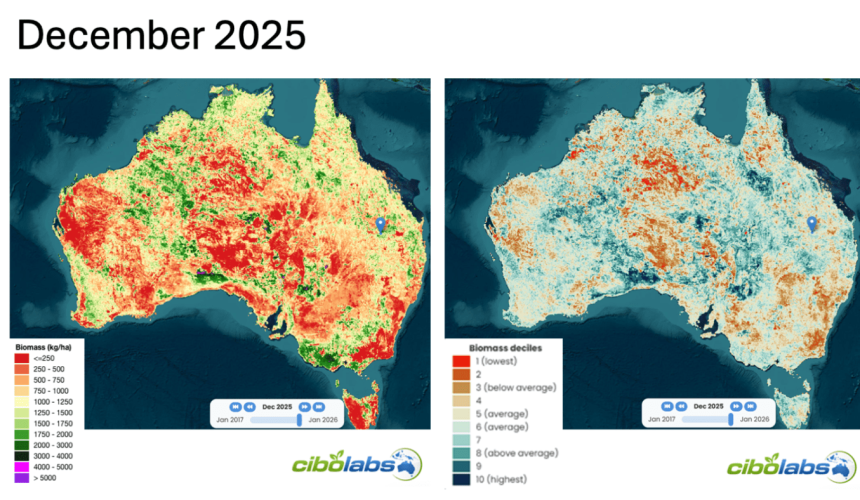
Slideshow – click and pause as required on view sequential maps in slideshow or click here to view in new window. (For geographic reference, blue teardrop marker in maps shows the location of Injune, Qld)
SATELLITE-derived pasture biomass maps show a striking reversal in seasonal conditions for Australia’s cattle producers over the 12 months to December 2025, with feed availability shifting from a northern-weighted season last year to a far more southern-focused recovery heading into the current summer.
The latest national biomass maps from Cibolabs, which measure kilograms of dry matter per hectare alongside pasture biomass deciles, highlight easing drought pressure across large parts of southern Australia, while much of the northern pastoral zone has yet to see its growing season properly take off.
Importantly, the December 2025 maps reflect conditions only up to the end of last year and do not yet capture the impacts of recent northern flooding or southern bushfires. Updated imagery incorporating those events will be published by Beef Central in coming weeks.
Below is a step by step run through of what Cibolabs national pasture biomass monitor maps show – readers can also visit the Cibolabs website and use the same interactive map to view their own region across any time period of their choice at this link.
Explainer panel: How to read pasture biomass vs pasture decilesThe pasture maps use two related but different measures – biomass and deciles – and both are important.
A low decile means pasture levels are well below what is normally expected for that month, while a high decile indicates above-average seasonal performance – even if absolute biomass levels are not particularly high. Because of this, areas with very low pasture cover can shift quickly into extreme low deciles with relatively small changes in growth, while high-biomass regions need much larger increases or declines to move deciles significantly. Used together, biomass shows how much feed is there, while deciles show how the season is tracking. |
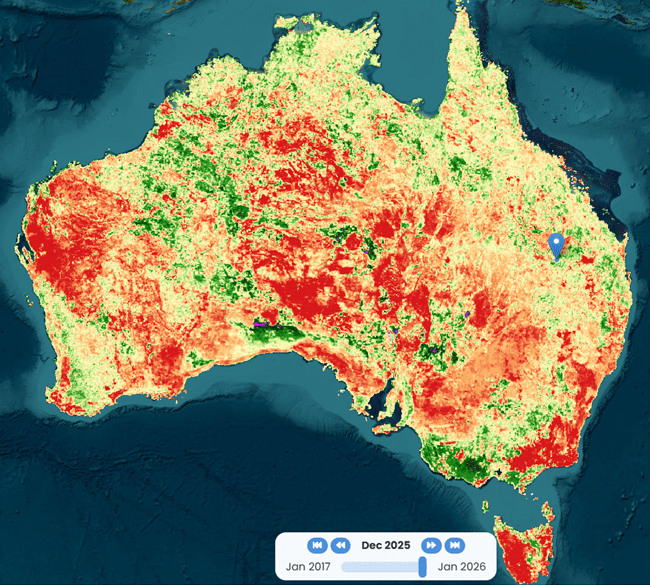
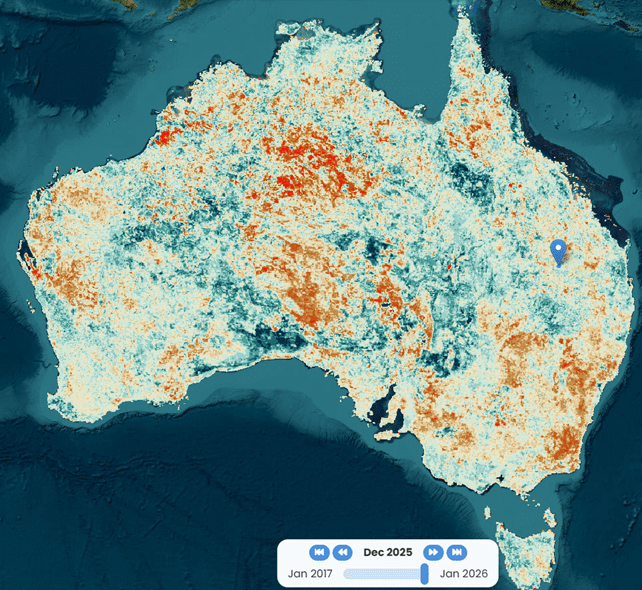
Where conditions sit now – December 2025
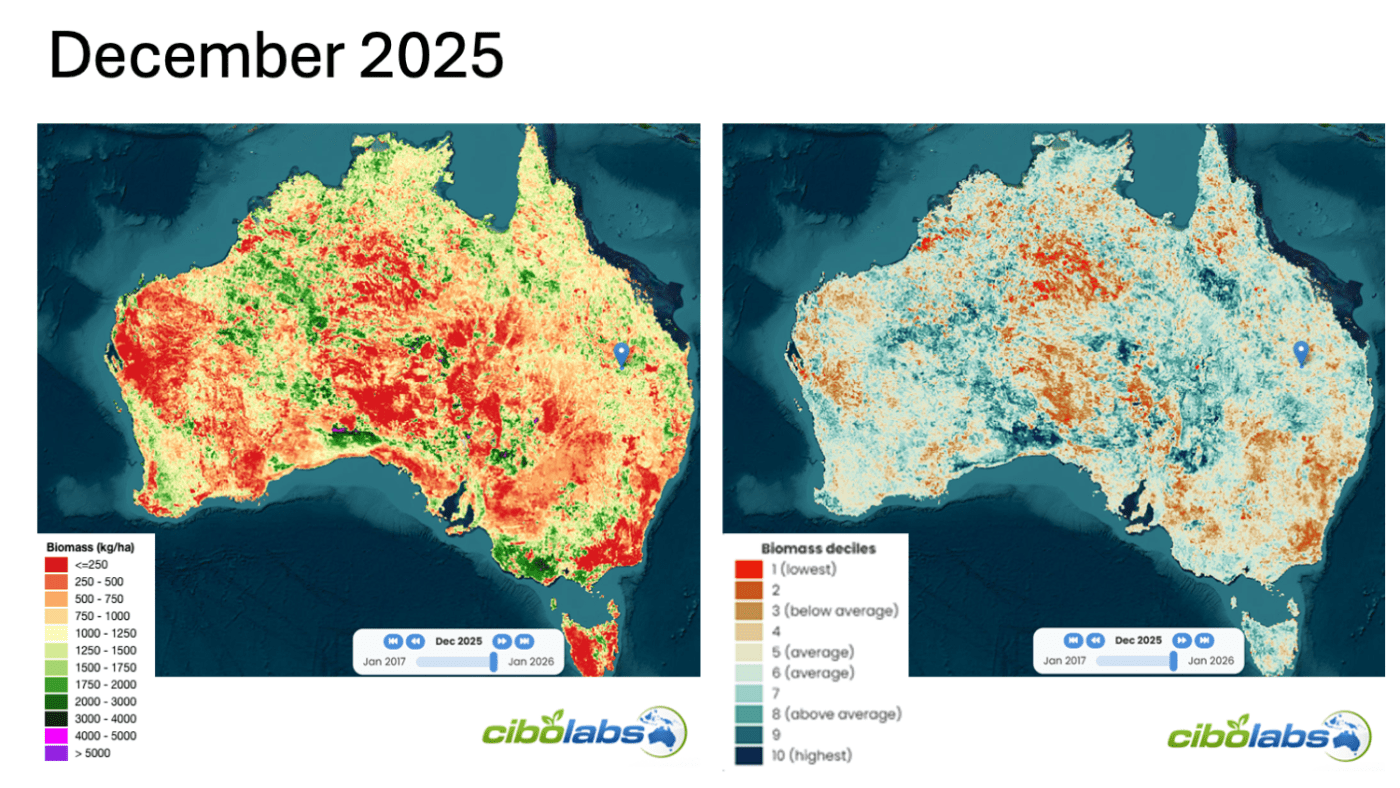
As of late December 2025, pasture biomass levels were mixed, with a highlight being the residual feed still evident in western Queensland’s Channel Country following flooding earlier in 2025.
Conditions on the Barkly and northern Queensland remained either average to below average, reflecting a delayed or weak start to the wet season.
In contrast, the most notable development nationally was the turnaround across southern grazing regions.
Areas of the south-west slopes of NSW, western and southern Victoria, and much of South Australia were recording above-average pasture biomass deciles at the end of December 2025, signalling a meaningful improvement in seasonal conditions compared with the same time 2024.
While absolute biomass levels in parts of southern NSW and northern Victoria remain relatively low, decile rankings show that pasture growth has been stronger than the long-term norm for this time of year, particularly across western Victoria and into South Australia.
Western Australia presents a mixed picture. Southern rangelands that were above average late last year have slipped back into below-average deciles, highlighting the state’s capacity to change rapidly with rainfall that can arrive at any time of year.
Tasmania has also seen a clear seasonal flip, with the north of the state now performing better relative to average, while parts of the central tablelands have eased from their stronger position last year.
December 2024 – strong north, stressed south
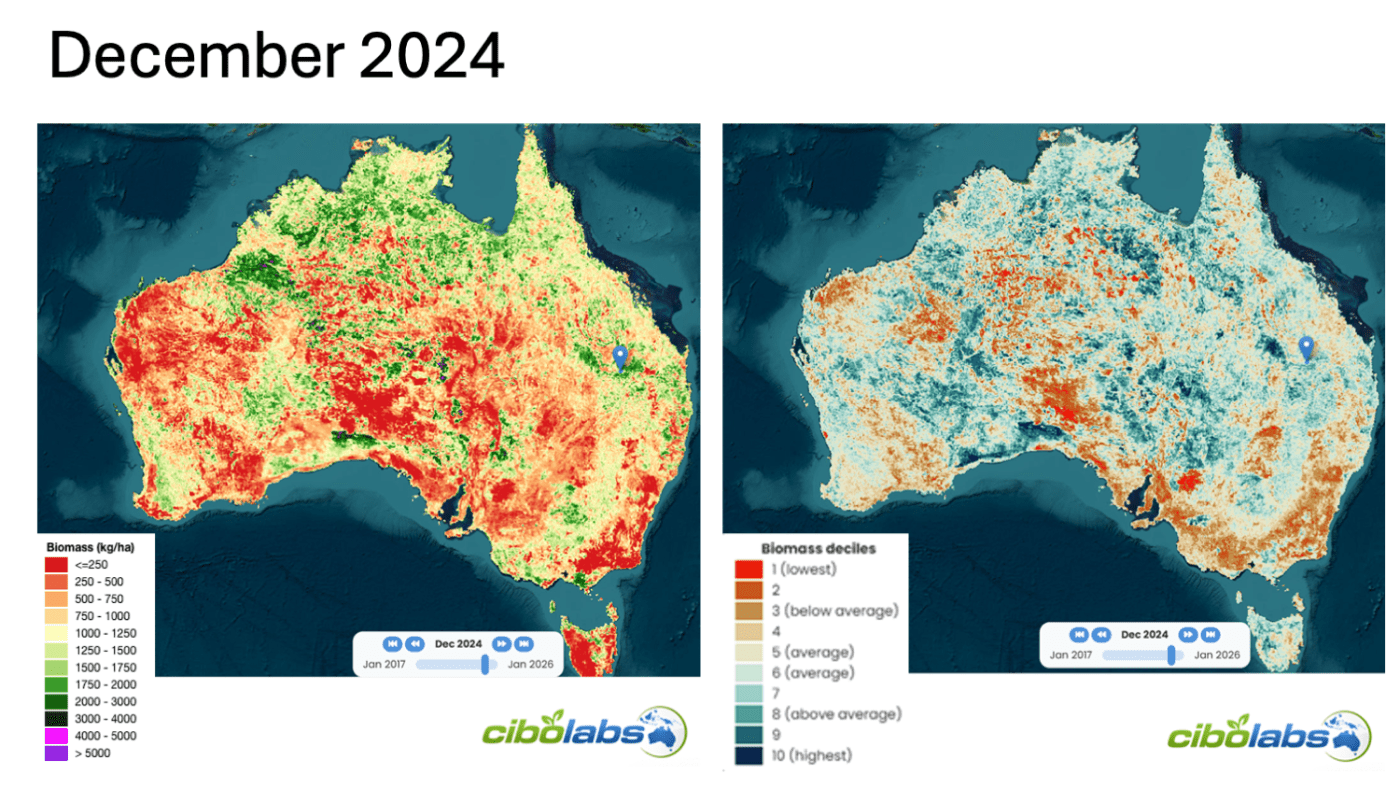
Twelve months ago, the national picture looked very different.
In December 2024, absolute pasture biomass levels were moderate across much of the northern pastoral system, reflecting a reasonable northern season. Even where biomass totals were not especially high, pasture deciles showed much of the north sitting above average for that time of year.
By contrast, large swathes of southern Australia were under significant pressure. Central and southern NSW, the south-west slopes, western Victoria and much of South Australia were firmly in the lowest pasture deciles, indicating conditions well below the long-term average.
This zone encompasses a substantial portion of Australia’s southern breeding and backgrounding country, including key Angus-producing regions, and the low deciles reflected the depth of feed shortages confronting producers at that point.
Early 2025 – floods in the west, uneven recovery elsewhere
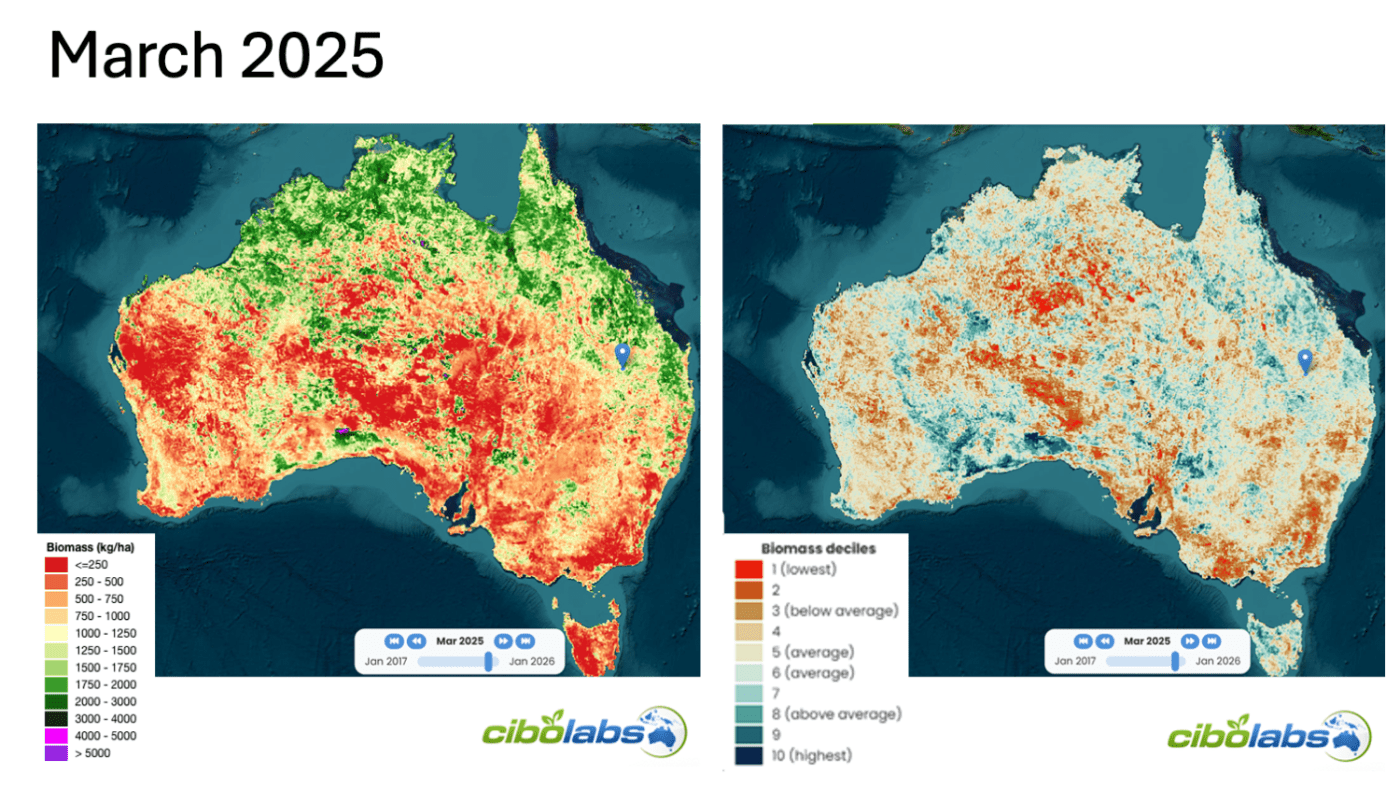
As the season progressed into early 2025, the impact of flooding became evident across western Queensland.
By March 2025, absolute biomass maps clearly showed a surge in pasture growth through the Channel Country, where floodwaters translated into substantial increases in kilograms of dry matter per hectare. Those gains were reflected in very high pasture deciles, with biomass well above average for the time of year.
Elsewhere, however, conditions remained uneven. While northern Australia experienced a generally reasonable growing season, pasture deciles suggested biomass was still tracking below average in many areas, particularly through central Queensland.
Southern Australia remained the weakest part of the national picture through this period, with pasture deciles across the south-west slopes, western Victoria and South Australia remaining extremely low for the time of year, despite some localised growth.
Mid-year – gradual southern improvement
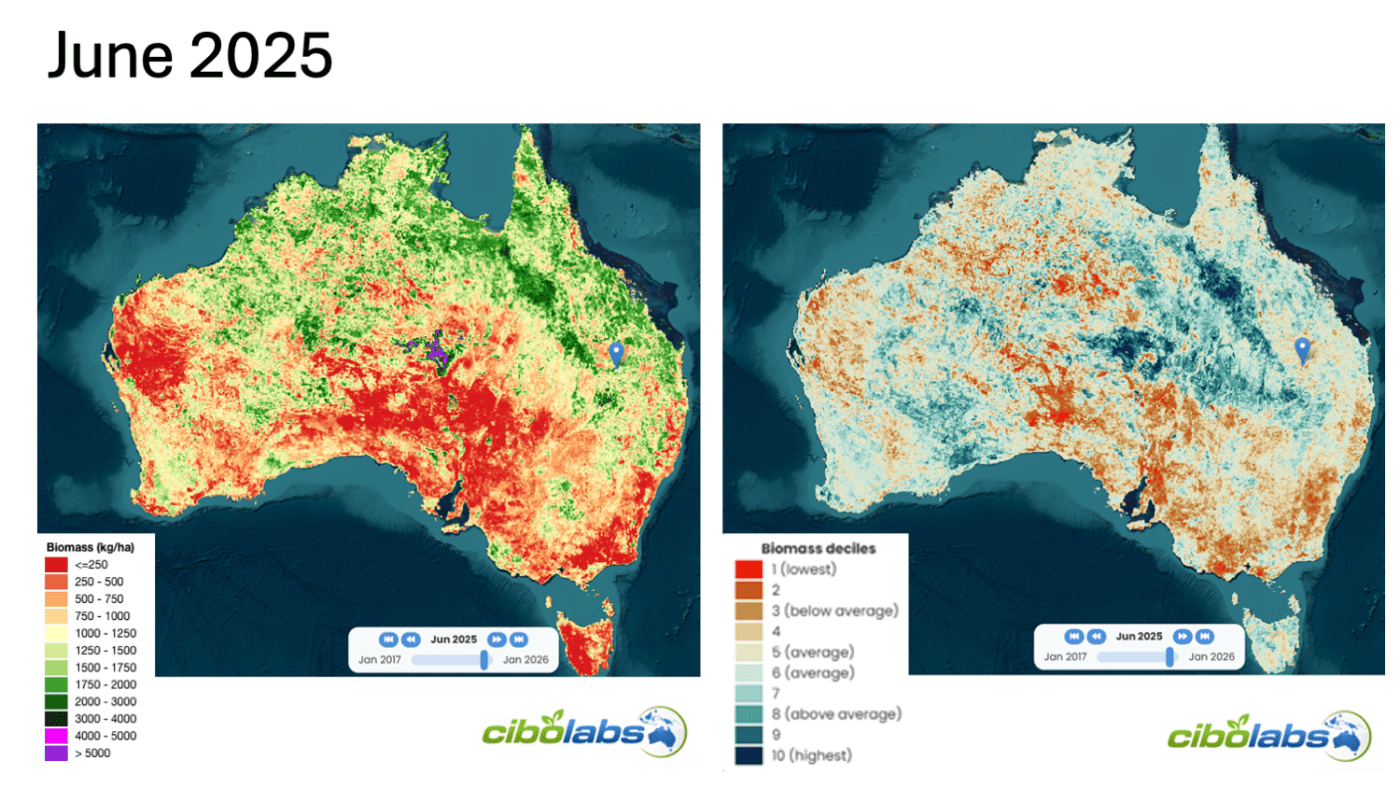
By mid-2025, signs of improvement began to emerge across southern grazing systems.
Although absolute biomass levels remained modest in many areas, pasture growth through winter and early spring improved relative to long-term averages, particularly across western Victoria and parts of South Australia. This gradual recovery laid the foundation for the stronger decile performance now evident in December.
Meanwhile, northern regions began to lose their relative advantage as the wet season failed to build momentum in many areas, leaving large parts of the north tracking average to below average by mid-year.
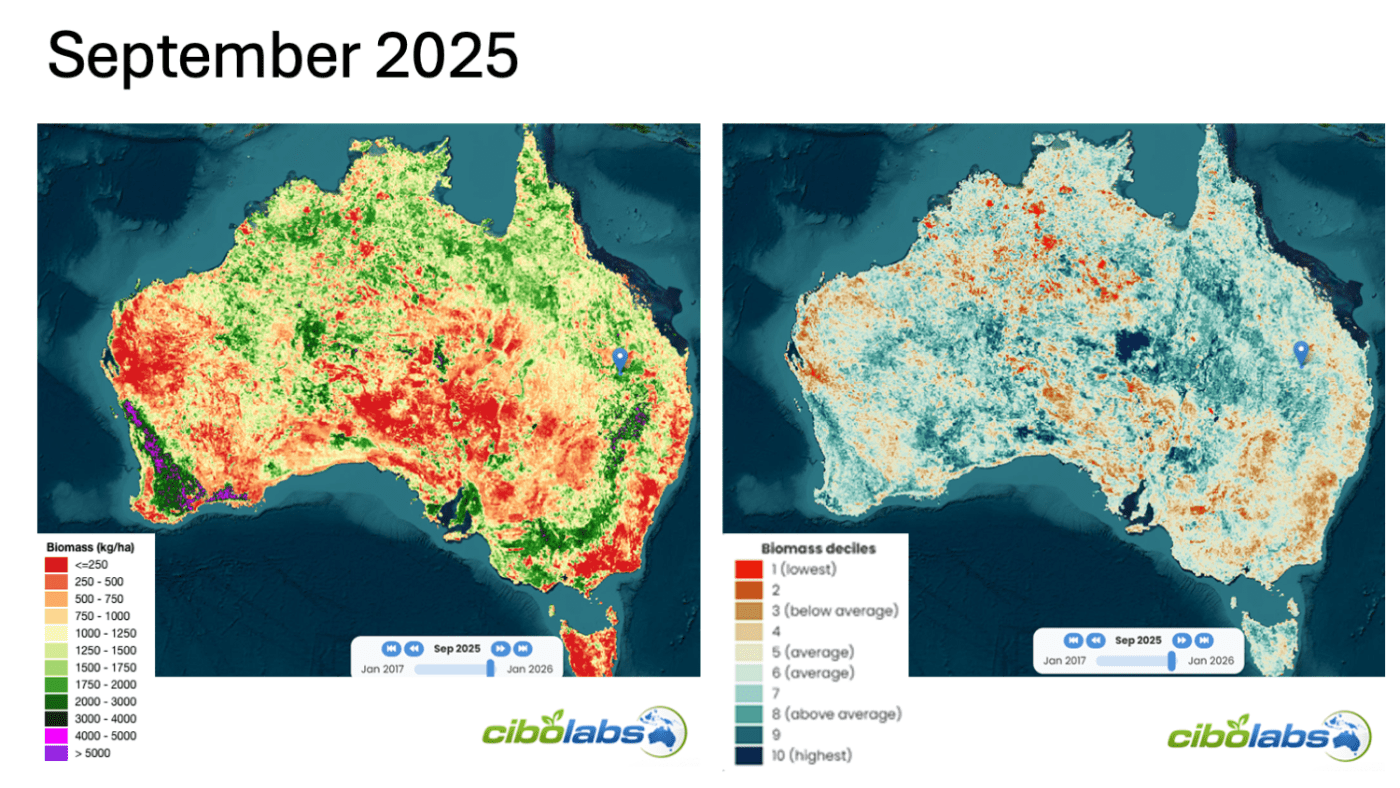
A clear seasonal swing
Overall, the pasture biomass maps show a clear national swing over the past 12 months – from a season that favoured northern producers and placed heavy pressure on southern systems, to one in which southern Australia has regained momentum while much of the north waits for meaningful seasonal rainfall.
With flood and fire impacts yet to be fully captured in the latest imagery, Beef Central will return with Cibolabs in a few weeks to provide an update on how those events have reshaped the national pasture biomass situation.