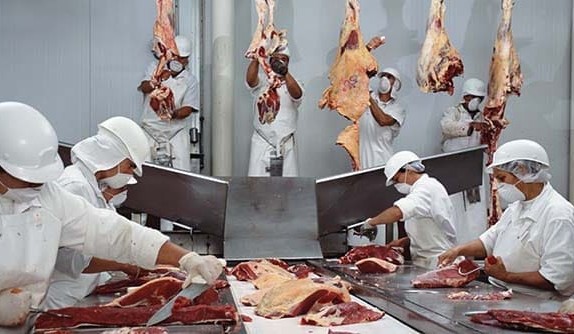
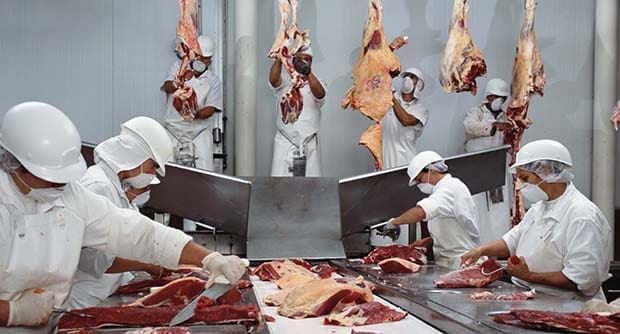
FOUR substantial Central Queensland beef producer families are behind the ambitious project to establish a large, ultra-modern, heavily-integrated beef processing and lotfeeding facility near Emerald in Central Queensland.
The first that many had heard about the Iona Beef project was a State Government statement released yesterday (click here to access) stating that the government had declared the proposed Iona Beef Processing Project in Central Queensland a ‘prescribed project’, fast-tracking the development.
Behind the project is a company called Northern Australian Agrifoods, headed by Emerald-based cattle producer Martin Laffer, and three other well established CQ grazing families, whose identities have not been disclosed at this stage. All four initial investors have provided the seed capital for the project, with Mr Laffer acting as managing director. The partners’ cattle country is primarily located around Comet, Clermont, Emerald and Capella.
Project partners and capital is now being sought, either from within Australia or overseas, with an overall project budget likely to be around $260 million covering a state of the art beef plant with proposed capacity for up to 200,000 head per year, adjacent nearby feedlot infrastructure, rendering plant, co-generation and biogas facilities, bio-nutrient processing, and a water treatment plant.
He said the investors had been working at a low-key behind the scenes for the past six years.
The project’s genesis came from earlier feasibility studies carried out by the Central Highlands Regional Council eight or nine years ago – one of many such abattoir proposals that emerged across Queensland at the time.
“That brought a few interested parties to the table, and it has gone from there, with a steering committee established,” Mr Laffer said.
“We now have a clear idea what we want to achieve, and how we’re going to go about it,” he said
Government showed little direct interest in the concept until the foundation backers bought 2500ha local grazing property Iona Downs, 22km west of Emerald, which will be the site of the integrated abattoir/feedlot venture.
“We did our due diligence on the property, and it was exactly what we wanted in a project site,” Mr Laffer said.
The seed capital providers have spent ‘a fair bit of their own money on the project to date, with no government assistance at this stage.
“We’ve deliberately kept a low profile, because we don’t intend to say something that we can’t deliver on,” he said.
Service kill component
While the four foundation partners in the project anticipate supplying up to 30,000-40,000 head of finished cattle each year to the plant once completed, service kill will be a key part of the business model.
Some of the project investors already operate their own established feedlot, including some with long term supply contracts with major supermarket groups.
“In my own case, I’ve had great difficulty getting access to service kill in Queensland – I had to cart cattle to Victoria to direct-supply beef to China,” Mr Laffer said.
“Service kill will be a component, but not the only part of the new business.”
Another part of the explanation is the significant distances that some of us are having to cart finished cattle for slaughter – whether it be Coles, Certified Grassfed or Authentic.”
Mr Laffer said the partners had not spoken in any formal sense to potential customers yet – whether it be supermarket groups, potential supplies like the new Mort & Co Gogango feedlot or other supply chains.
A rumour suggesting that the Hewitt Certified Organic program was a potential investor or customer has already been dismissed by Hewitt Australia.
‘We’ve had some informal discussions with a few potential customers or partners, but it’s very early stages,” Mr Laffer said.
“But we are not in a ‘build it and they will come frame of mind. But in reality, we are not going to be able to proceed with the project without investment from other stakeholders, supply chains, or end users. We’re now open for those discussions.”
“Initially its mostly about Australian investment, but overseas has a particular need, and it’s called food security,” he said.
“If an overseas entity sees Australian beef as part of their food security solution, they need to put some skin in the game. We’ve got the supply chains that can deliver, and we then make sure we have enough processing experience around us to make sure we do it in an efficient and risk-managed way.”
Beef Central pointed to the example of Livingstone Beef in the NT as a case study. Livingstone was spawned and constructed during a period of high demand and price for manufacturing beef, but by the time it was commissioned the market had substantially retracted. Was there risk in that for Iona?
“We think using the Darwin meatworks is a really bad comparison for our project,” Mr Laffer said.
“It’s thrown in our face all the time, but we have done a lot of due diligence, turned over every stone, and have ignored nobody’s advice. We’ve learned that everybody wants a meatworks, but nobody wants to build, own and operate one. We are very understanding of that.”
“Service kill will play an important part. It enables other investors to come in, get their kills done how, where and when they want, and most importantly, guarantee space.”
“And keep in mind that most processing facilities in Queensland have some serious age on them, and the ability to retro-fit new technology, automation and other systems is often quite limited. This project will have as much new technology in it as possible.”
The project backers have visited recently-built meat processing plants in other parts of Australia, including the impressive TFI Murray Bridge plant in South Australia, looking for ideas. TFI is not directly aligned with the project, at this stage at least.
Mr Laffer said the project model had changed substantially over time. Four years ago, we thought it might be hot-boning only, going as quick as possible. But since then, it’s a whole new world, with technology a big driver, and the synergies between the processing plant and feedlot a strong factor.
The plant will have the ability to process everything from high quality chilled Wagyu beef (Emerald is in the middle of an intensive Wagyu cattle production area), through to grinding meat.
But he stressed that the project was “not just about an abattoir.”
“A stand-alone meatworks on a hill does not survive, and will not get off the ground. But this integrated project is dependent on a) the large feedlot adjacent to the plant, power generation from feedlot waste, biogas, tallow and other sources, and high-value fertiliser production.”
“The reason the state government has now come on board is this integrated package concept,” Mr Laffer said.
The project had all the underground water it needed to function on the Iona property, he said.
“It’s one of the reasons why we bought the property, and it showed up in our due diligence.”
“We’ll now get on with our business, start our DA development approval processes, and start to talk with potential investors ands customers,” he said.
“We’re going to have to build a lot of the infrastructure ourselves, because the capital constraints on construction now are enormous. Nobody wants to see a cost blow-out of five, ten, fifteen percent on a $260 million fully-integrated project.”
“But to go ahead, the project needs further funding. All four seed capital investors have substantial assets and businesses supporting the project. But we are not a bottomless pit, and will need serious equity from the right partners.
“We know we have to manage risk with this project, but we are not averse to it. Building the project in a way that makes it attractive to new investors will help de-risk our own businesses.”
“But equally this is a community thing. Emerald is a dynamic area, but heavily dependent on coal mining – but there is no guarantee over mining in ten or 20 years, The region and community needs to diversify.”
Interested potential domestic or international investors in the project can contact Beef Central in the first instance, and we will pass on inquiries to Iona Beef to follow up. Email: jon@beefcentral.com
One assumes from the article that the unmentioned Signature Beef abattoir, just 100km away, is already at capacity with no opportunity for further investment/expansion?