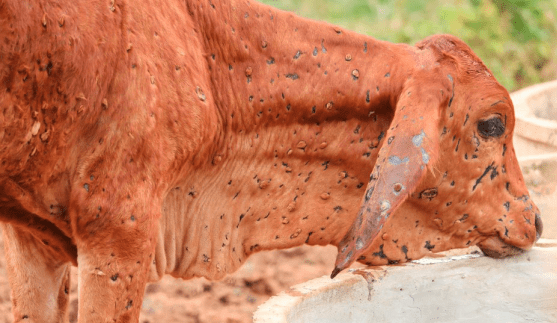
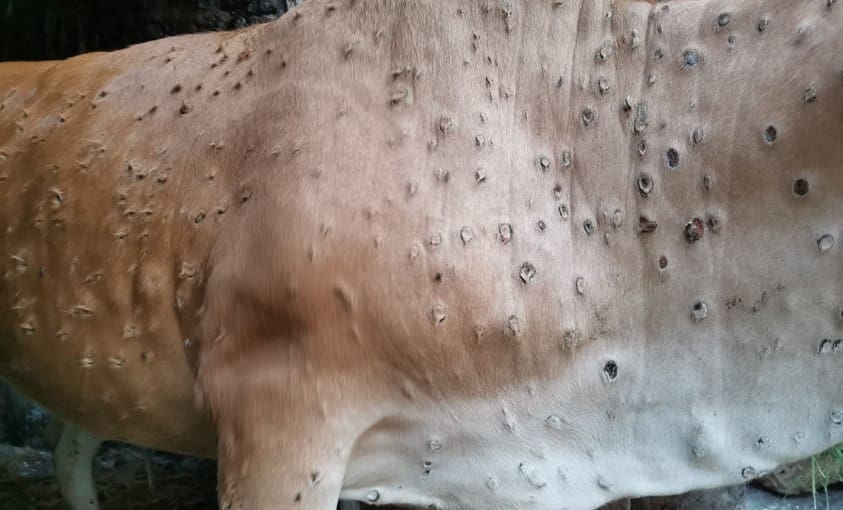
The confirmation of lumpy skin disease in Bali this week has brought renewed focus to Australia’s biosecurity preparedness for one of the cattle industry’s most disruptive exotic disease threats.
The disease has never been detected in Australia, but if an incursion was to occur it would trigger immediate regulatory and market disruptions for Australian beef and cattle exports.
While there are some grey areas surrounding what would happen in the event of an outbreak, an immediate halt on all livestock movements in affected areas and the wider suspension of key beef and cattle export markets are among the general assumptions of what would occur.
The viral disease, which can be spread by airborne insects, has moved from Africa north to the Middle East and Europe and south through Asia in little over a decade. The latest movement from the Indonesian island of Java to nearby Bali continues an eastern progression that moves lumpy skin disease to within about 1200km of the Australian mainland.
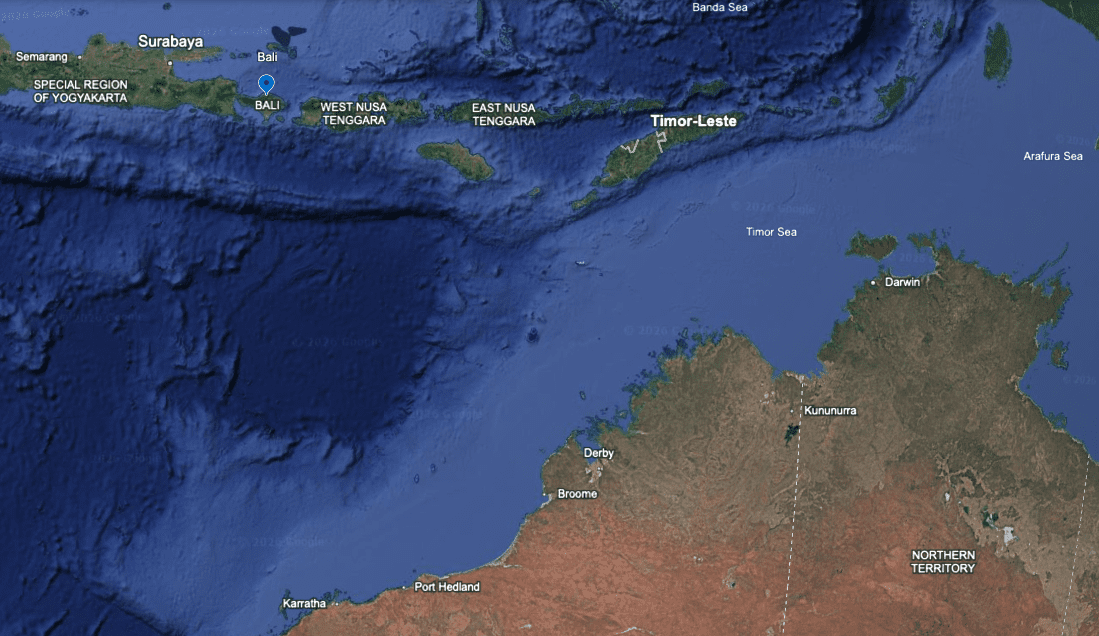
Image: Google Earth
Australian Government and industry representatives have been watching the march of LSD closely, particularly since its first detection in Indonesia in 2022.
Animal Health Australia (AHA) has described the Bali detection as “notable but not unexpected”.
“Australia’s strict biosecurity measures continue to effectively manage the risk of LSD entering the country,” it told Beef Central this week.
It also points to the surveillance and preparedness work underway through the National LSD Action Plan which also contains detailed quarterly reports on progress (See full statement from AHA CEO Dr Samantha Allen below this article).
A primary risk to Australia is from insects flying across or being blown across the ocean to northern Australia.
As Dr Michael Patching explained this week, Bali has high livestock density, plenty of inter-island movement, and heavy tourist traffic into Australia, which means the risk of human-assisted spread is just as real, especially where biosecurity controls are patchy.
What would an Australian LSD detection mean for trade and movements?
So what would happen if Australia woke to news of an LSD detection?
While it is hard to get definitive answers, it is clear that a detection here would cause significant and immediate disruptions to Australia’s cattle industry.
It would instantly alter Australia’s “free from” status, which would prevent the Australian Government from issuing export certificates, and result in an immediate suspension of trade to some, presumably many, markets for boxed beef and live cattle.
To re-establish disease freedom, Australia would need to commence negotiations with each individual destination market to regain access, which could take months and possibly years depending on the circumstances and eradication time frames, according to World Organisation for Animal Health (WOAH) Guidelines.
Beef Central’s attempts to get specific details on exactly which markets for boxed beef or cattle would be immediately affected in the event of an LSD detection in Australia have not been highly successful.
The Department of Agriculture, Fisheries and Forestry (DAFF) provided a limited response to that question.
Its brief response noted that the Department has undertaken proactive preparedness activities, and, in the event of an outbreak, it “would work with international trading partners to minimise the effect on trade”.
Livestock movement controls
In response to Beef Central, Animal Health Australia said if LSD was detected in Australia, the response would follow the nationally agreed AUSVETPLAN strategy.
It said a detection would not automatically trigger a national livestock standstill.
“Unlike foot-and-mouth disease, a nationwide standstill is not a prescribed control measure for lumpy skin disease.
“Instead, targeted movement controls and other response measures would be applied in affected areas to contain and eradicate the disease.”
It added that an incursion would have implications for some export markets, as trading partners may temporarily pause imports while Australia confirms the situation and demonstrates effective control – see full AHA statement below this article.
Some industry representatives have told Beef Central that their understanding is that an LSD outbreak in Australia would trigger an immediate suspension of exports to all beef and cattle markets, although this has not been formally confirmed by authorities.
European cases prompt trade suspensions
Australia itself has recently imposed suspensions against products from other countries on LSD grounds. Last year when the World Organisation for Animal Health was notified of LSD detections in Italy, France and Spain, Australia immediately removed them from the LSD-free country list and the list of countries approved for bovine fluids and tissues, as did the US, Japan and Canada.
In the wake of those outbreaks, the Swiss Government began vaccinating cattle against LSD as a precautionary measure, which led to Switzerland being added to the list of suspended countries as well.
But other sources indicate that there is scope for pre-negotiation to prevent or minimise the loss of markets should an outbreak eventuate.
World Organisation of Animal Health guidelines classify “bovine skeletal muscle meat” – beef – as a “safe commodity” for LSD, so it recommends no LSD-related conditions on the trade of these products.
This provides an opportunity for countries to agree to the safe trade in these products regardless of the countries’ LSD status.
Australian Government officials and industry bodies have been working proactively with key trading partners to have these discussions in recent years.
In one example of how such progress is being made, a National Lumpy Skin Disease Action Plan Progress Report for the period 12 August to October 2025 revealed that approximately $761 million worth of exports that were previously at risk “can now continue without disruption” due to such proactive discussions with trading partners.
One clear message from people close to the coalface is that, with uncertainty surrounding what would happen should a disease like LSD make it to Australia, the focus must remain heavily on keeping it out in the first place.
European farmer protests savage LSD response
In recent weeks significant protests have been underway in Europe where farmers and dozens of tractors have blockaded roads and dumped manure, enraged by Government mandates to cull entire herds, including healthy animals, to control the insect-borne viral disease.
The protests have also focused on farmer anger over EU trade deals, with a particular focus on the import of cheaper beef and agricultural products from South America.
Protesters have demanded vaccination over mandatory culling which they see as excessive, with entire herds being slaughtered in some cases in response to a single animal being detected with LSD.
France has rapidly increased vaccinations in response, procuring doses from the Netherlands and deploying army veterinarians to manage the outbreak.
The outbreak of LSD in Europe is also causing concerns for beef availability, as the impacts of strict control measures – culling and widespread movement restrictions – and productivity impacts are having a bearing on beef production.
The LSD outbreak also means that for the first time in its history, Europe’s largest agricultural show, the Salon Internional de l’Agriculture (or International Agricultural Show) in Paris, will involve no cows when the 2026 event takes place next month.
Animal Health Australia response to Beef Central on Lumpy Skin Disease in Bali
Below is the detailed response from AHA to Beef Central in response to a question about whether an LSD detection in Australia would trigger an immediate national livestock standstill, as would be the case were Australia to experience an outbreak of foot and mouth disease (FMD):
Australia remains free from lumpy skin disease (LSD), and our strict biosecurity settings continue to effectively manage the risk of the disease entering the country.
The recent detection of LSD in Bali is notable, but not unexpected.
AHA continues to work closely with government and industry partners to maintain Australia’s strong preparedness.
If LSD was detected in Australia, the response would follow the nationally agreed AUSVETPLAN strategy.
A detection would not automatically trigger a national livestock standstill. Unlike foot-and-mouth disease, a nationwide standstill is not a prescribed control measure for lumpy skin disease.
Instead, targeted movement controls and other response measures would be applied in affected areas to contain and eradicate the disease.
An incursion would have implications for some export markets, as trading partners may temporarily pause imports while Australia confirms the situation and demonstrates effective control.
The Department of Agriculture, Fisheries and Forestry (DAFF) leads Australia’s trade preparedness and engagement with trading partners and is best placed to advise on specific market access impacts.
Thanks to the National LSD Action Plan, ongoing surveillance in northern Australia, and strong collaboration across governments and industry, we remain confident in Australia’s preparedness settings. However, continued vigilance and partnership is essential as the regional situation evolves.
What is AUSVETPLAN? AUSVETPLAN is Australia’s nationally agreed framework for responding to emergency animal diseases. It sets out the policies, strategies and operational guidance — including movement controls, surveillance and containment measures — needed for a rapid, coordinated and effective response across all jurisdictions. Animal Health Australia maintains these response documents in partnership with governments and industry. All AUSVETPLAN manuals can be accessed from the AHA website at animalhealthaustralia.com.au/ausvetplan/
What is the National Lumpy Skin Disease (LSD) Action Plan? The National Lumpy Skin Disease Action Plan — developed in 2022 by governments, industry and key stakeholders — outlines priority preparedness activities across surveillance, trade readiness and vaccination planning. It strengthens Australia’s ability to detect, respond to and manage the impacts of a potential LSD incursion. The plan is available on the DAFF website.