
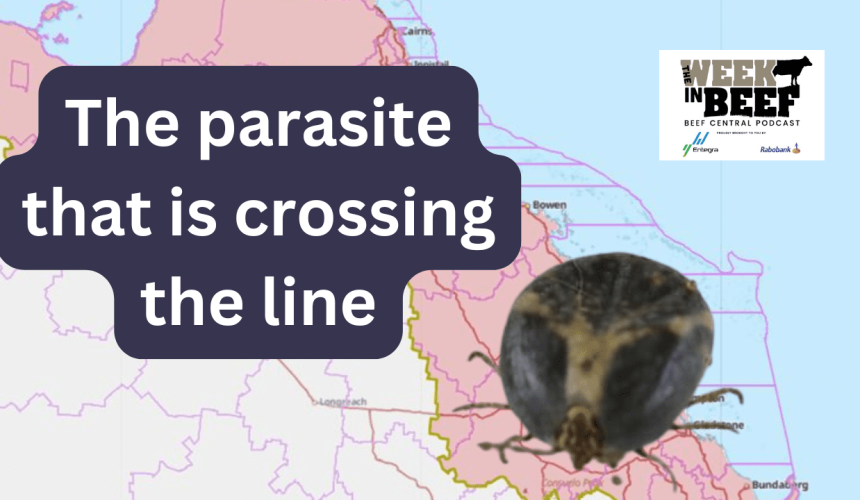
In this episode of the Week in Beef:
- Lydia Burton talks about the latest tick outbreak in Queensland, where producers are frustrated a lack of Government response
- Jon Condon looks into the rise of pre-vaccinated cattle entering feedlots.
- The forgotten capacity issue: James Nason explains how a lack of accredited ships is impacting the live export industry
- The number of the week looks at a recent soil carbon credit issuance, the sheer number of tick outbreaks in clean areas of Qld, Australian cattle herd size and where is the best saleyard canteen

Available every Thursday afternoon on the Beef Central website, or via YouTube, Apple Podcasts, Spotify, Audible, I Heart Radio, Podbean and other podcast platforms. Search for: The week in beef and click subscribe.
Previous Week in Beef episodes
29 January – Floods | Fires | Forward predictions | Frank’s inspiring journey to OAM
22 January – Heifers shine at weaner sales | LSD in Bali | Gun buybacks coming
15 January – Fire, floods cause havoc | China tariff impacts | Weaner sale trends
18 December – Top trends that defined 2025 “the Goldilocks year”
11 December – Big numbers hit saleyards | Activists high court win | State of play in WA
4 December – EPBC uncertainty | Nutritionist’s live ex support | How to judge Wagyu beef
I would like to comment on the recent cattle tick outbreak detected in Queensland tick-free zone. We understand the situationand concerns faced by the Queensland producers. We operated a beef enterprise in northern NSW, which is also designated as a tick-free area and intended to serve as a buffer between Queensland tick country and the rest of NSW.
Over the past few years we have seen significant increases in tick incursions as well as cattle deaths from tick fever. Producers here are facing the same challenges as those in QLD, a lack of boots on the ground to provide guidance, enforce protocols and support producers in eradicating cattle tick effectively.
In NSW the situation is being compound by DPIRD's push towards "owner managed" program which effectively shifts the responsibility entirely into producers. This aproach will not work. Producer on both sides of the border are doing everything they can, largely because there is not enough government staff the manage the outbreaks. Without adequate resources, shifting more responsibility onto the producer leaves the system even more vunerable.
Both state governments urgently need to provide more funding and reinvest in frontline biosecurity frontline staff. Cattle tick is not a peripheral issue it is a critical biosecurity responsibilty that protects livestock health, producers livelihoods and the integrity of the tick-free zones across the eastern Australia.