
THE Federal Government has approached Meat & Livestock Australia to re-build a carbon farming methodology used to reduce livestock methane emissions – after it abruptly cancelled the old methodology in 2024.
Cattle Australia and members of the National Party have been campaigning for the re-instatement of the beef cattle herd methodology since climate change minister Chris Bowen made the decision 18-months-ago.
While the methodology needed large numbers of cattle to be viable and was mainly used by corporates, the industry argued that the decision set a bad precedent as it was the only carrot for producers to reduce herd emissions.
Speaking at last week’s Northern Territory Cattlemen’s Association conference, MLA managing director Michael Crowley said the organisation had been approached by the Government to develop a new methodology.
Beef Central understands the approach was only made in the last couple of weeks and details on how the project will play out are still preliminary.
Mr Crowley said it was an opportunity to build on years of technology development.
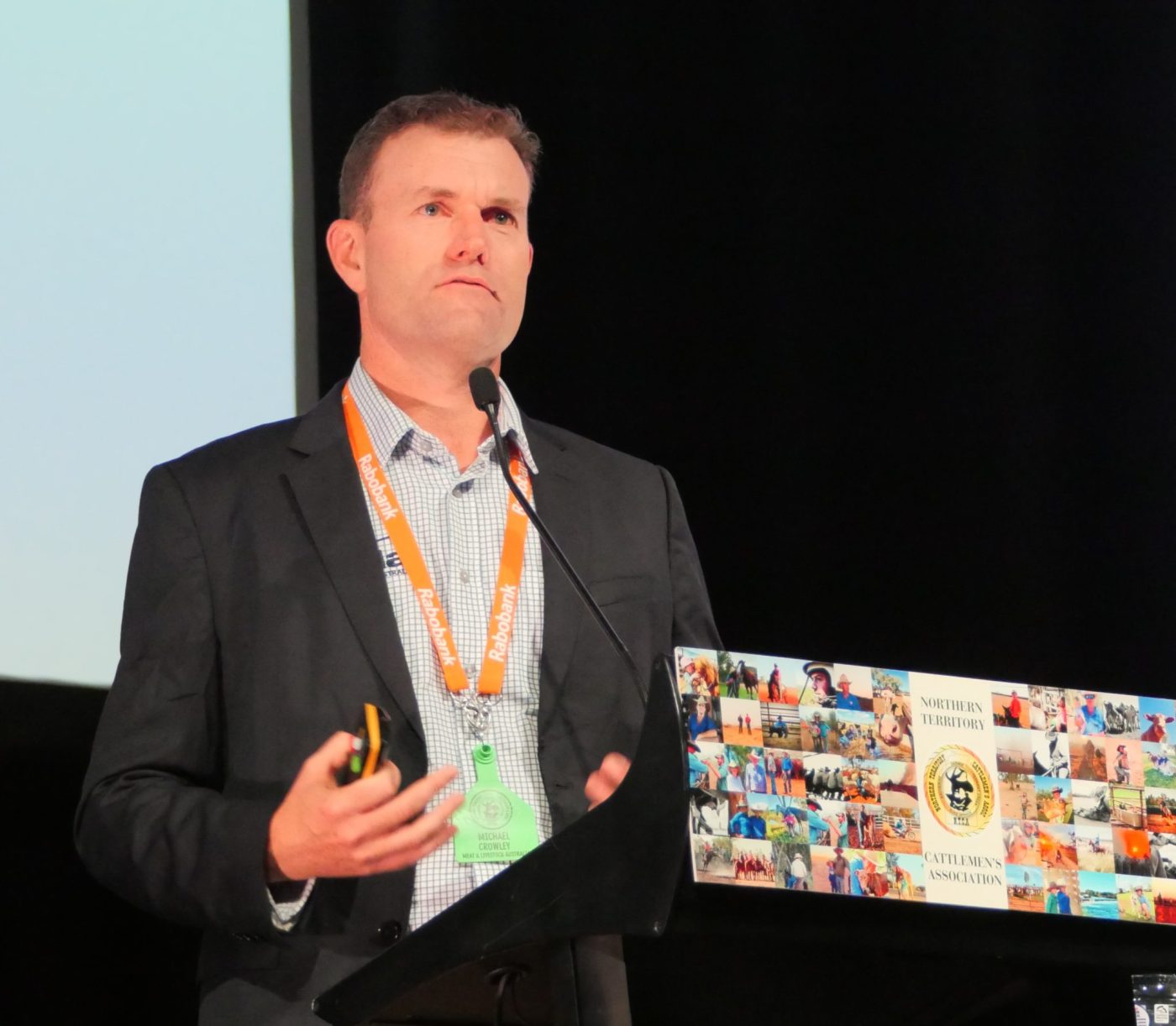
Michael Crowley talking at the NT Cattlemen’s conference.
“It will allow us to build in all of the new technology that we have in the pipeline to make sure that we can turn that into carbon credits as an additional revenue stream,” Mr Crowley said.
Last year, the red meat industry dropped its target to become carbon neutral by 2030, instead supporting the Government’s 2050 target.
With the change in approach, Mr Crowley said the organisation had been tasked with measuring the industry’s net warming position – which he said was important in the context of the current Federal Government greenhouse gas accounts.
“At the moment, our greenhouse gas methodologies in the national greenhouse gas inventory don’t consider soil sequestration. They’re not taking into account the use of technologies like feed additives. And they’re not recognizing the genetic progress we can make,” he said.
 Mr Crowley said being able to put the true emissions footprint of livestock into context would allow the industry to capture more value out of the carbon market.
“You start thinking about stacking that technology. We have soil carbon methods, vegetation management methods, we don’t have a method for feed additives and recognition of those other productivity drivers,” he said.
“But we are in the box seat to develop a methodology for the red meat industry to take into account all of that.”
Govt urged to keep up with industry
The Labor Government has been indecisive in its approach to the carbon market, with beef herd being one of several methodologies to be either cancelled or tied up in lengthy reviews.
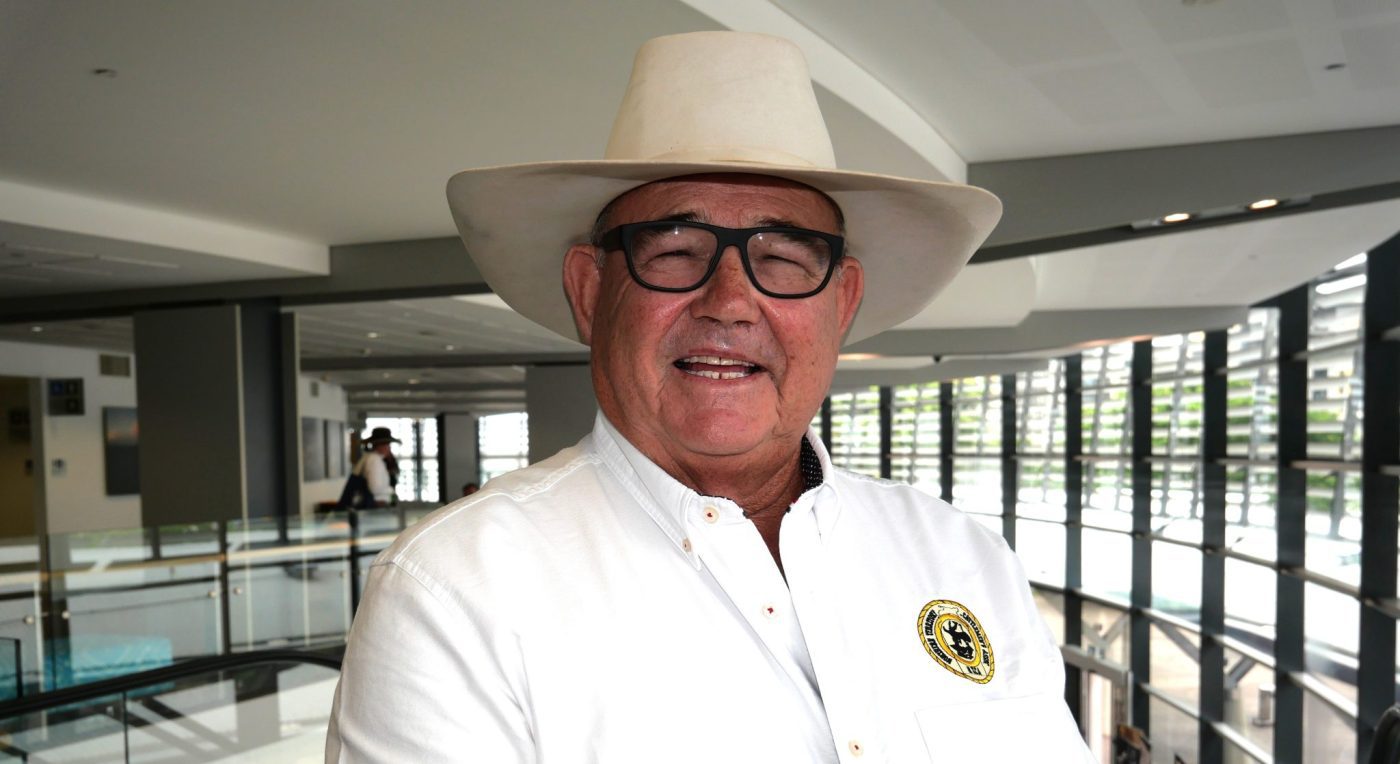
NTCA president and CPC operations manager Henry Burke at this year’s cattlemen’s conference in Darwin.
In speaking generally about climate policy, NTCA president Henry Burke said the industry was doing its part to reduce emissions and the Government needed to keep up.
“We are producing more beef with fewer inputs and less waste. Productivity and efficiencies have improved. Emissions intensity has reduced,” Mr Burke said.
“That has not happened by accident it has happened through innovation, investment and discipline.
Mr Burke said climate policy could not act in isolation from food security and that Government needed to recognise that Australia feeds people around the world – not just wealthy consumers with discretionary choices.
“Producers have responded because adaptation is not new to agriculture. It is what we do. But progress must be grounded in reality. Tools cannot be removed before alternatives exist. Systems cannot be dismantled before replacements are proven,” he said.
“And if the Federal Government is serious about productivity and climate outcomes, then it must come on the journey with us, not simply instruct us from a distance.”