
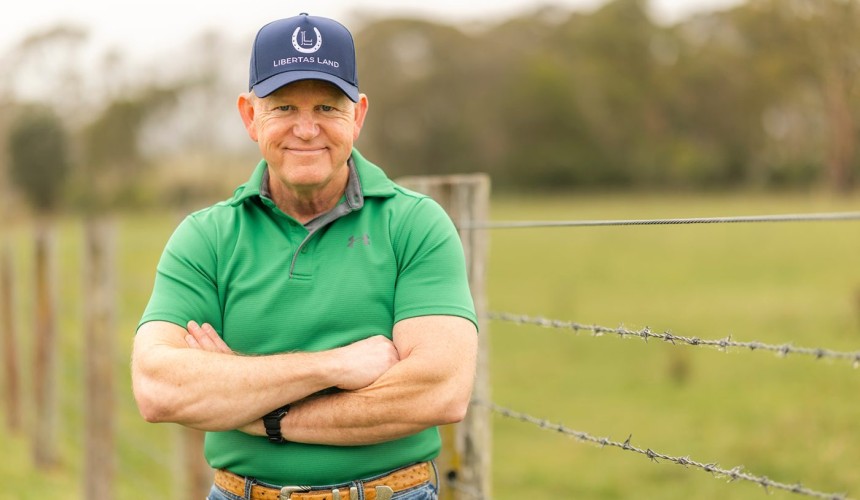
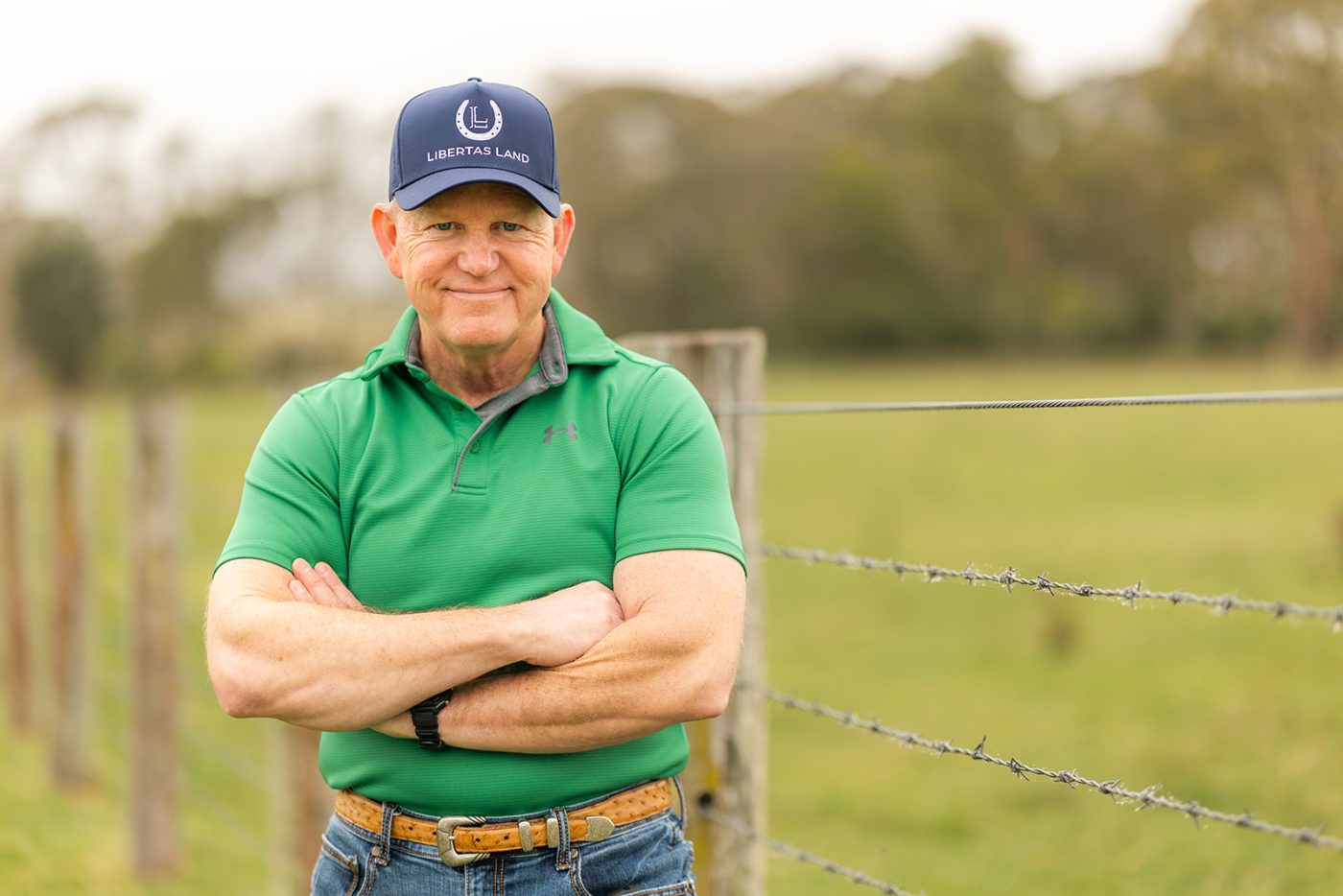
Rancher and regenerative agriculture advocate Dr Allen Williams. Supplied: Wilmot
A PROMINENT regenerative agriculture expert says support for the movement in the United States is overwhelming, with interest from ranchers and corporates making millions available for regenerative practices.
Dr Allen Williams – a self-described “recovering academic”, sixth-generation rancher and regenerative agriculture consultant – is in Australia this week for the Wilmot Field Days in New South Wales.
He took some time to talk to Beef Central about the growing regenerative agriculture movement in the US, which is enjoying a big wave of Government and corporate support. The US Department of Agriculture (USDA) last year announced a US$700m package to support regenerative agriculture and McDonald’s said it will invest US$200m.
Dr Williams said the support went way beyond those two investments.
“This is just one of many who are keenly interested. Costo, Cargill, Tyson, Mars Corporation and many others are now expressing interest in regenerative agriculture in food,” he said.
“Their interest is particularly coming from the standpoint of resilience in supply. Many of these food and fibre companies are becoming increasingly concerned about resilience of their supply chain and they coming to realise regenerative production is one of the keys.
“The interest is also coming from the consumer sector and we have quite a few in the medical profession, particularly nutritionists and dieticians.”
Is there a premium in regenerative agriculture?
Regenerative has become part of brand claims for beef and other food brands in the US, with several Australia exporters also using regenerative certification – particularly alongside grassfed or organic products.
The USDA also has a standard set up to approve regenerative brand claims.
 Dr Williams, who has a certification system for ranchers selling into regenerative food brands, said premiums were currently being paid for products with regenerative claims – however, he was expecting that to be short lived.
“Premiums come and go and they always have. So, if producers try to build their profitability off premiums alone that is always to wrong tactic to take,” he said.
“The real benefit is not in allowing us to capture, it comes from the increased productivity and resilience and our ability to reduce input costs.
“But what I will say is that when we produce this way it opens up a lot more marketing opportunities for us.”
Corporate investment supportive of ranchers
Regenerative agriculture pledges from the corporations have rolled out differently to the recent wave of targets aimed at reducing carbon footprints.
Rather than pushing producers to do certain activities to maintain their market access, Dr Williams said the funding had been more philanthropic.
“The investment from the corporations has been multi-faceted, one has been to do research and field trials to be able to produce data that is meaningful and resonates with the producer.
“The other is that they have specifically been funding educational opportunities for producers. They have allowed the producers to be able to participate in workshops, field days and schools to be able to further their education in regenerative practices.”
Dr Williams said a lot of producers had been accessing the programs, particularly producers concerned about debt levels.
“Debt is another big barrier to transitioning into regenerative agriculture, especially in the US. So, we help them to be able to first reduce and mitigate that debt. so the journey is a lot easier for them,” he said.
Trump administration a mixed bag
The current Trump administration in the US has been eager to show its support for agriculture in many public addresses. Health secretary Robert F Kennedy Jr (RFK) has explicitly been supportive of regenerative agriculture.
Asked whether he thought the current administration was a positive for regenerative agriculture, Dr Williams said it had been a “mixed bag” – with some contradictions and some good support.
He said the tenure of Robert was a real positive for regenerative agriculture.
“The biggest thing he has bought to the table is the consumer angle and the medical profession,” Dr Williams said.
“That has been really helpful, because farmers in the US only make up 1 percent of the population. So, when you have consumers involved they are the other 99pc. We need to have their involvement.”
Australian meat exporters gain US approval for ‘Certified Sustainable’ claims
Meanwhile in Australia, AOM Group’s new product labels featuring the Certified Sustainable logo have now been formally approved by the US Department of Agriculture’s Import and Export Systems Framework (ISSF).
The approval marks an important milestone for Australian meat exports into North America.
As the first meat brand to achieve Certified Sustainable accreditation, AOM Group will now be able to present verified sustainability claims to its North American customers at a time when demand for independently validated credentials continues to grow.
AOM Group’s Matt O’Leary said the shift in the market had been clear.
“We saw the first wave of regenerative claims a few years ago, but the difference now is that US retailers want these claims backed by third‑party, independent verification.
“Most of our products are already Certified Organic to the US, Australian and Korean organic requirements, so adding sustainability accreditation was a natural fit for our supply chain.”
Certified Sustainable’s operations manager Steph Frankham (listen to Steph’s Weekly Grill podcast here), said the US approval creates another pathway for Australian beef producers and processors to meet rising global expectations.
The new accreditation is open to both Certified Organic and conventionally-prodcued beef meeting the standard.
“In the organic category we’re seeing increasing demand for sustainability verification, but becoming Certified Sustainable gives operators the advantage of meeting consumer expectations around regenerative ag as well as other key drivers such as measured GHG emissions, biodiversity stewardship and natural capital – all within a fully traceable supply chain,” she said.
“The strength of the Certified Sustainable Standard is that it can sit alongside organic certification or operate as a stand‑alone accreditation, adding value to grassfed and ‘never ever’ programs. We also have non‑organic producers certified, including Wagyu breeders.”
Interested to understand the data behind the system that verifies the certification .