
THE Federal Government has been condemned for badly letting down the red meat sector in an ‘extremely disappointing’ EU Free Trade deal signed this morning, with the industry branding the agreement as falling far short of what Australia needed and expected.
“Australia’s red meat industry is devastated that the Federal Government signed an FTA that falls well short of delivering a significant increase in market access, despite repeatedly indicating it would not sign a bad deal,” the industry said in its initial reaction after the detail was released this morning.

Pixabay, Canva, The Conversation, CC BY-NC
While the incremental increase in quota access has been noted, the outcome is well below the Australian Government’s own objectives, let alone stakeholder expectations.
Industry leaders did not hold back in their condemnation of the outcome announced this morning, with people like Cattle Australia chair Garry Edwards branding the result as ‘appalling’.
“An FTA should promote trade, not constrain it. This outcome does not reflect the contribution of the red meat sector to Australia’s economy or export profile,” Australian Meat Industry Council’s Tim Ryan said (see full responses below).
Unfortunately, the deal announced this morning by Australian Prime Minister Anthony Albanese and the President of the EU Commission Ursula von der Leyen will see the continuation of disproportionately low quotas for red meat, placing Australia at an ongoing competitive disadvantage in the highly valued EU market,” chairman of the Australia–EU Red Meat Market Access Taskforce*, Andrew McDonald said.
Under the deal announced this morning, Australia gets a beef volume of 30,600 tonnes carcase weight (but locked at only 10,200t for the first five years, or at least 2032), falling dramatically short of the 50,000t of beef access that was achieved by Australia’s competitors.
Grainfed beef exports appear to be particularly hard-hit under the agreement. Under the existing 481 quota system, grainfed beef entered the EU tariff-free. Under the new agreement, a 7.5pc tariff will apply to grainfed beef volumes supplied under the new FTA quota.
“While the Government may point to the removal of the 20pc in-quota tariff on the small existing WTO Hilton quota, this does little to offset an outcome that locks in ongoing constraints for grainfed beef exports,” Australian Lot Feeders Association president Grant Garey said.
The 25,000t of sheepmeat and goatmeat access (starting at only 8300t) is a world away from the 67,000t the industry had indicated as a ‘pass mark’ (noting NZ gained EU access for 163,769t).
“Australia’s red meat sector has been profoundly let down by this outcome,” taskforce chair Andrew McDonald said.
“The Australian red meat industry has been crystal clear that the FTA negotiations were the ideal mechanism to finally address the EU’s punitive and highly discriminatory import regime,” he said. “Yet the agreement delivers just 30,600t of beef access over the next ten years, when a minimum of 50,000t was required simply to be in line with what the EU has offered our competitors. On sheepmeat and goatmeat, the result is equally disappointing: 25,000t over seven years, despite Australian industry requesting a minimum of 67,000t.
“This stands in stark contrast to New Zealand’s access of 163,000t, which is an outrageous discrepancy,” Mr McDonald said.
“To land a deal so far below what other suppliers have secured is genuinely bewildering. The agreement is a long way from anything resembling ‘free and fair trade’, particularly given Australia already provides the EU with quota‑and tariff‑free access for meat products like pork, while the A‑EU FTA locks in perpetual volume constraints on Australian red meat entering the EU.
“This outcome also sits uneasily beside the EU’s rhetoric of providing ‘a level playing field for all’ and its claims that Australia is a ‘like‑minded’ partner. In practice, this agreement delivers neither fairness nor reciprocity.
“This is unquestionably a missed opportunity for Australia’s red meat producers, processors and exporters. It will limit our sector’s ability to diversify into a market of 27 countries with strong and ongoing demand for imported meat. It will also deprive most of the EU’s 450 million consumers of the chance to choose high‑quality, sustainable Australian red meat products.
“The EU’s inability to reform its deeply protectionist trade regime ultimately prevented the delivery of a good deal,” Mr McDonald said.
Cattle Australia response
Cattle Australia chairman Garry Edwards said this morning’s announcement showed that the industry had been misled by an apparently disingenuous trade negotiation, with amateurs playing a game against professionals.
“The deal that has been struck is simply appalling for agriculture and regional Australia and delivers nothing to address the trade imbalance to the EU.
“The quantities agreed are pathetic, with headline trivial volumes not reached for ten years. At the same time Australia is inundated with massive volumes of tariff-free EU meat protein and dairy products, which highlights the hypocrisy of promoting a genuine Free Trade Agreement,” mr Edwards said.
“This was a once in a lifetime opportunity to balance trade between the EU and Australia that has been thrown away; instead our Trade Minister has ‘rolled over’ and sold Australia out. No deal was much better than this deal.”
 “Unlike our European counterparts, we do not receive billions in Government subsidies that prop up inefficient businesses. Our Government continues to burden our industry through excessive and costly regulation and places further disadvantages on Australian businesses by negotiating poor trade deals.
“The way we deal with these challenges and the costs incurred from over-regulation, and still produce the highest quality sustainable beef in the world, is through trade.
“Europe is the highest value market for beef in the world. Australia has an enormous trade deficit with Europe – especially for agricultural products. This ten-year negotiation was an opportunity to try and address this imbalance. Instead, we are now in a worse position with the market than we have been previously,” he said.
“The Government recently announced that cost-recovery charges through their inefficient regulation of the red meat supply chain have increased by 48pc over the past five years and are set to increase by a further 38pc in the coming four years. With the global headwinds around diesel, increased protectionism and nationalism in markets and global conflicts – we have to look at these costs and understand whether they are actually justifiable, or just a transfer of government inefficiencies onto industry.
“The Government is expecting a negative response from industry, they’ve already foreshadowed that. But their willingness not to accept this, and not listen to the reasons why industry is concerned, is a sign of a bigger issue,” Mr Edwards said.
“This isn’t about politics, it’s about the productivity, profitability and sustainability of our industry and our country. It is about time we focused on putting the interests of Australia first.”
AMIC reaction
The Australian Meat Industry Council expressed extreme disappointment with the outcome of the trade agreement, which locks in restrictive red meat access, resulting in a permanent competitive disadvantage for Australian meat to the EU.
The volumes and conditions attached to beef, sheep and goat meat trade to the EU under the FTA limits, rather than supports trade into this important market of 450 million consumers, AMIC said.
The details were particularly hard to stomach for an industry which is already under attack from global trade restrictions and facing significant increases to the taxes charged by the Australian Government on meat exporters.
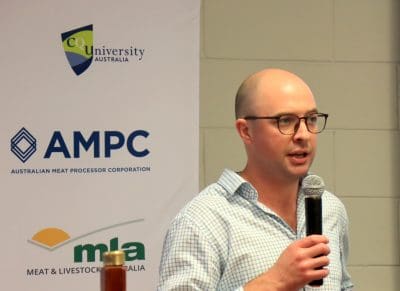
Tim Ryan speaking at a recent ICMJ conference.
AMIC chief executive Tim Ryan said the outcome was a kick in the guts to the Australian red meat industry.
“The meat industry has worked tirelessly and been very clear with the Australian Government about the importance of a meaningful outcome in an agreement with the European Union. This outcome is worse than those achieved by Australia’s competitors, and it caps and restricts Australia’s trade. This announcement comes at a time when the Australian Government has proposed to significantly increase taxes on meat exports despite major losses in market access and significant global trade headwinds,” Mr Ryan said.
“AMIC has consistently supported the objective of reaching a comprehensive trade agreement with the EU. However, AMIC has been equally clear that any agreement must deliver commercially meaningful access for Australian beef, sheepmeat and goatmeat to be considered in the national interest.”
“When it comes to red meat, the final package locks in and solidifies the long-standing access imbalance faced by Australian exporters to the EU,”
“We have been clear that this agreement represented a once-in-a-generation opportunity to reset red meat access to the EU in a way that would shape trade for decades to come,” Mr Ryan said.
“An FTA should promote trade, not constrain it. This outcome does not reflect the contribution of the red meat sector to Australia’s economy or export profile.”
Loss of Australian meat market access
This EU FTA outcome comes at a time when Australian red meat is facing major challenges, including significant trade losses and reductions in our access to key overseas markets.
Mr Ryan said the outcome added to a material deterioration in market access for Australian red meat over the last eighteen months in established and emerging markets.
This included the loss of around a billion dollars in beef trade to China (Australia’s second largest beef market) under the China’s global safeguard measure; critical trade to Indonesia heavily restricted for beef and effectively banned for sheep meat under punitive Indonesian import licensing arrangements; emerging barriers to trade arising for our vital trade to the US and India, and significant shipping, logistics and supply chain disruptions associated with the war in the Middle East.
He said the EU FTA outcome was particularly hard to swallow in the context of the sustained loss of access and significant emerging barriers to Australian red meat’s trade to global markets.
“The agreement locks in a comparative disadvantage at a time the Government is losing, rather than gaining, access to overseas markets that are critical to the long-term sustainability of the red meat industry.
Government increasing export taxes and walking away from its market access responsibilities
The FTA announcement also comes in the middle of the implementation of revised cost recovery arrangements pushed out by the Albanese Government which has demonstrated the government is walking away from agricultural market access and productivity.
AMIC has previously raised serious concerns with the proposals outlined in the draft Cost Recovery Implementation Statements issued by the Department of Agriculture, Fisheries and Forestry, which propose significant increases in the taxes charged to red meat export businesses and a walking away from government funding of critical market access and maintenance functions.
“The Government’s proposal is for Australian agricultural exporters to be taxed at an increasingly unsustainable level with no end in sight, systemically eroding Australia’s competitiveness in international markets. Government must put its money where its mouth is when it comes to supporting agricultural productivity and market access,” Mr Ryan said.
“DAFF is the exclusive provider of critical regulatory services that enable the sale of Australian meat to global markets. Australian meat exporters are already up against heavily subsidised global competitors, with lower or no government export fees. The Albanese Government is adding even more costs onto agribusinesses at a time of substantive global instability.”
While AMIC has called for an independent review of the expenses driving these increases, in light of the poor EU FTA outcome and significant losses to market access for Australian meat, AMIC has called on the government to review its regulatory impact and the proposed significant increases in cost recovery fees and charges.
ALFA response:
The Australian Lot Feeders Association said it was extremely disappointed by the outcome of the Australia–EU Free Trade Agreement announced today.
ALFA President Grant Garey said the agreement represented a significant failure to deliver meaningful outcomes for Australia’s red meat industry.
“By any measure, the Government’s report card on this deal is a failing grade, delivering one of the weakest free trade agreement outcomes for our sector to date,” Mr Garey said.
“For Australia’s grainfed beef sector, the agreement falls far short of the meaningful improvements in market access that we consistently sought throughout negotiations.”
“In practical terms, it represents a step backwards.”
Under the existing 481 quota system, grainfed beef entered the European Union tariff-free. Under this agreement, a 7.5pc tariff will apply to grainfed beef volumes supplied under the new FTA quota.
“While the Government may point to the removal of the 20pc in-quota tariff on the small existing WTO Hilton quota, this does little to offset an outcome that locks in ongoing constraints for grainfed beef exports,” Mr Garey said.
While small, incremental quota increases have been secured, they won’t be available for years and remain far below industry expectations or the levels required for Australia to compete effectively with other major suppliers into the European Union.
“Australians expect fair trade outcomes. Allowing unrestricted, tariff-free access for European protein and dairy products into Australia, while maintaining tight limits on Australian red meat exports to Europe, fails the pub test.” Mr Garey said.
This was a once-in-a-generation opportunity to secure meaningful access to a premium market of 450 million consumers, and it has been comprehensively squandered.”
NFF response
Australian farmers are extremely disappointed that negotiations for a free trade deal with the European Union have concluded without commercially meaningful agricultural market access gains since Australia last walked away from negotiations, the National Farmers Federation said.
“What the Australian Government has accepted today appears to offer no material change for key agricultural commodities as what the Government rightly rejected in October 2023. For decades, our sector has been guided by a clear principle of wanting more two-way trade with the EU, not less,” the NFF said in a statement.
“The NFF has long championed free and fair trade, recognising its role in global economic growth and stability. Australian agriculture is unwavering in its commitment to this.
“A deal with a market of this size offered an opportunity to help ease the pressure on farmers who are grappling with the impacts from the conflict in the Middle East, China’s beef tariffs, and United States trade volatility, which are creating global trade headwinds.
“NFF acknowledges the efforts made by Australian negotiating officials against a tough counterparty. While we acknowledge some progress on issues such as geographical indicators, preserving the use of names like prosecco and parmesan, farmers will rightly be concerned this deal hasn’t delivered commercially meaningful access for Australian agricultural exports.
Farmers would now pay the price for this sub-par EU deal for decades to come, NFF warned.
“Questions will be asked as to how we can now advocate for others to liberalise trade, having accepted a deal ourselves that does not reflect the core tenet that free-flowing agricultural trade drives positive economic and sustainability outcomes,” NFF said.
“Market access is the lifeblood of Australian farmers who do not rely on Government subsidies. We are concerned the EU has offered subpar access for Australian producers while potentially needing to deploy billion-dollar subsidies to get their producers to accept the deal. This is exactly what happened when the EU signed a deal with the Mercosur nations, fast-tracking nearly $80 billion in farm subsidies, sending a clear signal protectionism is alive and well.
“A strong industry and Government partnership has been a tenet of Australian trade policy for many decades. The Government must now demonstrate how it will rebuild this trust. While the Government cannot control other nations’ trade policies, it can control its own, so a good first step would be to pause its plan to increase export costs on industry through full cost recovery until global conditions stabilise.
Nationals: ‘Worst deal ever’
Leader of the Nationals Matt Canavan said today’s signing of the so-called “Free Trade” Agreement between Australia and the European Union was “a sellout” to Australian farmers and Australian interests.
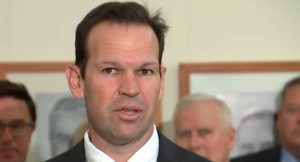
Matt Canavan
“The agreement offers barely any additional market access for Australian exporters and falls well short of what Australian farmers wanted from the deal,” he said.
“Three years ago, the Labor Government walked away from trade negotiations with the EU and promised that they would only sign a good deal, not any deal.
‘Today, Labor broke that promise by signing a deal that has not materially changed from what was on the table a few years ago. The question must be asked of the Prime Minister, why are you breaking your promise to farmers?
“As the National Farmers’ Federation has said today, this deal provides no “commercially meaningful agricultural market access gains since Australia last walked away from negotiations.
“What is worse is that the Labor Government is trying to pull the wool over farmers’ eyes and hide the dud nature of this deal. While the Government has trumpeted the access of up to 35,000 tonnes of beef over time, this is measured in carcase weight terms.
“Until 2019, Australian beef producers had access to a global EU quota of 67,000 tonnes in carcase weight tonnes terms. Australia would often fill the lion’s share of this quota.
“But in 2019, the EU did a “ring-fencing” side deal with the first Trump administration that reduced Australia’s access to below 5,000 tonnes carcase weight. Now Labor wants applause for lifting this to 35,000 tonnes (over time) which is not far from what we had before the EU’s side deal with Trump.
“Labor must think that Australian farmers are stupid, but I can tell you that they are not.
“This EU deal is in stark contrast with the deal that the Liberal National Coalition Government negotiated with the United Kingdom Government. That agreement allowed unlimited exports of beef, lamb, cheese, sugar and wheat.
“In contrast, Labor has accepted tight quota limits that severely restrict Australian farmers’ ability to grow exports into Europe.”
Mr Canavan said the Liberal and National Coalition would closely scrutinise the deal through the normal Parliamentary processes. “In doing so, we will be guided by the principle that Australian governments – of both sides of politics – have adhered to the principle that a Free Trade Agreement must live up to that name.”
AgForce
Queensland state farmer representative body AgForce said the agreement fell short of expectations and highlighted the mounting pressures facing Australian agriculture.
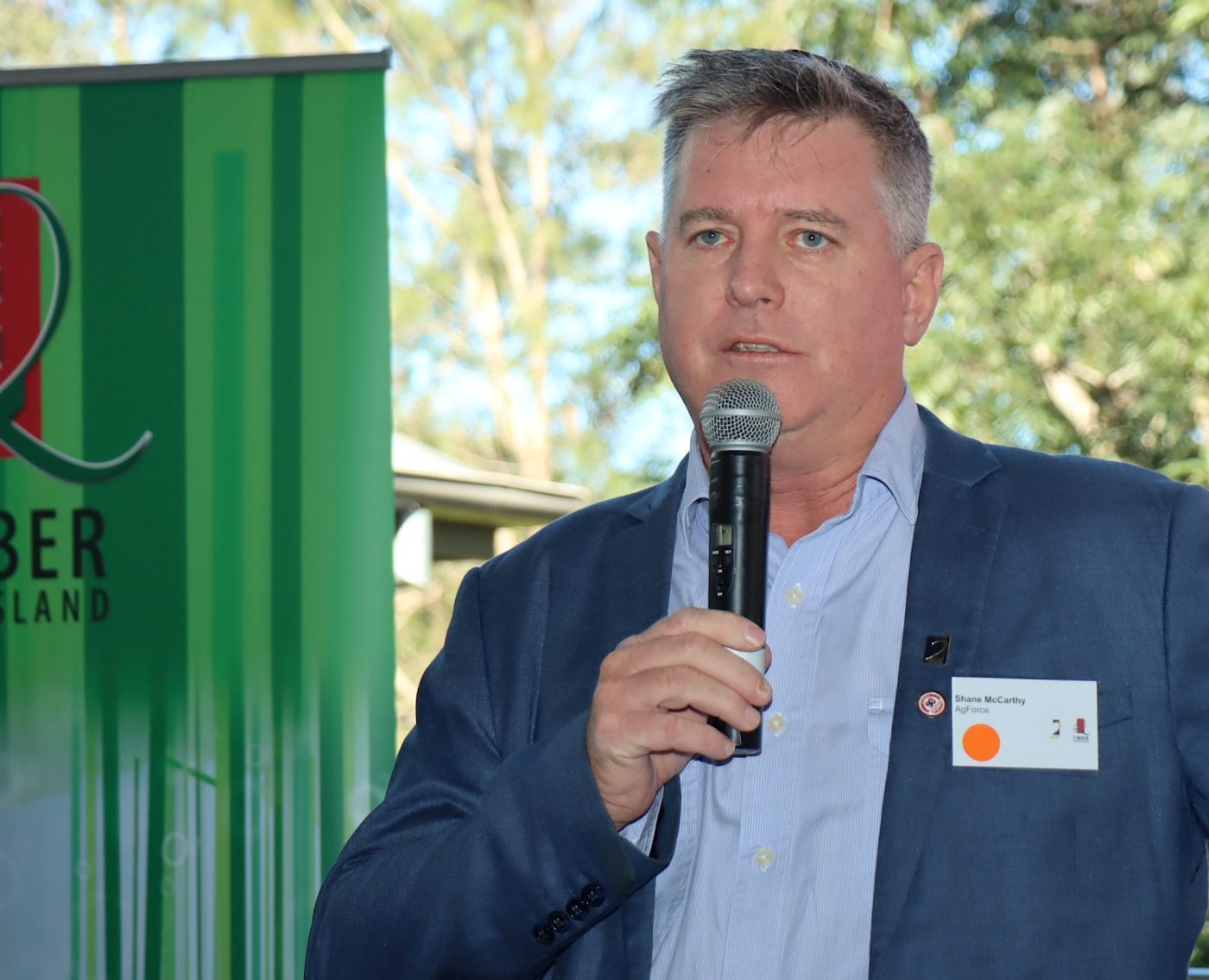
Shane McCarthy
“Across all commodities, there is a consistent concern that this agreement does not deliver the level of access needed to support growth in Australian agriculture,” AgForce General President Shane McCarthy said.
“We echo the concerns raised by the National Farmers’ Federation and others across the sector – this deal does not provide the meaningful market access Australian producers were seeking.
“This is shaping up as a perfect storm for producers. A disappointing EU deal, ongoing fuel and fertiliser supply pressures and increasing regulatory burden through measures like the Environment Protection and Biodiversity Conservation Act reforms are all hitting the sector at once,” Mr McCarthy said.
“At a time when farmers should be focused on producing food and fibre, they’re instead dealing with rising costs, supply uncertainty and growing compliance pressures.
“At the end of the day, every Australian relies on farmers. We need policy settings that back producers in – not make the job harder.”
AgForce commodity leaders said the impacts of the agreement would be felt across sectors. AgForce Cattle President Lloyd Hick said the outcome was deeply disappointing for the beef industry.
“The EU represents a high-value market, but without meaningful improvements in access, Queensland producers are being left at a competitive disadvantage against other global suppliers.”
AgForce Grains President Brendan Taylor said for grain producers, the deal fell short of delivering the market access needed to justify the effort, raising concerns about precedent in future trade negotiations and whether Australian agriculture is being prioritised in these outcomes.
AgForce Sheep, Wool & Goats President Boyd Webb said the FTA negotiation was a missed opportunity for the sheep and wool industries to expand into premium European markets.
“Limited access and ongoing barriers mean producers won’t see the benefits that were hoped for from this agreement,” he said.
Mr McCarthy said AgForce would continue to advocate strongly for improved outcomes in future trade negotiations.
“Australian agriculture cannot afford to be left behind in global markets. We will continue working with industry and government to ensure future agreements deliver real value for producers.”
* The Australia–EU Red Meat Market Access Taskforce is made up of representatives from Australia’s red meat supply chain and Australia’s red meat Peak Industry Bodies, including the Red Meat Advisory Council, Australian Livestock Exporters Council, Australian Lot Feeders Association, Australian Meat Industry Council, Cattle Australia, Goat Industry Council of Australia and Sheep Producers Australia and industry service providers Meat & Livestock Australia and Australian Meat Processor Corporation.
This is the deal you get when your negotiators have never worked a day in there lives
If you know anything at all about the EU you will know that the farming lobby is very powerful. Remember the butter mountain? The wine lake? If we were going to hold our breath till we turn blue over beef, we wouldn't have had an agreement at all. This deal is good for many businesses and it's good for our economy.
Just another SELL OUT from a government not interested in Rural Australia.
The European Union now mandates that all new free trade agreements (FTAs) include binding commitments to the Paris Agreement on climate change, making adherence an "essential element" that allows for agreement suspension if violated. This strategy aligns trade policy with the European Green Deal, aiming to enforce global emissions reductions and sustainable development.
policy.trade.ec.europa.eu
policy.trade.ec.europa.eu
+4
the EU can now use water use, land clearing , nitrate use and a host of other excuses to cancel any part of the FTA
As the grandaughter of an Aussie sheep farmer I value always value the contributions our farmers make daily to our lives. I recently returned having lived in the EU for the last 3 decades where I worked with farmers and producers (also liaising with DEFRA as part of its then post Foot and Mouth Recovery programme (which was also post BSE( and development of the British Protected Good Nanes Scheme( and I worked as a consultant to Marks and Soencer. I was also an EU consumer. The relevance of this is that from the perspective of a consumer the EU has increasingly contributed to improvements in food quality from animal welfare, feed, to antibiotic/hormone growth promotants etc - these are changes that have been driven by public health bodies and NGOs. Sustainability is not a buzzword within the EU - it is a genuine and hard fought commitment - born of the challenges that this community has abd continues to face. I appreciate that this new Australian trade agreement falls short of expectations but without yet knowing the full details. I am not yet clear about the real reasons for this. However I note that the deal does include provisions for the creation of two joint working groups - one to address animal welfare and one antibiotics so this seems to suggest that thus may indicate where obstacles remain to the attainment of higher quotas. It is also worth noting that family farmers in the EU have long had a tough time - but. (and as a generalisation) the EU's Sustainability framework has also enabled them to deliver points of marketing differentiation and competitive advsntage). in post Brexit Britsin (where farmers are still suffering the loss of trade and years of post marjet fsllout/vonfusion) regenerative farming has significantly accelerated - fuelled by consumer demand and support from DEFRA). From the outside looking in the EU is protectionist but it is important to acknowledge that EU consumers prefer to buy as locally as possible and are more environmentally concerned (the latter being a huge part of the EU'S remit for decades to the point that it has long been the subject of dinner table discussions). The way to the EU's heart is to offer its consumers more of the products they want. The institution will then follow suit.
When the EU and Labor get together we can only expect policy and agreement designed to destroy Australian agriculture and in particular eliminate the red meat industries. Just at the moment when the nutritional guidelines have changed and now tell us red meat is not only safe to eat but good for health. The joint delusion of the EU & Labor elites and their special interests lead to fraudulent arrangements in the name of saving the planet. Our industry representatives have blindly played their game, which, if continued, can only end in the terminal decline of red meat production. We need to start electing politicians who are prepared to call out the fraudulent delusion that "carbon drives climate". All we anti-woke folk need to call it out. I'm at the stage where I am happy for the wokies to hit me with their best cancelation shots. Call me names! Fire away! Maybe I'm not alone.
I am surprised Albo allowed any Australian Beef into the EU. He is a UN puppet and as such is totally against Australia as a trading nation, according to labor, we are the receivers of the worlds trash and should be thankful. Labor should never be allowed to negotiate anything, let alone trade deals.
Why would any government body sign any deal before they went back to get the ok from the actual cattlemen that this deal is 100% effecting … does not make sense to me
Don Farrell what a dud deal which you said we would never accept, what changed!!
Would you expect anything else from this government. Albo is a very weak prime minister and leads a woeful government
That's what happens when you have incompetent labor officials representing Australian interests.