
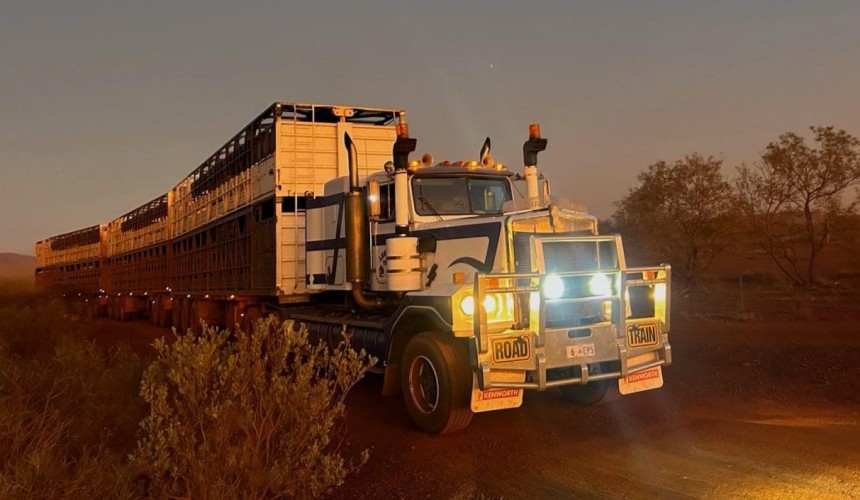
Leeds Transport operates in some of the most remote parts of the country.
THE fuel access and price crisis that’s emerged this month driven by the Iran conflict is already taking a heavy toll on red meat supply chains.
In Toowoomba this morning for the Rural Press Club regional event with Mort & Co, Hancock Agriculture chief executive Adam Giles told Beef Central the fuel crisis was already seriously impacting his business – one of the world’s largest Wagyu supply chains.
Using one example, Mr Giles pointed to the company’s recent takeover of Mr Adams, a 7000ha property in Western Australia’s Midwest (see today’s separate property report).
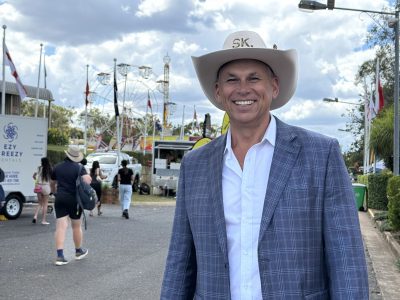
Hancock Ag’s Adam Giles in Toowoomba this morning
Mt Adams was operated by the former lessee as both a broadacre grain and livestock property – at one point running 30,000 sheep. Hancock had originally intended to plant substantial areas of canola and wheat this year, but has now elected to abandon the cropping program due to the fuel and fertiliser access crisis.
“Given the availability and price of diesel, and the availability of fertiliser, we couldn’t go ahead,” Mr Giles said.
“This all comes down to the Labor/Greens continued participation in the Paris Agreement and the commitment to net zero, and their policy settings are now having a ripple effect throughout Australia – in terms of fuel price and availability, fertiliser access and general cost of living through grocery prices.
“And its not just us, as a big operator – every farmer in Australia is feeling the impact, and every Australian will feel it through grocery prices and energy prices,” he said.
“It’s happening now – and it’s going to have a long tail,” Mr Giles said.
“Australians are already having to make decisions around ‘heating (or cooling) or eating’ and then they have to decide about driving somewhere. Farmers are the same.
“This is all a result of the Paris agreement and bad Labor/Green policy around net zero.”
The challenging operating conditions were flowing on across Hancock’s extensive cattle operations in Queensland, New South Wales and Western Australia.
He said he was aware of large commercial feedlots that were already finding it hard to get grain-finished cattle to the abattoir, and challenges in getting feeder cattle in to re-fill the pens.
“Feedlots are now backing up with more cattle staying loner on feed, because they can’t move them. This is rapidly turning very bad.”
“The fuel and fertiliser access issue is affecting us, and other producers everywhere. We have to try to manage that, just like every other farmer. It’s difficult – we have to move things around, and it’s going to affect our profitability and productivity (and that of most other livestock producers) this year.
“Our costs go up, meaning consumers’ costs go up, which ultimately affects the cost of living, making Australia less affordable and driving up inflation and interest rates. It’s all connected, and it all comes back to Labor’s Paris Agreement commitments, net zero, and incompetent government policy.”
In regions like the New England in northern NSW, where conditions remain desperately dry – despite good rain to the north and to the south – a potential animal welfare crisis was emerging, in being unable to shift cattle onto feed and water elsewhere.
“Some people in the area can’t get fodder delivered. It’s raising animal welfare concerns, and we’re hearing about examples of that all around the area,” Mr Giles said.
“In Hancock and Kidman’s case, we’re managing it on our New England properties, through critical fuel reserves, and relocating stock, but everyone is affected.”
Other regional industries being impacted
The fuel crisis is also flowing through into other large regional employers.
A multi-generational timber and transport business on the NSW Mid North Coast had laid bare the human and economic toll of the fuel crisis, being forced to sell cattle simply to pay its fuel bill.
The Dorney family -one of the region’s largest employers, out of Bulahdelah, responsible for more than 10pc of local jobs – has seen its monthly diesel costs skyrocket from around $220,000 to more than $400,000 in a matter of weeks.
With diesel prices already exceeding $3.50/litre and warnings of a potential spike to $8.00, the situation is rapidly becoming unsustainable.
To keep their fleet of 25 trucks on the road, the Dorney family is now liquidating assets, including livestock, in a desperate attempt to stay afloat.
“Despite the escalating crisis, the Albanese and the Minns Governments have failed to provide immediate, targeted relief for fuel-intensive industries,” Timber NSW chief executive Maree McCaskill said in a statement.
“Instead, they continues to benefit from rising fuel prices through increased GST and fuel excise revenue – effectively increasing tax revenue while regional businesses struggle to survive.”
Ms McCaskill said regional businesses were calling on both Governments to urgently reduce fuel excise to prevent further cost escalation – as the Coalition did immediately after price spikes from the Ukraine war and to address State contract lag mechanisms that prevent timely cost recovery.
She said the consequences of government inaction are already flowing through the supply chain.
“Fuel is not something our industry can control, and the costs are now moving through every part of the supply chain,’ Ms McCaskill said.
“‘This example is not just a business under pressure – this is a community under threat.”
They’re not fighting over solar panels and wind turbines in the Middle East. The world unquestionably runs on fossil fuel and reliable base load power.
A couple of points nobody seems to be talking about with the fuel price scam.
Why is diesel now 50 to 60 cents dearer than petrol when it is usually anywhere from 10 cents cheaper to 10 cents dearer.
Why are we well over $3 per litre when the barrel of oil price hasn't risen more than $50 per barrel and it has been up and down but no more than $50 up. We used to be told that for every $1 rise in the price of a barrel of oil, that then equated to 1 cent a litre in the fuel price. Therefore we should have no more than a 50 cent per litre increase in our fuel price.
Like I said, a fuel price scam.
Please tell Ms McCaskill that fuel excise is paid per litre.
gst is claimed back by the purchaser. How do you link Australian commitment to the Paris agreement to the inflated cost of fuel resulting from the war in Iran?
<strong>Our interpretation is that he is referring to the background reasons that have made the current Iran fuel shortage issue even worse. Editor </strong>
The increased GST take is never mentioned
Fuel prices double
GST income doubles
Most big retailers would be on monthly remittances or even weekly where as many of the refund claims are quarterly
A significant increase in interest free cash for the government
100% true. Our governments incompetence, lack of accountability and plain corruption is driving our country into the ground. The net zero policies need to be dropped and we need to exit the Paris agreement immediately. While useless, they are just punishing the hard working Aussies.
Has this guy seriously not heard of what is happening in Iran?