IT’S pure speculation, but on the occasion of Australia’s largest commercial feedlot hitting the market this week, we’ve thrown together some names that could conceivably come up in despatches as possible buyers.
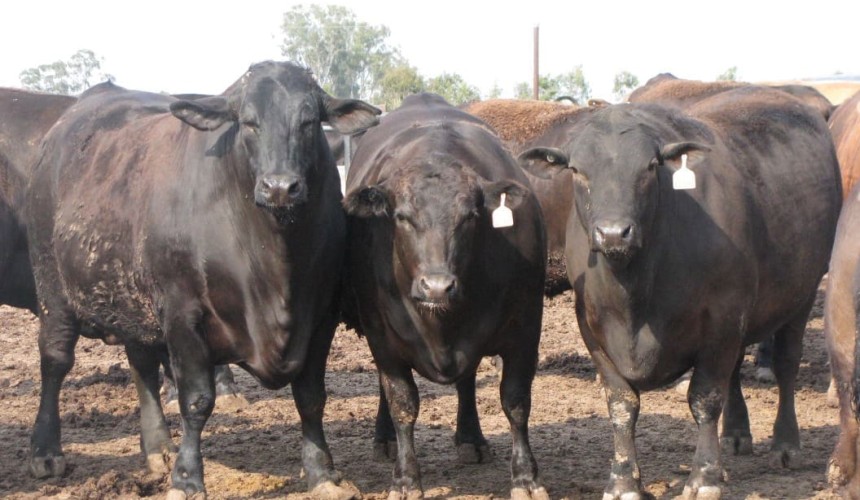
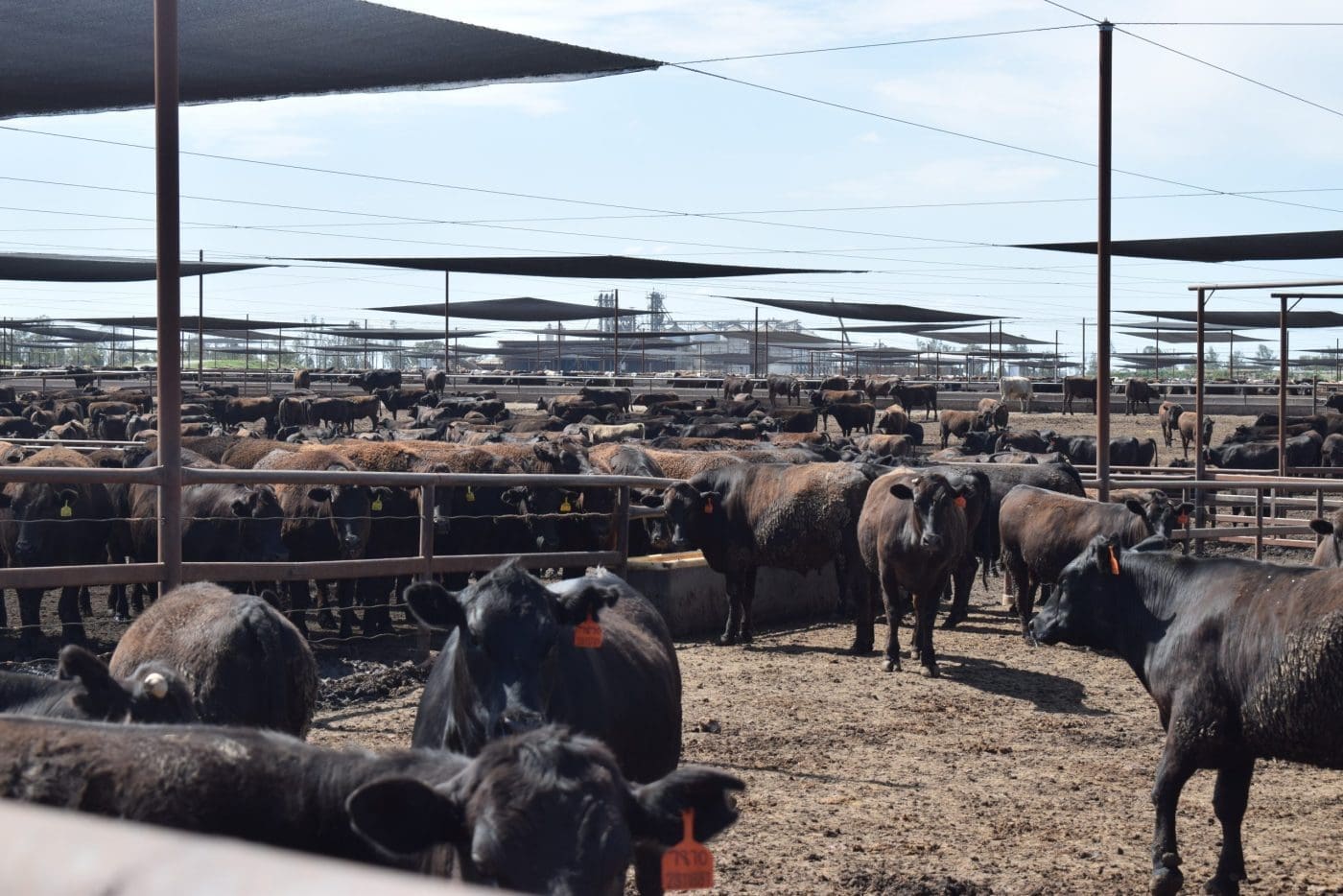
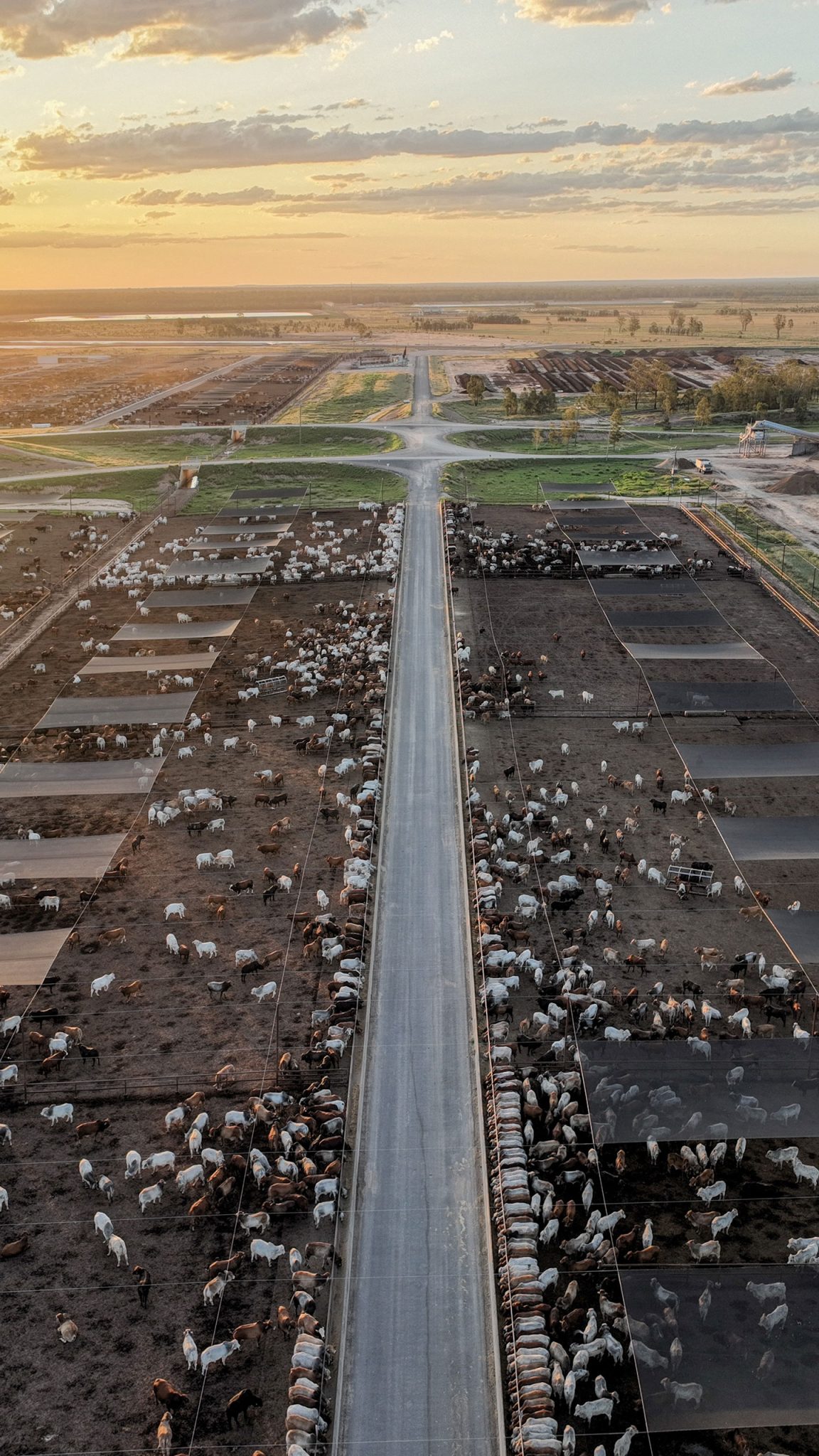
Toowoomba-based Mort & Co on Monday announced it plans to sell its 79,000 head Grassdale feedlot near Dalby, the associated meat trading business plus brands, the Mort & Co Transport business numbering 45 vehicles and other assets.
Early estimates suggest the business could make close to $600 million.
The company dissolution follows the recent sale of its secondary Pinegrove and Yarranbrook feedlots, during a period of unprecedented feedlot sale interest.
Fuelling recent interest in grainfeeding assets has been the Australian beef industry’s steady and consistent shift towards a ‘US style’ grainfed beef production model over the past ten years, designed to deliver greater consistency of turnoff (especially during periods of drought) and elevated meat quality.
As of the December quarter, numbers on feed across the Australian grainfed industry reached a new record of 1.6 million.
A new source of interest in Australian lotfeeding assets has been global funds, who want to be involved ‘somewhere’ in the red meat supply chain. They regard facilities like meat processing plants and feedlots as ‘infrastructure assets,’ likely to be leased to others to operate, Beef Central was told.
The strategy of sale of such assets and leaseback by owner-operators has become more common, as demonstrated by JBS feedlots in Australia, and JBS and Cargill’s feedlots in the US.
Other animal protein plays by institutional investors
Chicken giant Ingham’s did a similar sale and leaseback on its Australian processing and chicken shed assets earlier.
“There are entities out there that want to own these assets, but which don’t necessary want to operate them – and more than ever now, as some maturity comes into that segment of the market, and those types of assets are viewed more favourably,” an industry contact said.
“And at times like this when people in other parts of the world are firing missiles at each other, Australia is seen as a safe haven for such investments. No matter what happens overseas, people still have to eat, in a world where there is still a large protein deficit.”
“And often those large overseas investors will accept a lower return on investment than equivalent Australian investors.”
 In another large recent Australian animal protein play, global investment firm Kohlberg Kravis Roberts & Co (KKR) purchasing the ProTen poultry business from Aware Super, for a reported figure of A$1.3 billion.
ProTen raises around 160 million birds a year with a 24pc market share in Australia, recording a four-fold expansion in its portfolio over the last seven years.
In another large protein deal early last year, egg producer Pace Farms (owned by Roc Partners, a major shareholder in Stone Axe Wagyu) acquired family-owned Kinross Farms.
KKR has been targeting the agricultural infrastructure sector as part of what it describes as a “high-conviction thematic”, focusing on long-term, contracted, and sustainable food supply businesses.
Could KKR make a play through its Asia Pacific Infrastructure Fund, in a parallel animal protein production field, like beef lotfeeding?
“They are the type of sophisticated investor which is now comfortable in investing in the agriculture/protein space,” Beef Central was told.
“The challenge in that, of course, would be in partnering them up with an operator – whether that be a Kilcoy Global Foods, an Australian Country Choice, a Cargill, or a Thomas Foods International.”
We cast the net around some well connected agribusiness stakeholders for some other suggestions on possible buyers for the Mort & Co business. Some of their responses will be well known to Beef Central readers; others likely unheard of.
Palisade Investment Partners
Palisade Investment Partners, a global infrastructure and real assets manager, owns and operates the Regional Livestock Exchange network of 11 large commercial saleyards in Australia. Some see it as a reasonably short step from saleyards operations to feedlot ownership and/or operations.
Palisade’s investments overseas and in Australia cover renewable energy (both solar and wind), gas pipelines, airports, sea ports, bulk storage and handling facilities, hospitals and public transport.
The company is understood to have shown interest in feedlots and/or Mort & Co in the past.
Green Plains Inc
US-based Green Plains Inc is one of the world’s largest ethanol producers, grain handlers and storers, and through its subsidiary, Green Plains Cattle Co is the fourth largest cattle feeder in the United States.
Green Plains controls US yards with total capacity of more than 255,000 head. The company bought the last of the Cargill (US) owned feedlots in 2017, signalling Cargill’s exit from feedlot ownership (in the US, at least).
Green Plains in 2017 entered into a long-term supply agreement with Cargill Meat Solutions to provide Cargill’s US beef business with a reliable supply of cattle.
Formerly operating as Caprock Industries, Cargill up to 2017 had been a major player in the US feedlot industry with a capacity of 350,000 head. Currently, Cargill US beef focusses on beef processing and supply chain management in North America, rather than owning feedlot facilities.
While Cargill has inherited the former Teys Australia Condamine, Charlton and Jindalee feedlots following its takeover of the Teys family’s 50pc stake in the Teys-Cargill Australian joint venture, the company’s US direction suggests Cargill, itself, is unlikely to be interested in acquiring Grassdale, sources suggest.
Rural Funds Group
Rural Funds Group is an agricultural real estate Investment Trust (REIT) listed on the ASX as RFF.
 RFF owns a diversified portfolio of Australian agricultural assets – farmland, feedlots and other agricultural infrastructure and other assets including water entitlements, which are leased predominantly to corporate agricultural operators. Examples include the five JBS Australia feedlots in Queensland and NSW, purchased in 2018 and leased back to JBS; Natal grazing aggregation bought from, and leased back to Camm Agriculture; and other grazing assets leased to Australian Agricultural Co; Stone Axe Pastoral and others. The company has $2.7 billion worth of assets under management, ranging from cattle to tree crops, cotton, cropping and vineyards.
RFF says it focuses on agricultural commodities where Australia has a competitive advantage. Sister company Rural Funds Management (RFM) established in 1997 acts as an agricultural fund manager, acquiring, operating and developing assets.
Pinnacle Asset Management
US-based Pinnacle Asset Management bought JBS’s 11 US beef feedlots operated under the Five Rivers banner in 2017. New York-based Pinnacle Asset Management is a commodities and natural resources investment firm. Today Five Rivers is the world’s largest cattle-feeding company, with 13 feedyards in six US states.
Collectively, the feedyards have a one-time feeding capacity of more than 865,000 cattle and market more than 1.8 million head of cattle per year. Five Rivers is described as JBS USA Beef’s “most strategic partner, playing a critical assured-supply role with JBS’s US beef processing operations.”
In Australia, JBS itself has shown little appetite to investment in further feedlot expansion, beyond leasing the yards it previously owned. Instead, the company has built alliances with private feedlot operators to secure exclusive supply of grainfed cattle.
Kilcoy Global Foods
 Dedicated Queensland grainfed beef processor Kilcoy Global Foods has a close supply relationship with Mort & Co.
The company currently owns no feedlot assets itself, but relies on a network of large commercial yards for supply. Chinese owned Kilcoy Global Foods has its own Wagyu and Angus brands, not dissimilar to Mort & Co, and exports high quality beef across the world.
The company has been associated with a float on the New York Stock Exchange, and some see a vertical integration play like the acquisition of Mort & Co as enhancing that prospect.
Minerva
 When any large Australian red meat supply chain asset hits the market, Brazilian protein giant Minerva’s name inevitably gets put forward as a potential buyer. While the company has made some investments in lamb processing, including the Australian Lamb Co at Colac, so far nothing has happened in beef.
Evidently some large recent acquisitions in South America has tied up capital, lowering expectations of further investments in new frontiers like Australia for the timebeing.
if the numbers stack up why wouldnt existing shareholders and suppliers buy it.
Australian purchase only
How can we be sustainable of we the Aussies don't own it