
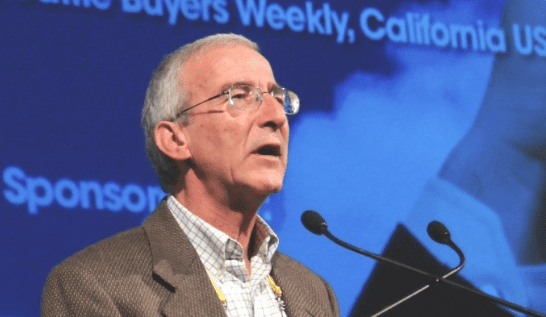
 A monthly column written for Beef Central by US meat and livestock markets commentator Steve Kay, publisher of US Cattle Buyers Weekly
THE United States meat processing industry has been a bizarre but favorite target of certain US politicians, nearly all Democrats, for most of the 38 years I have written about the industry.
I say “bizarre” because numerous investigations by previous administrations have never found any evidence that would cause them to curtail the ability of meat companies to operate, as US Senate Democrats are currently attempting to do.
During the Biden administration, executives for the largest meatpackers were called before Congress to testify about industry consolidation. Now the Democratic drumbeat continues.
US meat companies thus face a new assault on their ability to operate without unnecessary constraints. Senate Democrats in early March announced legislation that would completely restructure the meat processing industry and would likely set back the industry decades in its ability to operate efficiently and keep meat and poultry affordable for Americans.
The proposed legislation would break up US meatpacking companies, escalating government efforts to curb record high beef prices.
Democrat Senate Minority Leader Chuck Schumer, from New York, then introduced a bill that would prevent companies from processing more than one type of meat and could require major processors to spin off beef plants. The legislation would also call for a review of foreign-owned meat companies. That could include JBS SA, based in Brazil, and pork processing giant Smithfield Foods, which is majority owned by Hong Kong-based WH Group.
The legislation would be part of a broader effort by Democrats to address affordability challenges for US consumers. It also follows the Trump administration’s efforts to probe competition within the meatpacking industry.
Administration officials have said easing beef prices is a priority and have pursued measures aimed at lowering prices, including increasing imports (reference this earlier Beef Central article about an extra 80,000t of tariff-free access granted to Argentina). Neither initiative however addresses the reason why beef prices are so high: that the smallest US cow herd in 75 years has produced a beef supply shortage just when demand for beef at home and abroad remains extremely strong.
Meat industry blasts move
Meat industry officials immediately blasted the Democrats’ move, saying it would weaken America’s food supply chain and lead to higher costs for consumers by making the industry less efficient.
The move is absurd, said Julie Anna Potts, president of trade group the Meat Institute. It is not going to reduce costs for consumers, but clearly will drive up costs for producers and consumers.
The ensuing chaos and likely significant drop in meat production will upset delicate supply and demand forces, ultimately forcing retail and food service operators to hike consumer prices for beef, pork and poultry. It comes at exactly the wrong time when food prices are already too high for many American families, she said.
It wasn’t immediately clear whether Republicans or the Trump administration will support the Senate Democrats’ measure.
If passed, the legislation would effectively break up some of the country’s largest meat companies, including Tyson Foods, which processes one in every five pounds of chicken, beef and pork consumed in the US, along with JBS, another top producer of beef, pork and chicken.
The legislation would also impose caps on beef market concentration at both the regional and national levels, and give the Federal Trade Commission the power to order targeted divestitures, such as selling off plants or spinning off business units into new independent firms.
Steps to shake up the industry
While meat industry officials regard the Senate Democrats’ planned bill as a long shot to pass into law, some say it could prompt the Trump administration to take further steps to shake up the industry, said the Wall Street Journal.
The dynamics within the US beef industry have vexed Washington’s efforts to wrangle high prices. Last northern hemisphere autumn, the Trump administration launched an investigation into meatpacking companies, seeking evidence of possible collusion to drive up beef prices.
Four key companies
The US beef industry is dominated by four companies, Tyson, JBS, Cargill and National Beef, which is owned by Brazil-based MBRF Global Foods, noted the WSJ. The companies together process about 80 percent of the country’s beef, it said. My own data however reveals that the four firms have accounted for less than 75pc of commercial (total) cattle slaughter for the past decade or more.
Meatpackers spent decades consolidating and expanding their scale, seeking to lower costs, diversify their businesses and increase leverage with suppliers and customers, said the WSJ.
The industry has said the moves help keep food cheap for Americans. The WSJ article however failed to note that consolidation occurred more than 20 years ago and that total industry cattle slaughter capacity has declined sharply as well. I estimate that the one-time capacity of the 73 largest federally-inspected US beef processing plants is 129,000 head per day. The capacity total in 2011 was 138,000 head per day.
Washington lawmakers have previously targeted meatpackers and their market power, said the WSJ.
As I noted, their targeting goes back many years. But numerous investigations by previous administrations have never found any evidence to curtail the ability of meat companies to operate, as the Democrats are attempting to do.
During the Biden administration, executives for the largest meatpackers were called before Congress to testify about industry consolidation. The Biden administration also doled out hundreds of millions of dollars to smaller meatpacking companies, aimed at helping them compete with industry giants, said the WSJ.
I usually agree, wholeheartedly, with Mr. Kay's analyses, but find a great bias on this one. He would have us believe that Democrats are most likely the villains asking for investigations into meat packer consolidation and their monopolistic control of the business. I cite only one comment. Pres. Trump has ordered the Dept. of Justice to investigate the packer control situation. If one does some deeper looking, one will find more than a few Republicans agreeing with his thoughts. Please be fair, Mr. Kay. Tell the "WHOLE" story.
<strong>We didn't interpret Steve's comments as selectively using Democrat moves in this space over Republicans, William - merely that Democrats are in fact initiating this particular piece of legislation. There's already been a lot written about Republican views in this space. In hindsight perhaps the article could have made that point. Editor </strong>