
DEBATE over whether Australia is entering a herd rebuilding cycle was one of the major talking points among producers at last week’s Australian Wagyu Association conference in Brisbane.
Market forecasts presented pointed to an Australian cattle herd rebuild getting underway later this year.
“Next year, it will be rebuilding in North America, rebuilding in Australia, and then the rebuild also in Brazil, that will lift these prices to the next level,” well-known market analyst Simon Quilty told the 800-plus producer-heavy audience.
He noted that in recent years Australia has been killing its female herd in the south at record levels, and added: “I am of the opinion that by middle of this year, calf prices have started to lift, one of the early indicators that we will be in a form of rebuild.”
Data presented by Matt Dalgleish, Episode 3, also pointed to a forthcoming herd rebuild. While the Female Slaughter Ratio was currently in a herd decline phase, it was poised to swing back towards a rebuild in coming months, depending how autumn break pans out, he said. The beef processor index was another pendulum swinging back towards herd rebuild part of the cycle later this year.
But not all agree a rebuild is imminent.
New South Wales cattle producer and Wagyu stud breeder Nigel Kerin, KerinAg, Yeoval, told Beef Central he cannot see a herd rebuild happening, saying conditions on the ground in NSW, Victoria, South Australia and Tasmania are continuing to drive livestock liquidation rather than retention.
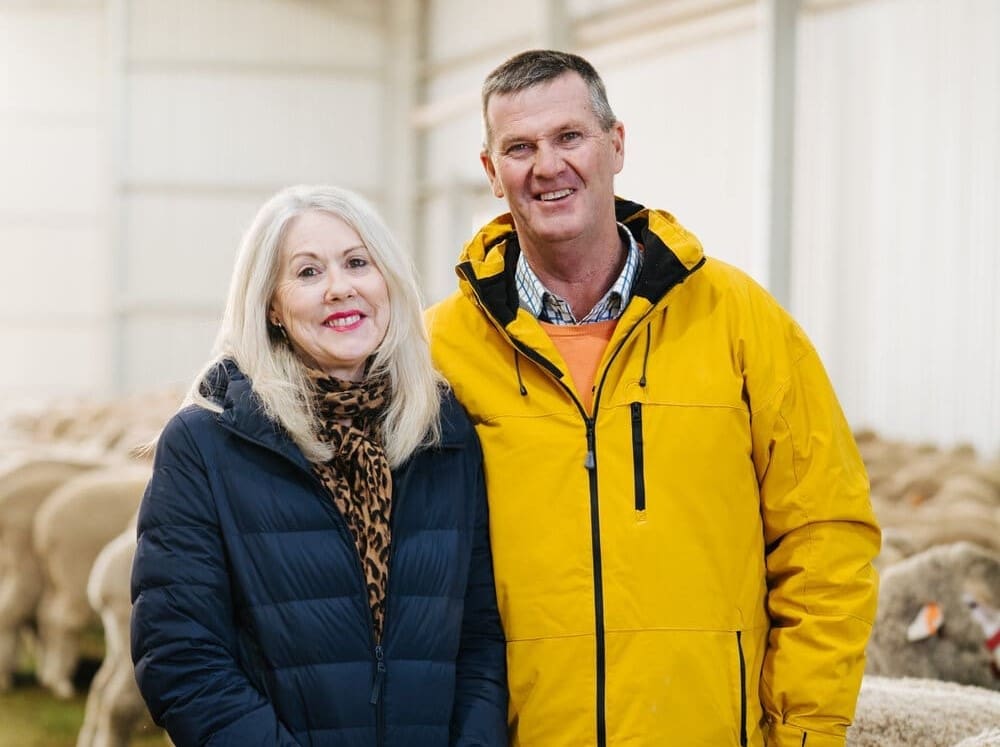
Nigel and Kate Kerin, Kerin Ag, Yeoval
He said producers have not “rebuilt the balance sheets that got destroyed in 2023”, when livestock prices plunged by 70 percent in four months, followed by biting drought.
Climatic conditions continued to strip females out of the industry, he said. “Every time I see a rebuild starting to happen – Victoria, South Australia, Tassie, southern NSW – they get smashed by climate.
“We are farmers, we’re on the ground and we’re talking to all our mates in all parts of Australia, and what we now know to be true is the wets are getting longer, and the dries are getting longer as well.”
He pointed to dry conditions across large parts of southern Queensland and northern NSW driving high yardings through saleyards such Dubbo, Scone, Inverell, Tamworth, Gunnedah and Dalby.
“The big question is, why are they selling now and they’re not interested in dipping their toe into a strategy where they’ll feed such and such a percentage of their core herd or flock?
“And when you look at the percentage of cows that are getting killed out of those markets, of all ages, it is not as if they are boner, cracker cows, old cows, to me it is driven more so by the financial hangover of 2023.
“We have to keep cashflow going in these businesses. We know once we plug an auger into a silo and start feeding, cash flow stops.
“We know as soon as we put the hay grab on the front end loader and start feeding hay to cattle, cash flow stops. The farmers know that.
“But where I am really lost is what are we going to be talking about in one or two years?
“Because if those cattle and those ewe numbers are taken out of production, where the bloody hell are they going to come from. And I don’t have an answer.”
Wagyu herd liquidation
Former Australian Wagyu Association president Charlie Perry, from Trent Bridge Wagyu in Northern NSW told Beef Central’s The Week in Beef podcast he could see a shortage of F1 Wagyu/Angus coming in the next 18 months.
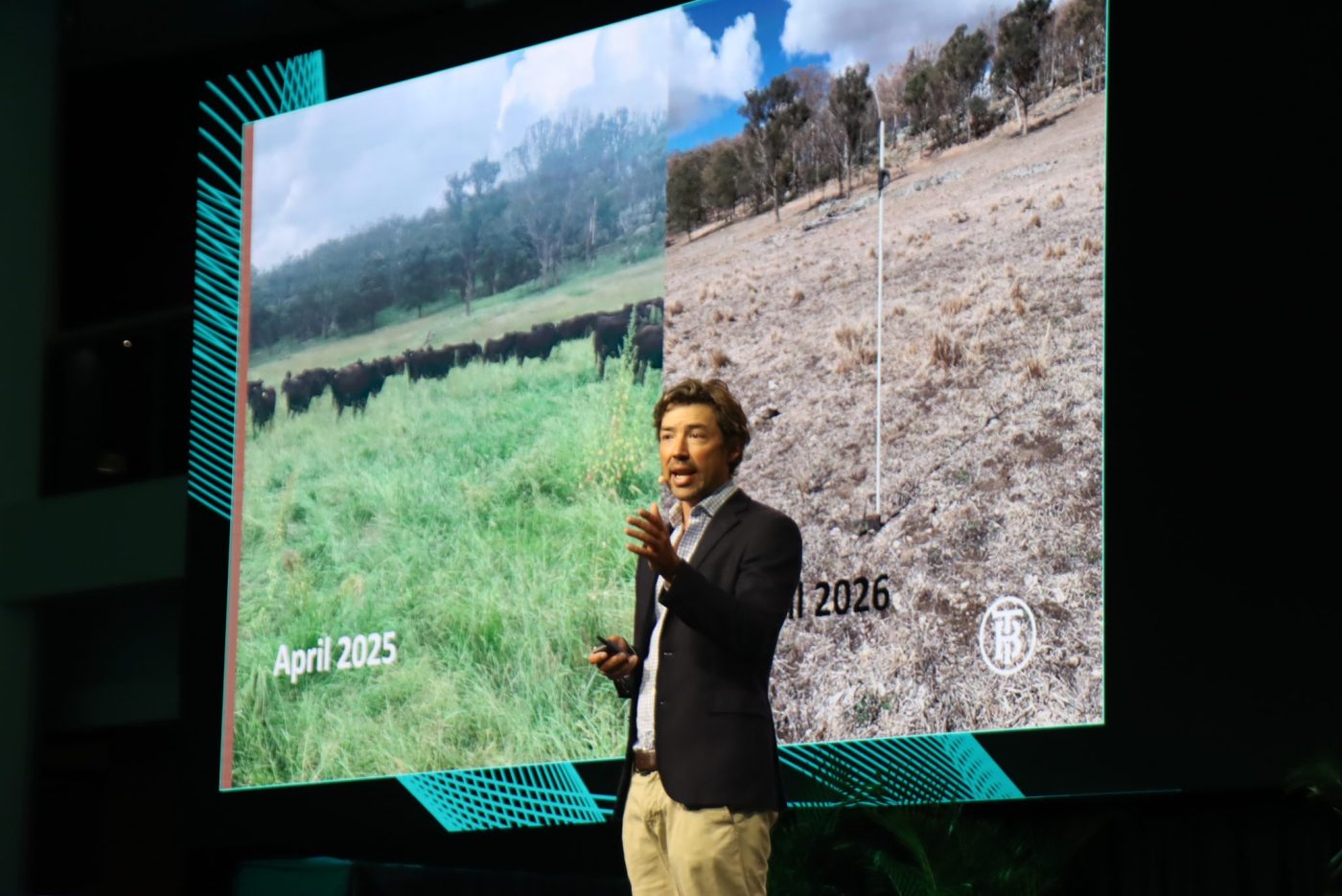
Charlie Perry, with a slide showing the stark contrast in seasonal conditions at Guyra from April 2025 to April 2026.
“The number of Angus cows with Wagyu in them that have been killed in the past 18 months is astounding,” Mr Perry said.
“Walk back 18 months to when Victoria was in one of its worst droughts, there are a lot of high-quality Angus with Wagyu down there. If you enter a herd rebuilding phase, you are not keeping an Angus cow with a Wagyu inside of it, you are keeping an Angus with an Angus to support your rebuild.
“The number of times I heard last year that Wagga had another record sale and another record sale. And now it’s moved further to the north where every single week where we’re hearing Tamworth, Gunnedah, Armidale, Dalby, Inverell – record sale after record sale.”
Mr Perry said the other factor playing into the looming shortage of F1 Wagyu was that feeder prices had been at parity with Angus prices for the past year.
 “You have people going ‘for the discount in weight I am just not going to use a Wagyu bull at the stage’,” he said.
A combination of a strong meat market and the looming shortage of Wagyu presented an opportunity for producers who can hold onto F1 Wagyu, according to Mr Perry.
“There are some global winds around like cost of living, increasing interest rates and geopolitical instability – but we are selling a premium article,” he said.
“Every time I hear a data point that is a head wind I get worried, but from everyone I have talk to someone who is selling meat into these markets they keep saying ‘there are a lot of rich people and they keep buying this product’.”
However, he said he was concerned about the boom-and-bust cycle emerging for Wagyu cattle – with big sell downs during the global financial crisis in 2007, in 2015 and during the 2019 drought. Wagyu prices increase significantly after all the previous events.
“I feel like we are just at the start of another cycle and it is challenging for the whole industry. It is great if your cattle are worth more but it puts a quite a bit of instability in the market,” he said.
“Potentially this cycle can be flattened out by the growing number of purebred Wagyu in the north.”
Angus cows struggle in the north
Tom McLeish breeds purebred and crossbred Wagyu at Winton through his Diamond Cattle Company and owns the TopX Western Qld branch.
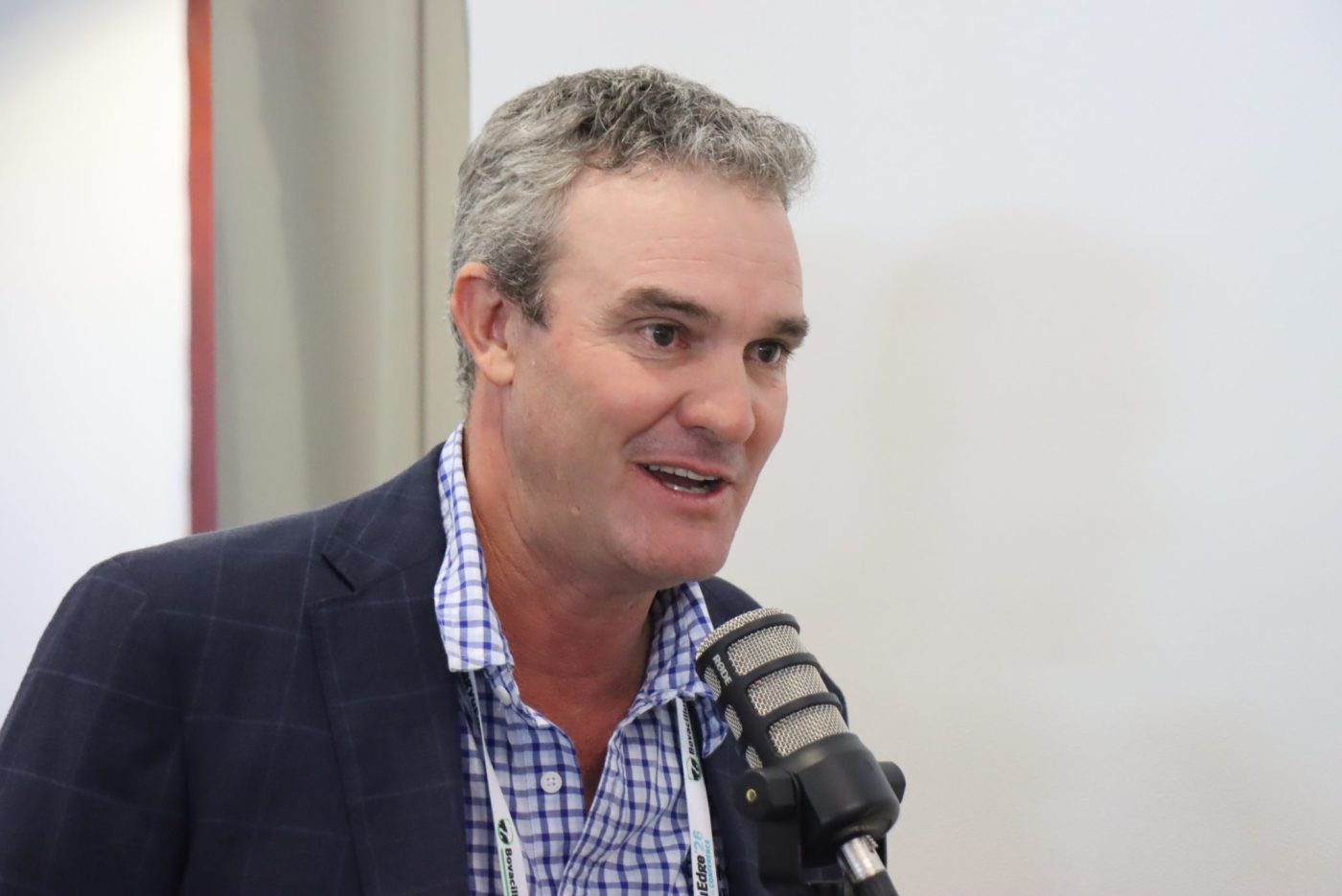
Tom McLeish
Asked whether he thinks the growing Wagyu herd in the north could help smooth out the boom-and-bust cycle in the south, he said there were concerns about the ability of the north to carry Angus cows.
“There is a lot of talk about the lack of Angus cows to push forward that F1 production in the south, which is the real high-end Angus production,” he said
“I am not being critical of Angus cows, but they have to stay in the cooler country because they don’t do well in north-west Queensland – whereas the Wagyu cow does. We can bring Angus cows up for the short-term and get them through but for where we are it is just too hot for them.
“There are a lot more purebred Wagyu cows that have moved into the north-west and we are ironing out those production issues to make them higher marbling herds.”
Have your say