ANOTHER large Australian commercial feedlot is about to be put to the market, continuing an extraordinary recent sequence of asset sale offerings in the grainfed sector.
The Shearer-Smith family’s Smithfield feedlot near Proston in Queensland’s South Burnett region will be put in front of buyers, it has been confirmed today. Staff and key customers were informed of the decision on Friday.
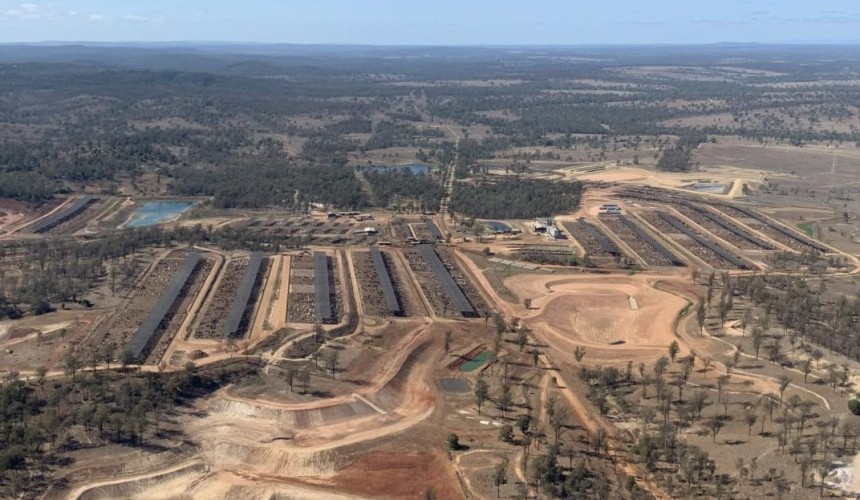
Smithfield feedlot is a large, modern, well equipped and well located yard developed to its full license capacity of 18,500 SCU.
 Principally used for custom feeding, the Smithfield asset will be offered without stock, with price expectations above $65 million, as demand for quality Australian beef production assets continues to surge.
If successful in finding a buyer, Smithfield Cattle Co plans to consolidate its grainfeeding business at the company’s second large feedyard, Sapphire, near Goondiwindi, which has considerable scope for expansion.
In an extraordinary recent sequence, the listing of the Smithfield feedlot via Danny Thomas at LAWD represents the fifth large Eastern Australian feedlot to seek buyer interest in the past two or three months (see references below).
Beef Central’s recent feedlot expansion series discussed Sapphire feedlot, reporting:
Another yard with possible future expansion is Smithfield Cattle Co’s Sapphire Feedlot near Goondiwindi. Sapphire is currently constructed to 28,750 SCU, within a licence approval for 48,560 SCU. When bought by Smithfield in 2016, the yard was built to 6000 head, with approval for 8700 head, undergoing several expansions since then.
Smithfield is reviewing the numbers on another potential expansion at Sapphire, but has not made any firm commitments at this stage.
According to Beef Central’s 2023 Top 25 Lotfeeders report, Smithfield Cattle Co is the eighth largest lotfeeder in the nation, with its two yards having a one-time capacity of 38,500 SCU.
The Proston feedlot now being offered has an excellent performance reputation as a feeder of all classes of cattle from Central and North Queensland indicus crossbreds to longfed Wagyu.
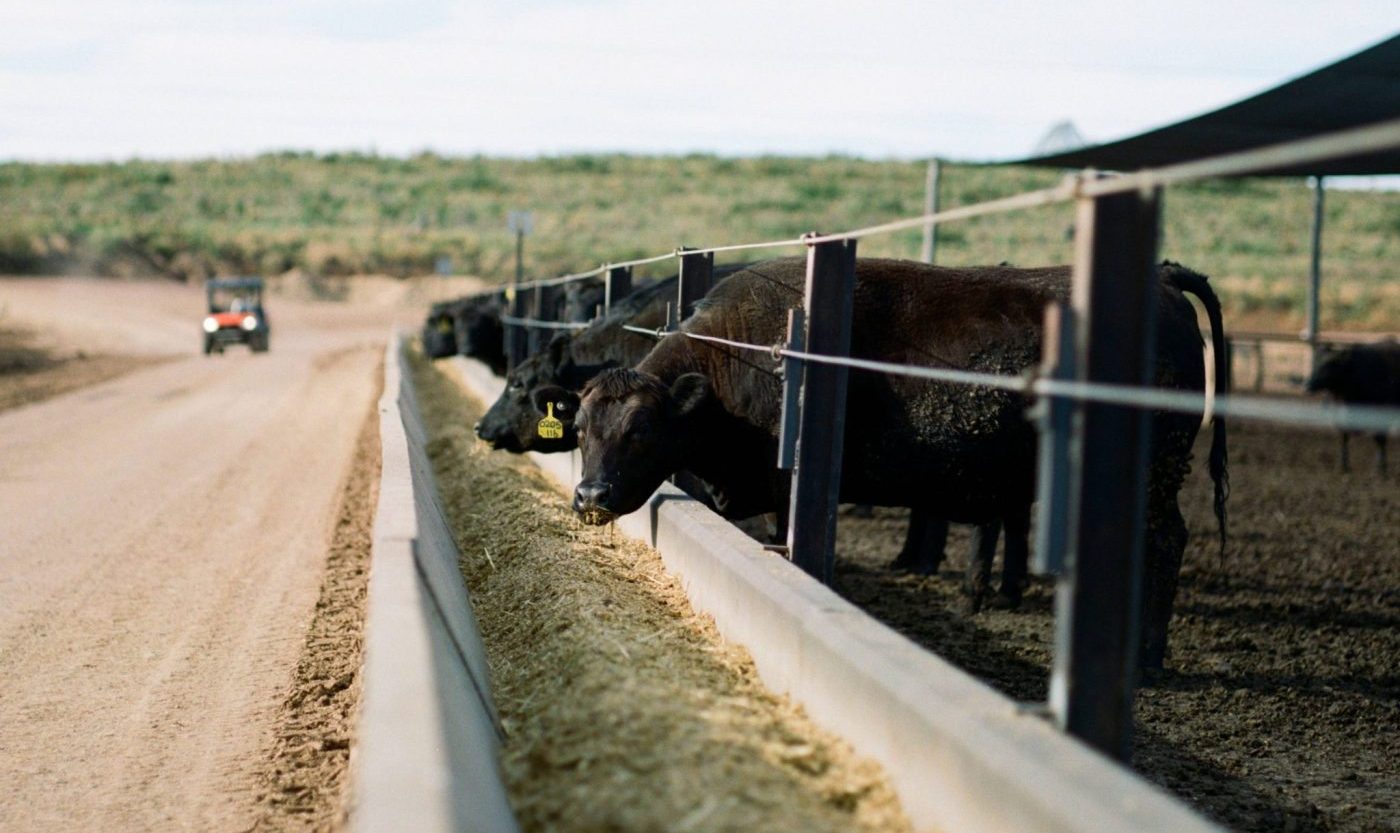
Wagyu cattle on feed at Smithfield
Smithfield Cattle Co chief executive Andrew Shearer-Smith said the recent activity in the feedlot sector and the current and forecast strength of the Australian cattle industry was the catalyst to offer the family-owned property and feedlot asset.
“The decision to sell a property that has been in our family since the 1950s, and a feedlot that our parents, Robert and Sandra Smith, started in 1986, was not made lightly,” Mr Shearer-Smith said.
“We are all proud of what our family and the Smithfield team have achieved in the continuous development and operation of Smithfield Feedlot since its inception.
“Smithfield Feedlot has an enviable track record of reliably delivering exceptional cattle performance to customers for decades, and while the feedlot is not brand new, a prospective purchaser will be able to step into a high-performing facility that has been constantly upgraded with no significant capital expenditure required.”
In addition to its second Sapphire Feedlot near Goondiwindi, the family-operated Smithfield Cattle Co business also owns other agricultural assets in the south of the state, and Mr Shearer-Smith said they remained committed to the sector.
“Whether a suitable buyer for Smithfield Feedlot is identified or not, we will soon be starting an expansion of Sapphire Feedlot,” he said.
Stage 1 of that expansion will see Sapphire built to 40,575 SCU, with completion of that project expected to be during the third quarter, next year, with the option to complete the expansion to the licensed capacity of 48,560 SCU later.
“So, while one chapter of our history may close, we will still be very much committed to the lotfeeding industry,” he said.
Strategic location
The Smithfield feedlot is strategically located north of Queensland’s cattle tick line in the tightly-held South Burnett region of Queensland, and forms part of a 2140ha grazing property with improved pastures comprising a mixture of Rhodes, Gatton panic and native pastures. Almost 100ha is irrigated under centre pivots for fodder production and grazing.
The yard includes 175 shaded feedlot pens built to a density of 16.5sq m per animal, and modern steamflake milling and processing infrastructure.
Water security is a key feature with entitlements exceeding the feedlot’s needs, including 640Ml of high priority water licences drawn from the Tarong pipeline scheme, plus an unsupplemented entitlement of 23Ml from the Stuart River.
Livestock water is sourced from the Tarong pipeline via three electric powered variable speed pumps, reticulated to two storage dams and feedlot pens, with irrigation water predominantly sourced from effluent sediment and runoff dams.
The feedlot currently operates primarily as a custom feed yard for other large-scale Australian cattle producers or integrated meat companies with long-term supply arrangements. A proportion of the cattle on feed are owned by Smithfield Cattle Co.
Other infrastructure supporting cattle feeding operations include hospital yards, induction yards, scan out yards, and dispatch and receival yards.
The milling complex consists of three 18×36” steam flaking roller mills with an associated tempering system and a new 3-megawatt Maxitherm gas fired boiler. Grain storage consists of seven silos with a combined capacity of 2090t and silage pits accommodating 15,500t. Shedding includes a commodity shed, old and new workshops, a vehicle shed, machinery shed and a hay shed.
The property also features a weighbridge, stockperson’s amenities, office, stables, manager’s dwelling, boardroom, an old house and cool rooms.
Wide range of potential buyers
LAWD senior director Danny Thomas said the Smithfield feedlot presented an exceptional opportunity for a wide range of market participants across the beef supply chain.
“Smithfield is an established business that has been successfully operated by the Smith family for many decades,” Mr Thomas said.
“Given the current appetite for Australian beef and production assets, we expect to see strong interest from both domestic and international beef processors, existing feedlot owners and large-scale graziers.”
Recent asset disposal moves
The Smithfield Cattle Co decision continues an unprecedented sequence of major feedlot asset sales, or attempts to sel over the past six weeks, starting with:
- The sale of Rangers Valley feedlot a month ago in a deal with Stanbroke understood to be worth close to $400 million, including 42,000 longfed Wagyu and Angus cattle
- Mort & Co’s decision last month to offer its Pinegrove and Yarranbrook feedlots in southern Queensland. Pinegrove, between Millmerran and Cecil Plains is a 9698 SCU yard with approval to expand to 21,100 SCU. Yarranbrook, near Inglewood has a capacity of 18,540 SCU, and approval to expand to 35,000 SCU. The offering of the two yards plus the proposed Gogango site in Central Queensland comes from a desire among smaller Mort & Co shareholders (not foundation shareholder Richard Hughes, as originally reported) to exit the business.
- Less than a fortnight ago, Elders confirmed to Beef Central that it would offer its 22,500 head Killara feedlot near Quirindi in northern NSW to the market.
Vigorous investor interest
Beef Central understands that the vigorous level of investor interest in one or more of the above feedlot assets has taken many by surprise, and may have in fact motivated some of the vendors involved to put their assets on the block, sensing the ‘sweet spot’ in the current market cycle.
It’s understood that at least one of the above offerings came about as a result of an unsolicited approach from a potential buyer. Another has attracted more than 30 genuine inquiries in the past couple of weeks, Beef Central has been told.
People close to some of the above transactions have told Beef Central that buying interest is coming from diverse sources:
- Established Australian beef processors looking to enlarge their grainfed footprint, adding security of supply and responding to strong demand for quality grainfed beef
- Institutional investors, both Australian and offshore, looking to secure high value assets either to run themselves, or lease to others
- Pastoral entities looking to move downstream by establishing or expand a large grainfeeding footprint, for market security and other reasons.
For years, virtually no large feedlots were sold in Australia at all, with feedyards being one of the most closely-held assets in the beef supply chain. However assets that were once deemed to be worth $1000-$1200 per head of capacity are suddenly being seen as worth $3000-$3500/beast area, and more.
“The current interest in sales represents a changing of the guard,” independent analyst Simon Quilty suggested to Beef Central during conversations yesterday.
“Some of them (Rangers Valley’s owner Marubeni, for example) have owned the assets for decades, and now want to realise on their capital investment, now that the asset value is being appreciated.”
“Investors are now recognising the true value of feedlot assets in Australia, and the critically important role they play in continuity of supply of high quality beef, and valuations have doubled in only a few years,” Mr Quilty said.
“That’s being seen in both expansion, as Beef Central has already outlined, as well as asset sales.”
As Beef Central mapped out in this recent feedlot expansion series, there’s close to 200,000 head of additional industry capacity expansion in some stage of development, or looking likely to happen soon.
Numbers on feed could reach two million head as soon as 2027, analyst Simon Quilty has projected.
- Smithfield Feedlot is being offered for sale by Expressions of Interest closing Monday 22 December. The primary contact is Danny Thomas, LAWD Senior Director on +61 439 349 977.
Good to see shade in these feed yards.