
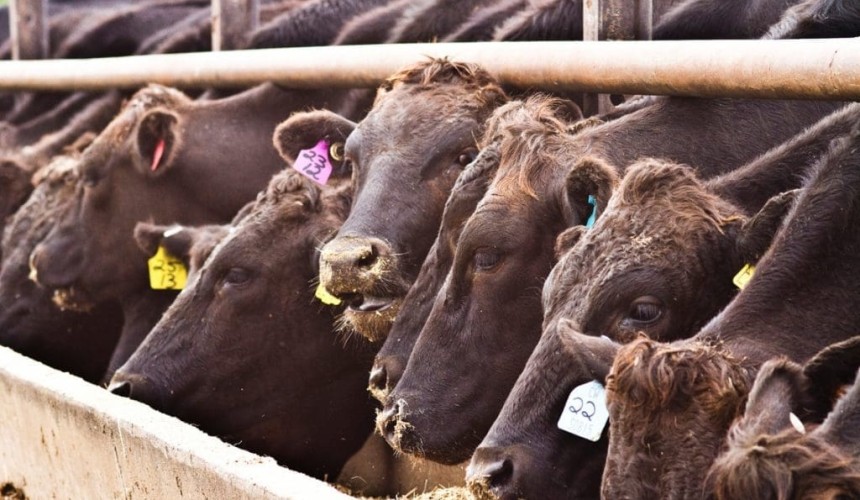
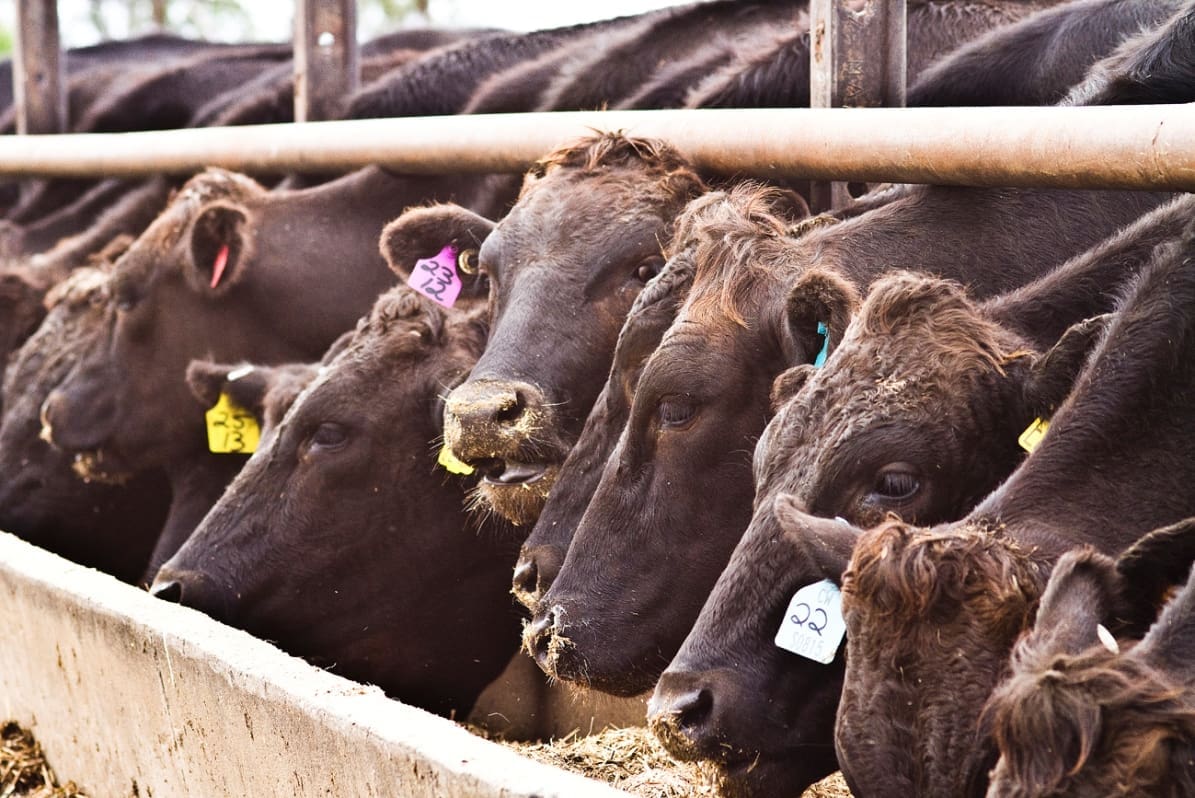
IT’S been a rough year in the ring for F1 Wagyu feeder prices, going 15 rounds with challenges including lack of economic confidence in key markets, abundance of supply and other headwinds.
Going against historical trends, Wagyu feeders have in fact been worth less than Angus for lengthy periods in 2025, but now appear to be coming off the ropes, to use another pugilistic analogy.
Beef Central has provided occasional updates on Wagyu feeders prices for the past 14 years, surveying large F1 to Fullblood Wagyu beef lotfeeders and supply chains across the key production centres in Queensland and New South Wales.
 Based on quarterly feedlot survey data, longfed Wagyu-influenced cattle occupied around 10pc of national feedlot capacity in the June quarter, a slight reduction on proportions seen in the previous four quarters. Numbers peaked at around 12pc in early 2024.
Historically, F1 Wagyu have traded anywhere from a 50-100c/kg premium over to Angus.
However well-established, large-scale supply chains told Beef Central this morning that well-bred F1 Wagyu x Angus feeder steers were trading this week around 520c/kg, with one contact quoting a little higher than that, at 530c to as much as 550c for ‘really attractive’ well-grown cattle of known carcase performance.
In comparison, Angus feeders have eased a little over the past week with more entering the market with dry conditions, but plenty are being traded this week in the 530-540c/kg range. More on this in next Monday’s fortnightly feeder steer update.
One supply chain manager said the gap had narrowed recently between F1 prices and Angus.
“The (lower) F1 feeder price was probably getting out of kilter a bit, in comparison with Angus,” he said. “The numbers (of Angus) have started flowing again, and things have balanced themselves up,” he said.
Prices lift since July, and March
Back in early July we reported prices for well-bred Wagyu F1 feeders (quality Angus dams and appropriate Wagyu Fullblood sire-side genetics) at anywhere from 450-500c/kg. Angus the same week were making 460-470c.
Four months earlier in mid-March, Beef Central reported that the Wagyu premium over Angus was under considerable pressure, with F1s quoted by supply chains at 410-450c/kg, with 430c/kg around the mid-point, but F1s of less desirable genetics, without known performance as low as 400c. Angus that same week were quoted at 390-410c/kg, but have obviously moved a long way since then. Its easy to forget how tough the export meat trade was at the start of this year, especially for better quality chilled and marbled meat.
F1s have gradually lifted in price since around May, when many were traded at around 450c/kg, to where they sit today.
Beef Central was told that at least some of that F1 price rise may be due to supply chains responded to ‘complaints’ from their committed F1 suppliers over price, wth the ever-present risk that they would react by pushing Angus bulls back into the breeding paddock this spring, and not Wagyu.
“One of the attractive features about F1 breeding out of Angus dams is that its very easy and quick to change course,” one contact said.
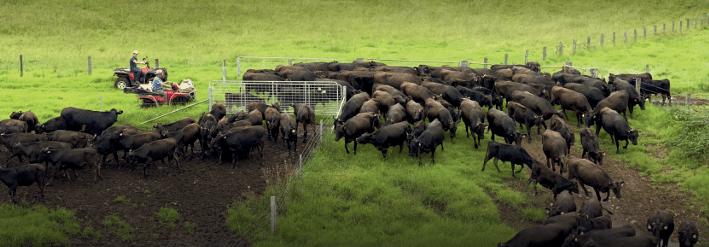
Unusual outcomes
With Wagyu F1 feeders at times this year selling 20-30c/kg liveweight cheaper than equivalent Angus – and Angus feeders being in very short supply due in part to the drought impact in Victoria and southern NSW – some unusual outcomes have occurred.
In one example, a large southern integrated lotfeeding and processing company bought ‘a lot of relatively cheap’ (relative to Angus) Wagyu F1 feeders earlier this year. They were directed not into traditional longfed Wagyu-style programs, but fed for shorter periods, destined to end up in non-breed specific branded beef programs, typically chasing marbling scores 3-5.
Part of that move, at least, appears to be that Angus feeders at the time became very hard to find, even at higher prices. In essence, it may have been a case of ‘F1s or nothing.’
One observer made the point that despite the relatively attractive feeder price (perhaps 20-30c/kg cheaper than Angus) lower feeding performance (ADG) may have washed away some that benefit. In one example, the F1s were being fed an extra 20-30 days over Angus in the enxt pen, to deliver similar carcase weights.
What’s particularly unusual about the above example is that the cattle involved effectively ‘lost their Wagyu identity’ by the time they ended up in the box.
Similar strategies have been used at different times in the past when F1 prices have fallen hard, with mixed success, Beef Central was told.
Higher content feeder cattle
Beyond the F1 market, large grainfed supply chains are this week quoting around 590-600c/kg for purebred (F4 and higher) Wagyu feeders, and well-bred Fullbloods 720-750c/kg. Other higher content quotes were a little less than that, with one contact quoting Fullbloods no higher than 650c.
“And there’s no problem with supply, for any Wagyu animal from F1-Fullblood, ” the contact said. Fullblood feeder supply continues to grow as a sub-set of the Wagyu industry.
“But suppliers who are closely aligned with Wagyu brand programs will be in a lot better place than others,” he said.
Is Wagyu being swept along with the global shortage of beef?
With Australia the odd-man-out in global beef supply at present (see report from the Anuga food trade show earlier this week) is Wagyu beef being swept along with the high demand for Australian beef in general?
“A rising tide floats all ships,” was the response from one Wagyu supply chain manager.
“We’re seeing demand and new customers that we have never seen before in the US and Canada,” he said. “We have seen sustained quarterly Wagyu x beef price rises of 5-7pc over the past three quarters,” he said.
Another dynamic that has changed for Australian premium beef exporters, in the current era of short world supply, is the fabrication requirement relationship with customers.
“Where once every customer was demanding, wanting different cutting lines, specs and packaging requirements, now the exporter has the upper hand in the relationship. Now we’re just saying we’re going to do it this way, and allocate you that product – and they thank us. It’s more efficient and uniform for our business, removing some extra cost and complexity – a very different dynamic.”
“During the current stage of the global supply/demand cycle, there are other benefits for Australian exporters, other than price,” he said.
Another supply chain manager had a somewhat different view.
“We’re talking about meat prices increasing, but they are coming off a lower base,” he said.
“They’re currently operating in the space between there and the ceiling. But its important to understand there is no real relationship between Wagyu and Angus meat prices – they operate in two separate orbits. It just means that they come up closer to where Wagyu pricing is.”
“From an Australian exporter’s perspective, it’s nice to see the rise in conventional (including Angus) meat supply getting shorter in the US, and hence prices are rising – but that won’t necessarily correspond into Wagyu meat prices,” he said.