
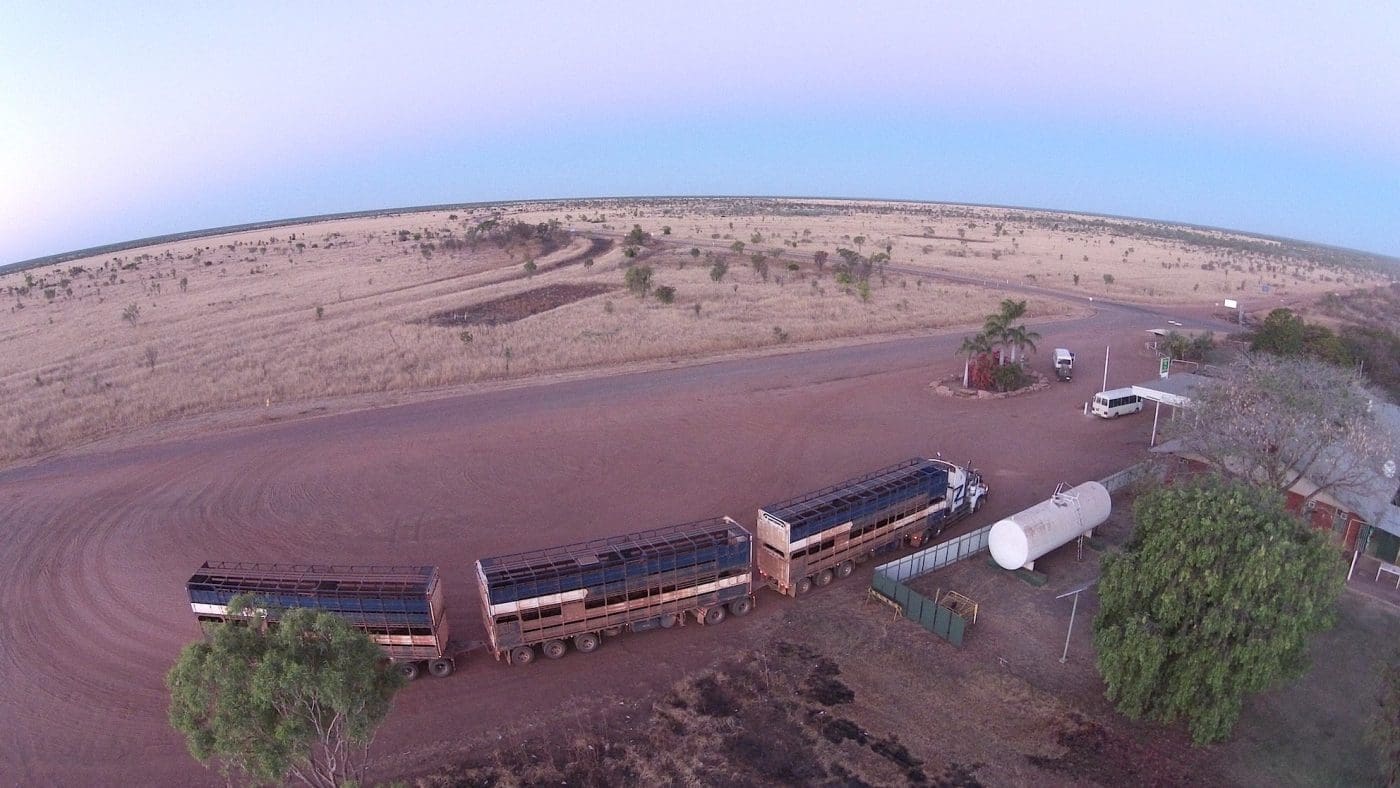
A road train refuels at Top Springs Roadhouse in the Northern Territory.
AUSTRALIA’S cattle industry runs on diesel. Transporting cattle, carting equipment, mustering stock, completing water runs, fencing and feeding livestock all rely heavily on fuel.
As the conflict in the Middle East escalates and drives fuel supply lower and prices higher, finding effective ways to reduce fuel use on-farm is gaining more importance by the day.
 While diesel use remains vital and unavoidable on Australian cattle properties, the current situation has sharpened focus on the role new and emerging technologies can play to chip away at fuel bills where possible.
This week we spoke with Central Western Queensland cattle producer James Walker (left), who has been at the forefront of technology adoption in agriculture, and is currently an advisor for, and investor in, Mandalay Venture Partners, a venture capital firm focused on investing in agrifood tech.
We asked James to point out some fuel saving technologies already at work in paddocks across the Australian grazing sector, and he offered the following practical examples:
Remote water monitoring: cutting out unnecessary kilometres
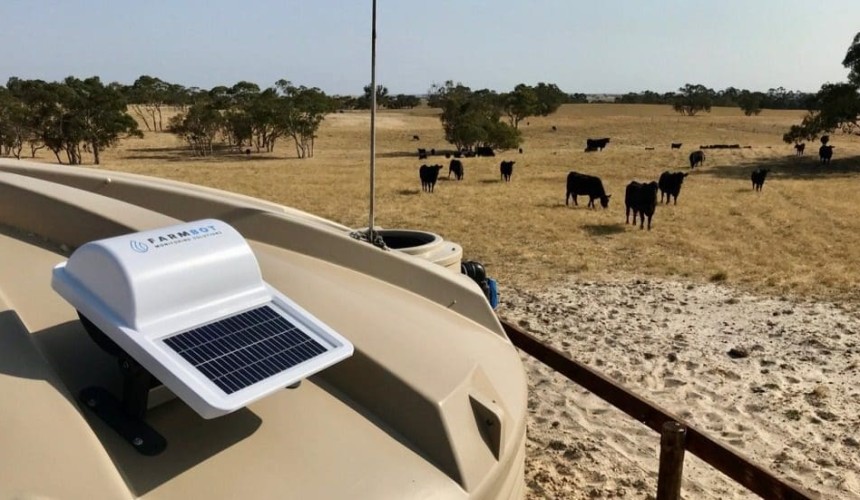
Remote water monitoring systems such as Farmbot have been a major source of fuel savings for many properties, allowing producers to check tank levels, troughs and pump performance from a phone or computer, reducing the need for regular water runs which can add up to big fuel, time and labour costs on properties large and small.
Drones: mustering without the motorbike
It took time for drone technology to move from promising concept to proven paddock workhorse, but years of work by northern cattle producer Luke Chaplain from Sky Kelpie to refine and prove the application has gone a long way to establishing drone use as a genuine mustering, and in turn fuel-saving, tool.
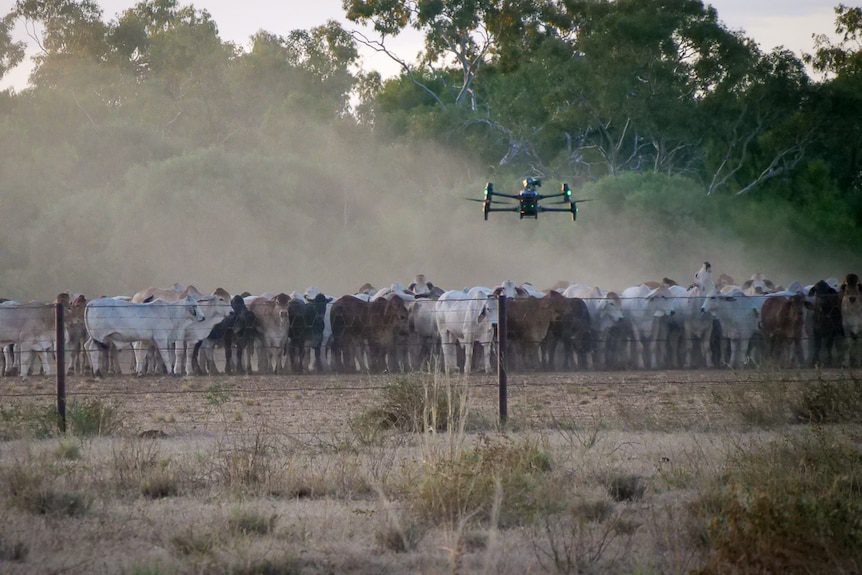
Image: Sky Kelpie
In a high-value cattle breeding operation James Walker and another producer run in partnership at Warra on the Darling Downs producing 80 Ultrablack bulls a year, a Sky Kelpie drone has become an integral part of the business, saving time, fuel and labour, while also improving animal welfare and human safety.
“It has thermal, so you can start the drone mustering when it’s still dark at 3 or 4 o’clock in the morning,” James said. “It will just herd them together and move them towards the yards for you and by the time the sun comes up you can go out and they’re all mobbed up for you to walk them to the yards.
“I’ve got a pretty hefty file of mustering accidents, and it was usually when I was initially covering the ground, putting them together and mobbing them up, not when they were all mobbed up. It takes the high-speed risk out.”
 Beyond safety, drones can reduce reliance on motorbikes, helicopters and utes, cutting fuel use and labour requirements.
Other aerial drones capable of carrying payloads in excess of 50kg are also already proving effective at automating time-consuming tasks such as spraying weeds and regrowth in paddocks.
In the cropping sector the Swarm Farm automated farming vehicles developed by Emerald couple Andrew and Jocie Bates is another example of a Queensland startup that is already reducing diesel usage and labour requirements on farm, with the machines now working across more than 10 million acres world wide.
Virtual fencing: moving cattle without moving vehicles
James also highlighted the example of virtual fencing systems, led by companies like Halter, as another technology that is already being embraced and reshaping cattle management on some Australian cattle properties.
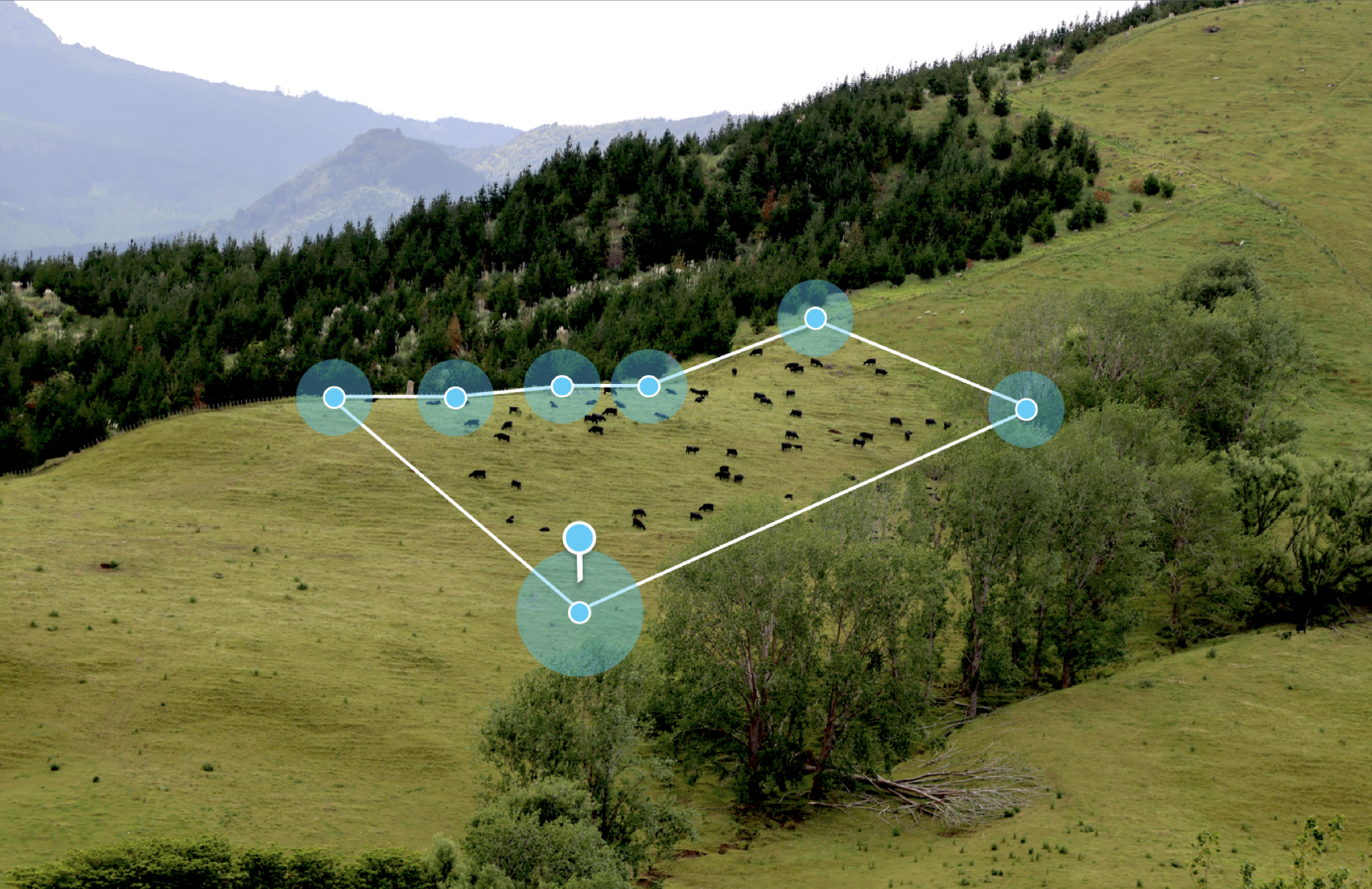
Image; Halter
Using GPS-enabled collars, producers can create “virtual” geophysical fences that confine cattle to specific areas within invisible boundaries without the need for physical fencing or vehicles.
The technology has also moved rapidly from idea to adoption. Halter, which recently completed one of the largest agricultural technology capital raises ever seen – valuing it at a whopping $2.9 billion – says more than 2000 farmers across Australia, New Zealand and the United States now use the system, with around one million collars in use.
James said the technology can also be used to physically move cattle.
“You can actually put in virtual laneways as well,” he explained to Beef Central.
“As an example, you can program it for three day’s time so the cows progressively advance towards the yards, so when you turn up, they’ve already mustered from paddock to yards.”
Smart tags: Location data reduces physical monitoring and creates more efficient musters
Smart Tags are also helping to reduce fuel usage on cattle properties by enabling remote, satellite-based monitoring and precise location data that reduces the requirement for vehicle-based checking of livestock, while also improving the efficiency of mustering, as Greg Campbell from CERES Tag explains in today’s episode of The Weekly Grill.
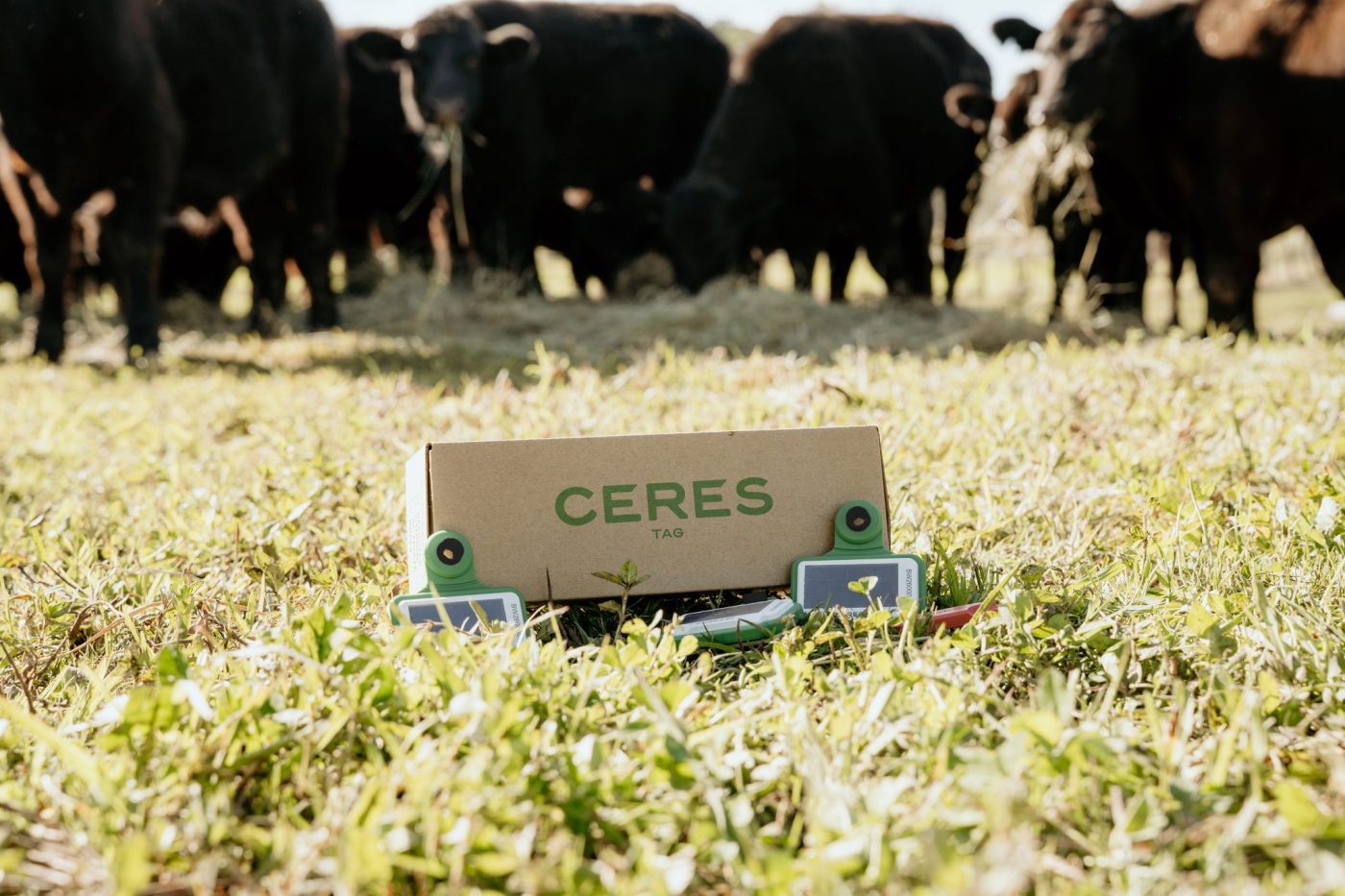
Image: CERES Tag
“Anything that can help reduce your fuel use and your fuel overheads is obviously going to be of benefit,” Greg says in today’s podcast. “It is no secret one of the biggest benefits (of Smart Tags) is around being able to just reduce your mustering time frame. So if you need potentially fixed wing aircraft, if you need helicopters, motorbikes, utes and all sort other equipment to get the cattle in, and you don’t know where to start, you’re going to burn a lot of fuel.
“If you know which corner of which paddock they are in, then you can really make a headstart and get that fuel use forn from 3 to 5 days to 1 to 2 days.”
E-bikes: a low-cost alternative
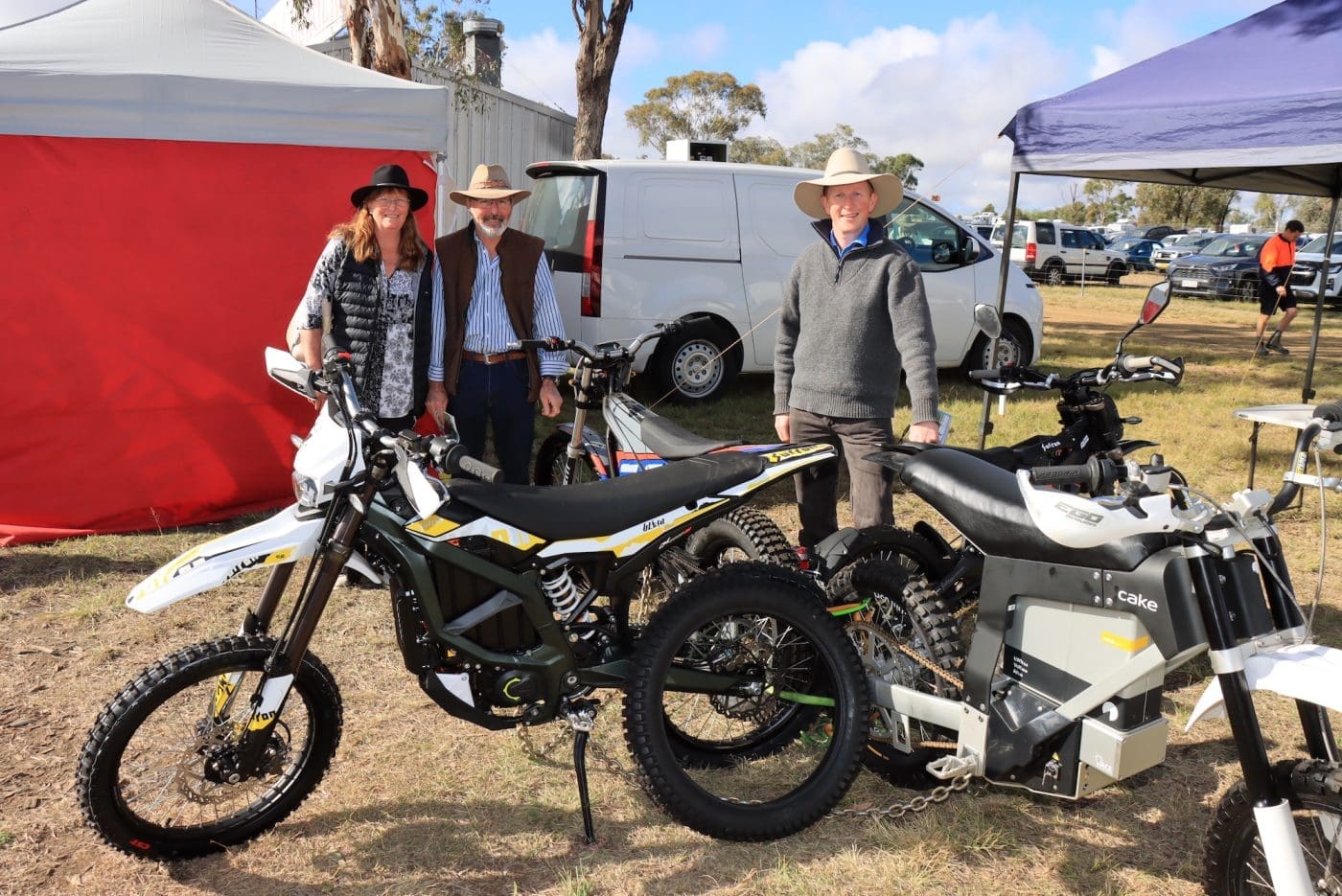
A selection of eBikes pictured at FarmFest in Toowoomba.
Electric motorbikes are also gaining some traction as a practical, low-cost alternative to petrol-powered bikes for routine jobs.
James said he was starting to see more e-bikes appearing on properties in the Central West particularly for use by kids coming home from boarding school.
“They plug them in, you have four or five hours which can be a muster, and they are low maintenance,” he said.
Solar pumps: removing diesel from water infrastructure
Water pumping is another major diesel consumer, particularly in remote areas.
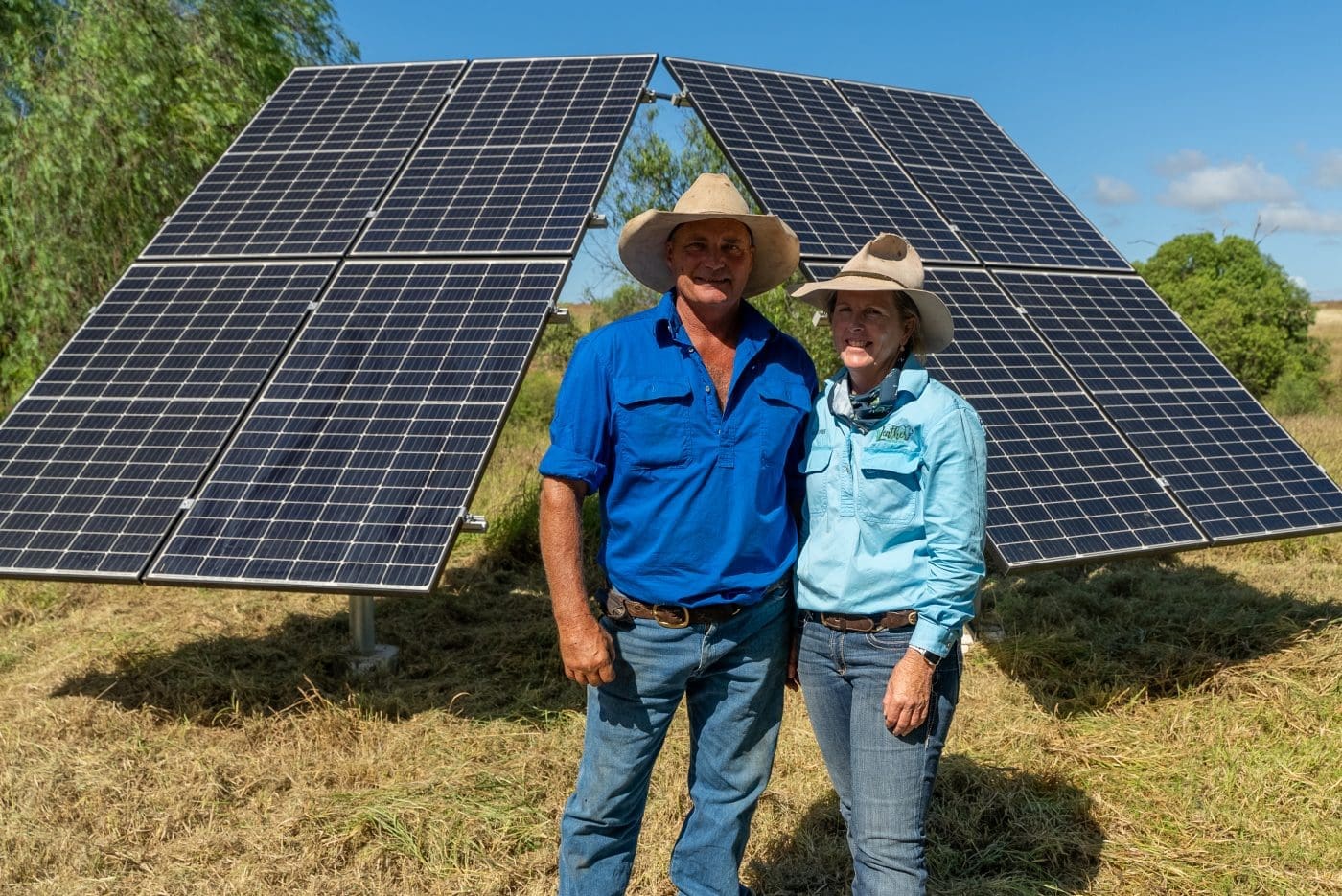
Rob and Melinee Leather, Barfield Station, described how solar pumps have reduced fuel use on their operation in this earlier Beef Central article.
The use of solar energy to power bores and water distribution systems, including solar/diesel hybrid systems, has already unlocked diesel savings on many properties, while also lowering maintenance and labour costs.
James said that while technology was helping to cut diesel use and costs in some places, it was also important to remember that diesel remains a vital input on Australian farms.
“It’s extremely disappointing that with all the tax we pay, that the government hasn’t invested more heavily in food and enterprise security.
“It’s great however that we have world leading homegrown ag tech providers helping to reduce some of our input costs.”
- Have any practical fuel-saving tips for cattle properties? We’d love to hear you thoughts – tell us more in the comments section below.
Hi from the Atherton Tablelands.
Your members might be interested in this presentation on reduced application of UREA during our fuel and fertiliser crisis.
the link is: https://ectltd.com.au/from-theory-to-reality-why-brown-coal-urea-blends-struggled-until-now/
Regards
Noel
You haven't mentioned solar power for off-grid pastoral properties, instead of diesel generator power. Our family installed solar power in 2022. This has realised a saving of tens of thousands of litres of diesel. Whilst still requiring a backup diesel generator, this runs on average for about two hours a week, as opposed to 18+ hours a day prior to our solar upgrade.
Thanks James, game changing stuff this. I recently bought a new tractor (diesel) but wished there'd been an electric alternative. They will come I'm sure. And maybe this energy crisis (like the one in the 1970s) will forment a radical change to how we power our farm operations.