
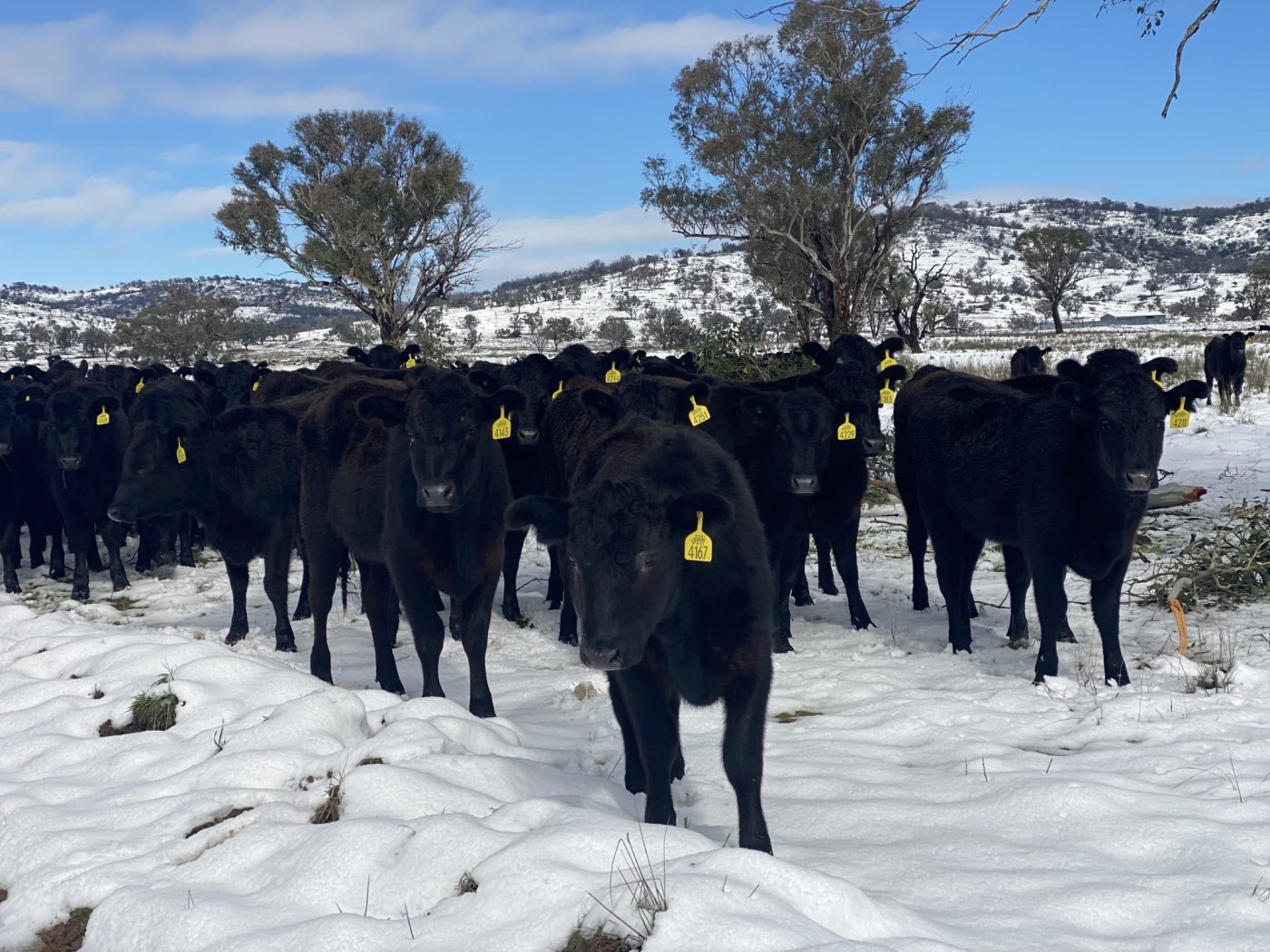
Cattle near Armidale in August 2025.
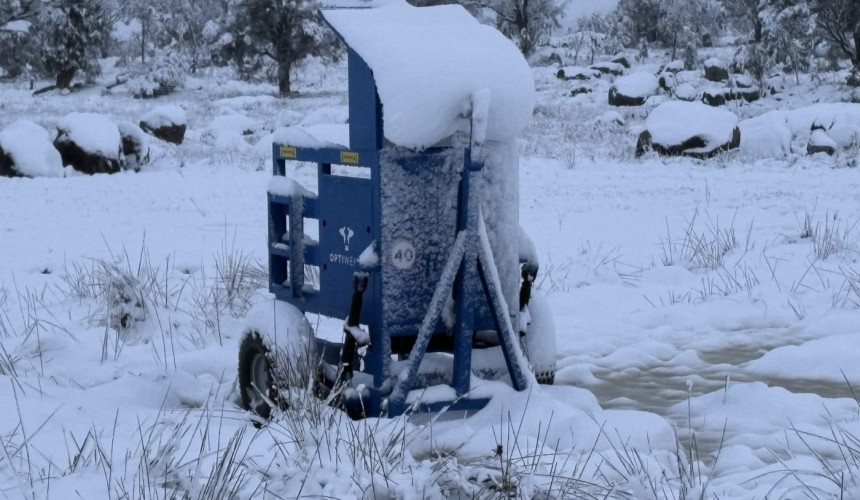
Producers in New South Wales had a front row seat to the impact of snow and a severe cold front on the weight gain of their cattle, with some seeing weight loss of up to two kilograms a day on their portable weighing unit during the recent cold snap.
With close to 1500 Optiweigh units now in Australia and around the world, producers are able to see daily how their animals are performing.
Jess and Hamish Webb from Myanbah west of Armidale have two units to monitor their backgrounding and trade cattle.
“We had our Optiweighs monitoring two mobs of F1 steers during the snow and we saw the steers on the native country dropped by .7 kilograms a day and the steers on the oats dropped by 0.5kg a day,” said Mrs Webb.
“It took a little bit for them to come back after the snow, but they are back to doing 0.7kg and 1.3kg a day, respectively.
“We put that down to the fact that there was a blanket of snow, which we have not seen before, and the cattle simply couldn’t eat and then it was so wet from the snow melting, there wasn’t a lot of bulk in the feed, so it was going straight through them.
“We don’t see a lot of snow here, but we understand it contains a lot of nitrogen and after some sunshine, that has filtered through to the grass and has helped green things up and the cattle have lifted off the back of that.”
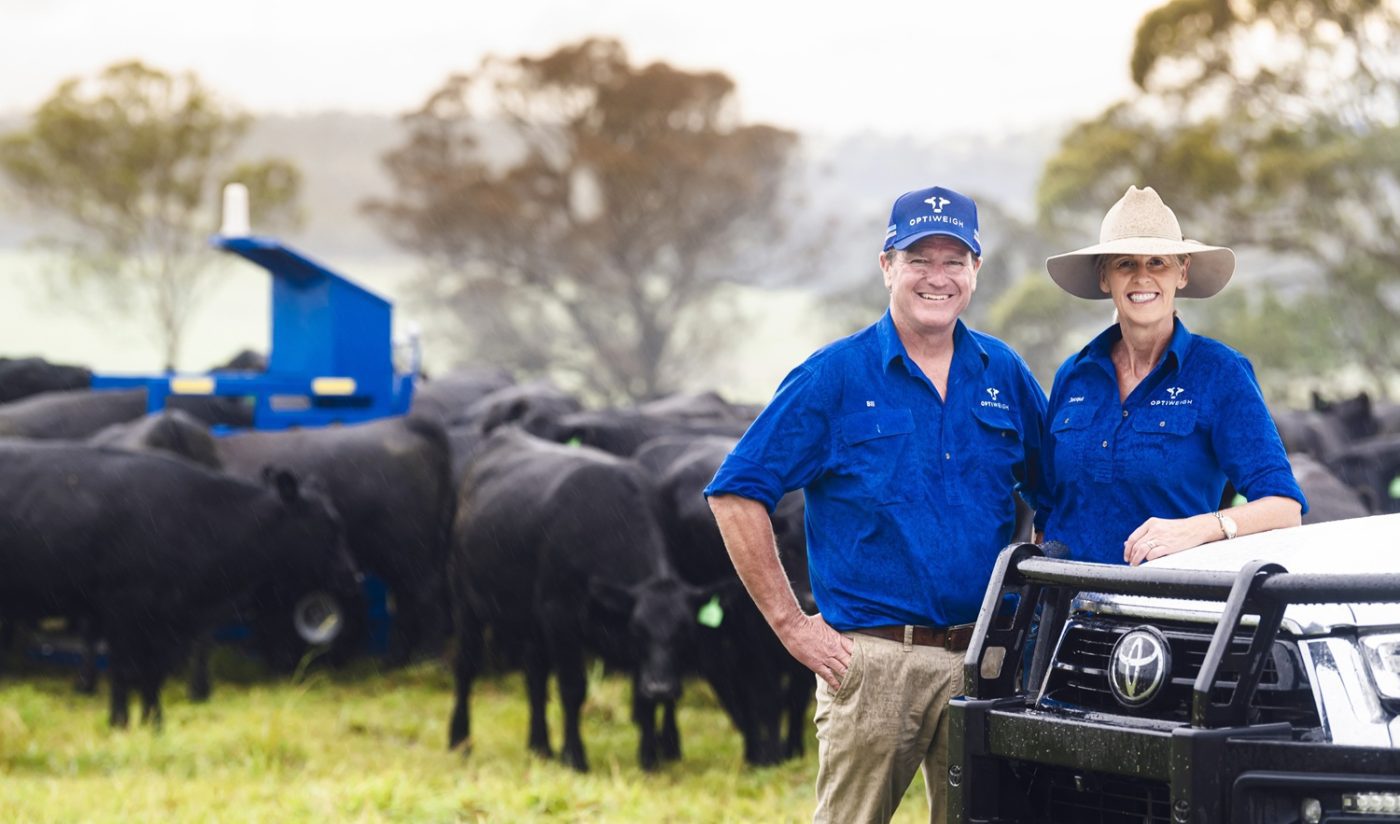
Founders of Optiweigh Bill and Jacqui Mitchell.
Bill Mitchell, the founder of Optiweigh said the units show producers micro fluctuations in their animals, enabling them to act quickly if the animals aren’t performing.
“A very simple scenario is where cattle you expect to be doing a kilo a day are only doing half a kilo a day, normally you would not see that by eye for six or eight weeks and if you think of the cost of half a kilo a day for six weeks at $5 a kilo for a feeder steer – the numbers get really big, really quickly,” said Mr Mitchell.
 “The Optiweigh sends a daily email so if there are any surprises, it is a call to action to dig a bit deeper and check the animals.
“There are a lot of people with sheep and cattle who as soon as the weight gain starts to taper off, they rush out and do a fecal egg count test, so it is another tool against worm resistance, and it is improving the welfare of the animals.”
Mrs Webb said Myanbah’s manager Jake Cracknell uses the data daily to crosscheck what he is seeing in the paddock.
“It has also been really useful for us as we are undergoing quite an ambitious pasture renovation where we are comparing improved pastures or oats to native country and at different times of the year observing what that feed is doing,” said Mrs Webb.
“We have been using Optiweigh to quantify how pasture improvement leads to better weight gain.”
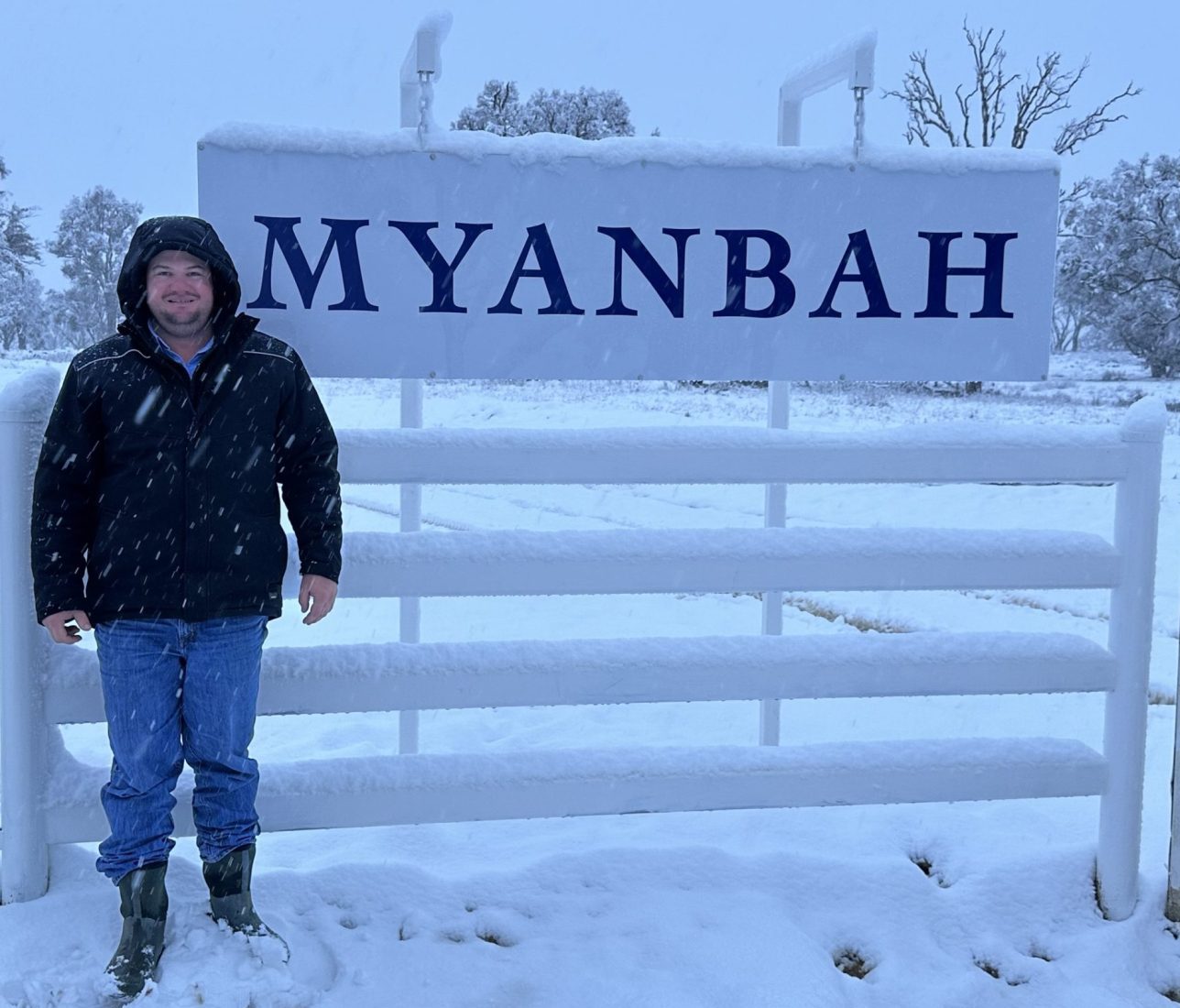
Myanbah Armidale, Jake Cracknell, snow August 2025
Better understanding the drivers of weightgain
Mr Mitchell said the Optiweigh was originally designed to help producers know the weight of their animals in the paddock without having to move them to yards.
But he said the units are now being used for more than he ever envisaged.
“Increasingly people are using it to understand the drivers of weight gain, why their cattle weigh what they do and what is influencing it from feed to the different paddocks or practices – what is the impact of all of that on weight gain,” Mr Mitchell said.
“It has shown us that cattle can handle cold and wet conditions as long as they have enough to eat, but if the energy content of the feed isn’t quite up to scratch, then the weight will peel off pretty quickly.
“We have seen cattle in Canada doing 2kg a day in -20 degrees in a feedlot. So that highlights the importance of keeping energy up to the animals in cold conditions.
“The Optiweigh has also shown us that heat stress in the summer is the bigger killer of weight gain with cattle losing significant amounts of weight as the heat and humidity push the thermal heat index into the extreme.
“We have seen cattle lose significant weight then recovery when it cools down only for those same cattle to lose weight again when it gets hot and humid and we have seen that everywhere from the Gulf to Victoria.”
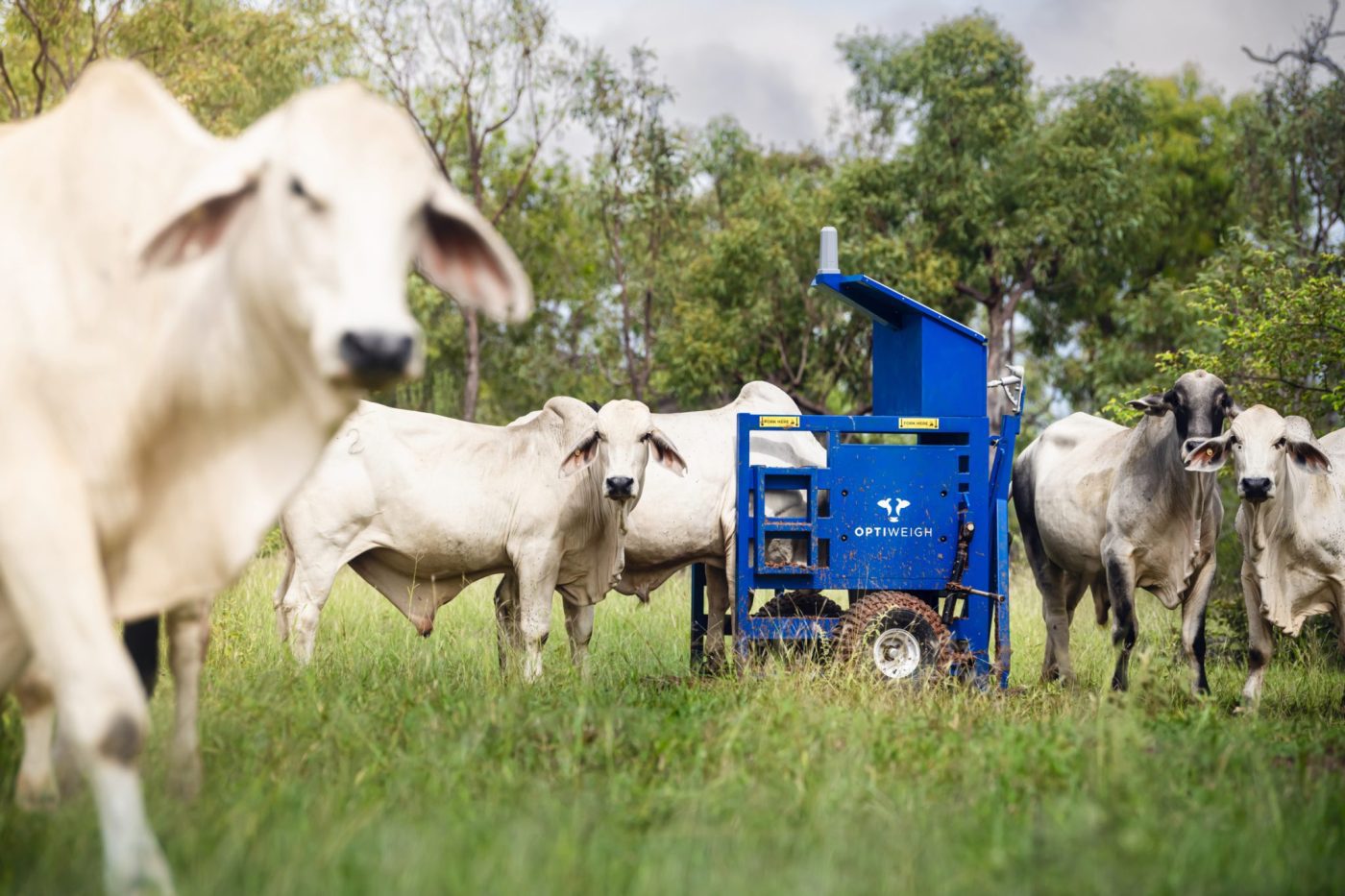
By understanding the weight of the animal daily and the micro fluctuations Mr Mitchell said producers are better able to market their cattle.
“The most immediate payback is being able to book trucks based on knowing exactly when the animals will be at their target weight, without the risk of being penalised for cattle that are overweight or underweight.
“But the numbers on that don’t compare to being able to pick up a productivity gap early and take corrective action.”