
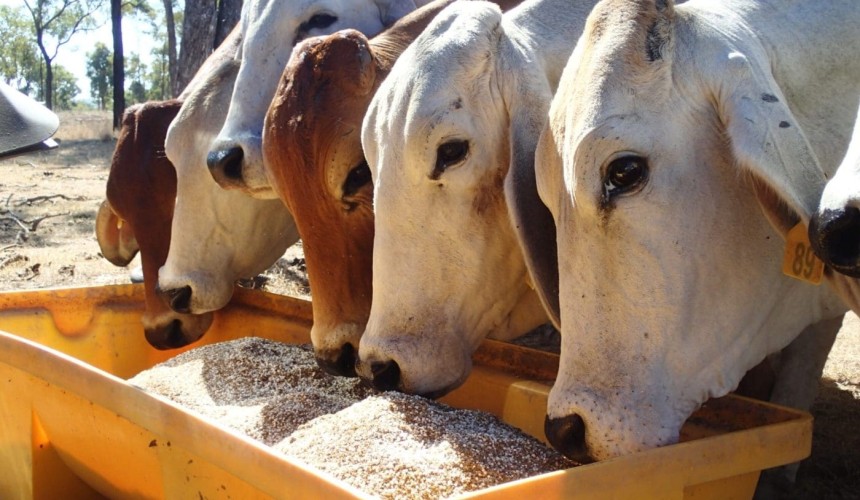
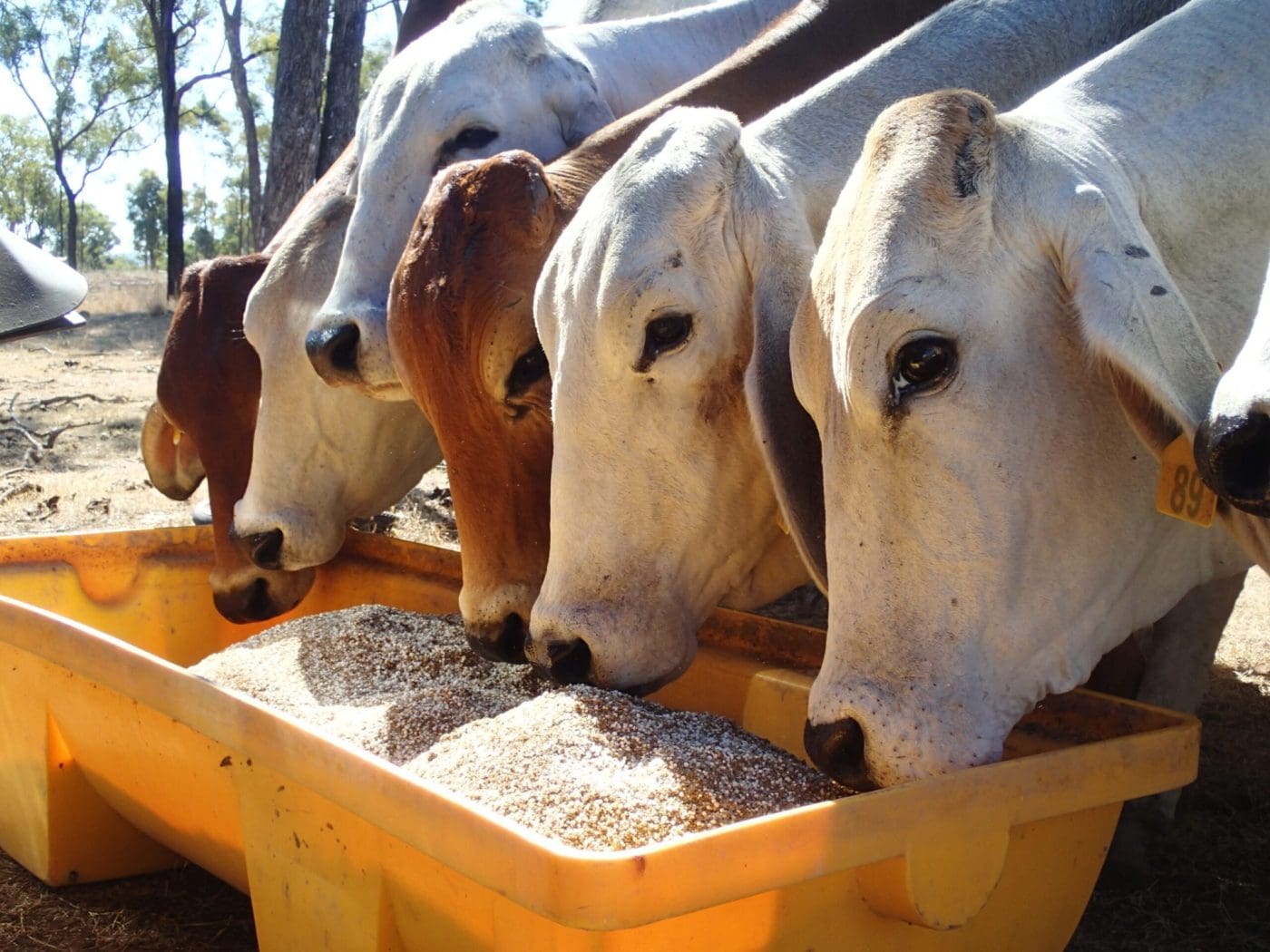
A MAJOR stock lick supplier in Queensland has told Beef Central the price of urea, a key ingredient in supplementary feed, has increased 86 percent due to a disruption in supply from the Middle East.
In 2022 Australia’s last urea production facility, which was based in Qld, shutdown forcing the country to rely on imported urea from the Middle East and China.
China has this month stopped exports of fertilisers including urea to protect domestic supply, which has made Australia more reliant on the Middle East, where the ongoing conflict is impacting supply and therefore price.
“We got the price list from our suppliers about a week ago and it’s gone up $780 and it’s going up every week and on top of that we have increasing fuel levies,” owner of livestock nutrition supplement business, Nutri-Lick, Jack Jones said.
“We were paying around $850 a tonne out of Townsville and it’s gone up to $1580. That’s about an 86pc jump in two weeks just for the urea component.
“Then we have to pay fuel levies on the freight on top of that, so the price increase could be $800 to $820 a tonne.”
Urea is a key ingredient in supplementary feed because of its high protein content and is used predominately in the dry season or during dry periods to boost animal’s weight and performance.
“Urea adds about 287pc equivalent crude protein per kilo into a tonne of feed, so if you wanted to just feed protein meal without urea it would be seriously ineffective and you have to feed lots and lots of it, so by feeding urea it boosts protein in the dry lick mix,” Mr Jones said.
“We don’t put any urea in our wet season mixes which we feed with green grass, but from now until December or whenever it rains, we put from 5pc to 20pc urea in mixes depending on country type and depending on what people are trying to achieve.”
Mr Jones said his suppliers have given him assurance that stock feed is being prioritised for the supply of prilled urea.
“Dry lick needs prilled urea whereas farmers predominately use granular urea for crops. I am being told supply of prilled urea will be good because my supplier has restricted supply to farmers who can’t get granular so there is enough prilled urea for stock feed,” he said.
“So, unless north Qld and the NT get going in the next month or so, where they need 25 and 30pc urea in their mixes, as far as I am aware supply will be fairly strong, but you will have to pay for it.
“That’s why our advice to customers is to get it in the shed now because we don’t know what the next tonne of lick is going to be worth.
“Already 15pc urea mix has gone up $170 this month so if this keeps going it could get up to over $200 a tonne extra just this month.
“So we have been telling people to stockpile to a degree, because we have pretty well burnt through what we bought at the start of March.”
Despite the price increases, Mr Jones said the numbers still stack up to supplement feed cattle.
“Even with the elevated price, it’s still profitable to feed supplements are the moment because you are still getting your 10pc more calving (minimum), but the profit window is shortening,” he said.
“Doing some rough figures, last year generally people fed for 240 days which is the dry season, roughly it cost $60 per cow to feed. This year it could cost around $73.
“So the profit window has shortened, but it’s definitely still there if the cattle market continues to kick.”
Govt must pull all levers for Perdaman urea plant
Meanwhile, Shadow Minister for Resources and for Northern Australia, Senator Susan McDonald has called on the Federal Government to urgently deploy all available levers to fast-track the Perdaman urea plant and prevent a catastrophic failure of Australia’s food production sector.
“With global fertiliser supply chains in turmoil, drastic action is needed to avert a national food crisis,” Sen McDonald said.
“The Perdaman project in WA offers Australia a clear path to self-sufficiency, with the capacity to replace up to 90pc of our imported urea. But we cannot afford delays.”
Senator McDonald said the Government must act immediately to bring the project online by January 2027, ahead of the critical autumn planting season.
“This means mobilising every available tool including the Northern Australia Infrastructure Facility, Export Finance Australia, and also our immigration system to get essential workers here and get this project finished,” she said.
“The Government has just expanded EFIC’s powers through its new Strategic Reserve function. Now is the time to use those powers to secure fertiliser supply as a matter of national economic and food security.”
Sen McDonald said targeted support, including the requested $200 million in funding and expedited visas for up to 400 specialised workers from India, would ensure the project is delivered early.
“These should be short-term, highly skilled workers who will help complete a project that is already 90 per cent built. Without them, we risk unnecessary delays and prolonged exposure to volatile global markets,” she said.
“The Albanese Government has bungled its entire approach to this fuel and fertiliser crisis. It has announced a fertiliser taskforce but this should have been done weeks ago. Australian farmers should not be left vulnerable because of it.”
Sen McDonald said ensuring reliable fertiliser supply was critical to food production, protecting regional economies, and easing cost-of-living pressures.
“The Federal Labor Government should be backing Australian agriculture, strengthening our sovereign capability, and ensuring food security for the future,” she said.
“We need urgent action now.”
we need a mix of prilled, stock feed and granular urea for ruminant supplementation. while the increase in price is another challenge, it still is the cheapest way to provide Protien to Northern herds in the dry. Back of envelope calculations i would say even with Urea at 1575 one would be talking a negative step to reduce urea supplemtation. The long term productivity losses are substantial. ( down stream over years)