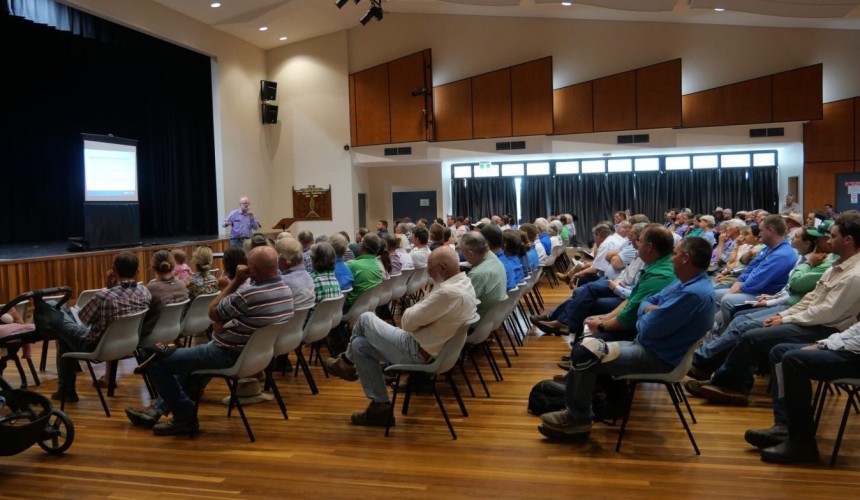
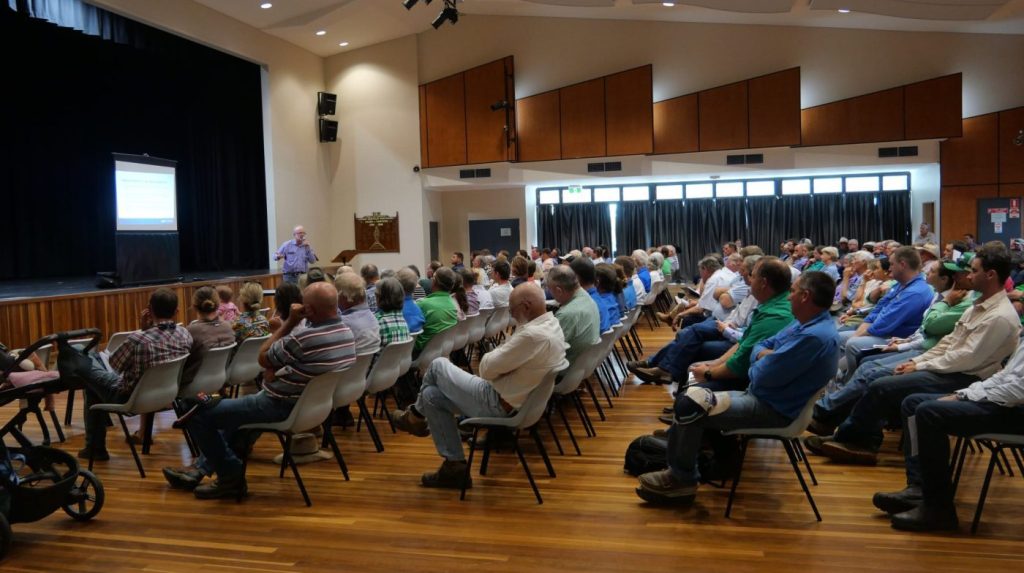
The crowd at the tick meeting in Taroom.
STAFF from Queensland’s Department of Primary Industries have been met with a room full of frustrated cattle producers over the management of the latest cattle tick outbreak in the Cattle Tick Free Zone.
There was standing room only with more than 150 producers at the Town Hall meeting in Taroom this afternoon, after a tick outbreak was reported in the area last month.
The frustration amongst producers has been building since the outbreak occurred, with a number of infected and neighbouring property owners citing they felt abandoned by the DPI.
“We need surveillance teams on the ground to determine the exact extent of the infestation,” Doug Stuart, Taroom cattle producer and third-party scratcher, said.
“Infested properties, neighbouring properties and properties amalgamated on the same PIC number as those already infected, need to be methodically checked to determine their status.
“Not only does the department need experienced stock inspectors on the ground, but they also need to be advising producers on their potential risk, how to and when to treat and what time intervals between treatments.”
Today’s public meeting was announced by the DPI last week to update the community on the outbreak.
The DPI’s Jed Taylor, who was formerly a government stock inspector and cattle tick eradication officer presented information on how to inspect for cattle ticks, signs of tick fever, biosecurity obligations and the process for eradication.
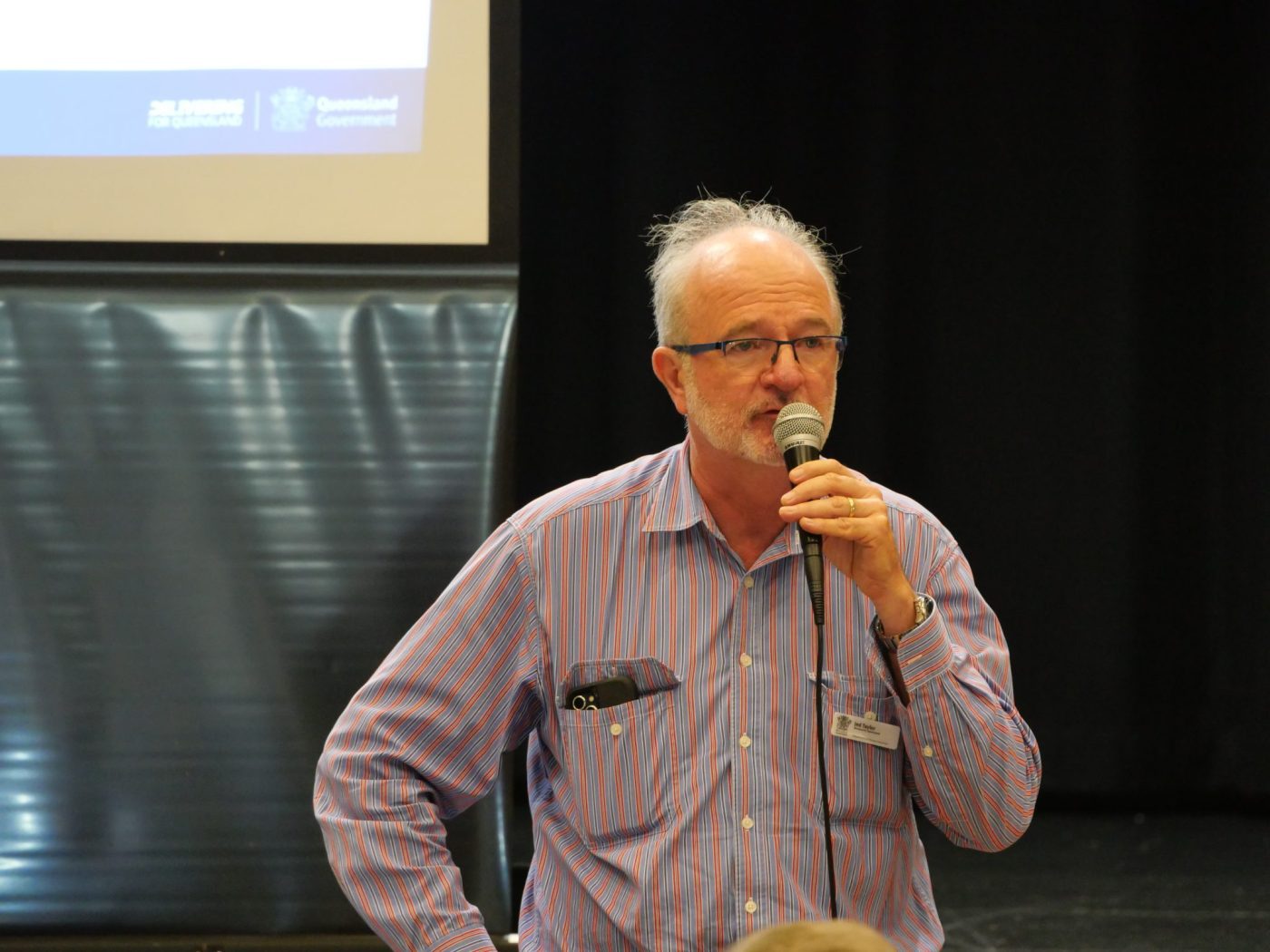
The DPI’s Jed Taylor.
“If we believe a property has received cattle or is high risk they will be notified by the DPI,” Mr Taylor said.
Mr Taylor’s presentation stated the DPI will contact properties with a heightened biosecurity risk. These would include direct neighbours, a trace property and a property linked to outbreak properties.
However, producers in the room disputed that that had happened during this outbreak.
‘Current system not working’
Following Mr Taylor’s presentation, questions came from the floor with livestock agent Terry Ryan opening the Q&A segment by stating the current system is not working and would like to see a return of stock inspectors overseeing the management of cattle moving out of the tick zone and more clearing dips.
His concerns were met with a round of applause.
Mr Ryan shared a case where cattle were inspected on a property and deemed infected with ticks. The producer then engaged a different third-party scratcher who approved the cattle as clean to travel to the Dalby saleyards, where they were found to have ticks on them.
“We have no confidence in ‘clean’ saleyards and don’t feel safe buying out of clean yards,” said one producer.
Another issue raised in the forum was the DPI failing to share where the infected properties are.
“The current policy is that we don’t share that information,” Mr Taylor responded.
“This information will be fed back to the Minister’s office.
“Our main priority now is tracing forward where the infected cattle have gone.
“We have been relying on accredited certifiers to undertake the surveillance work.”
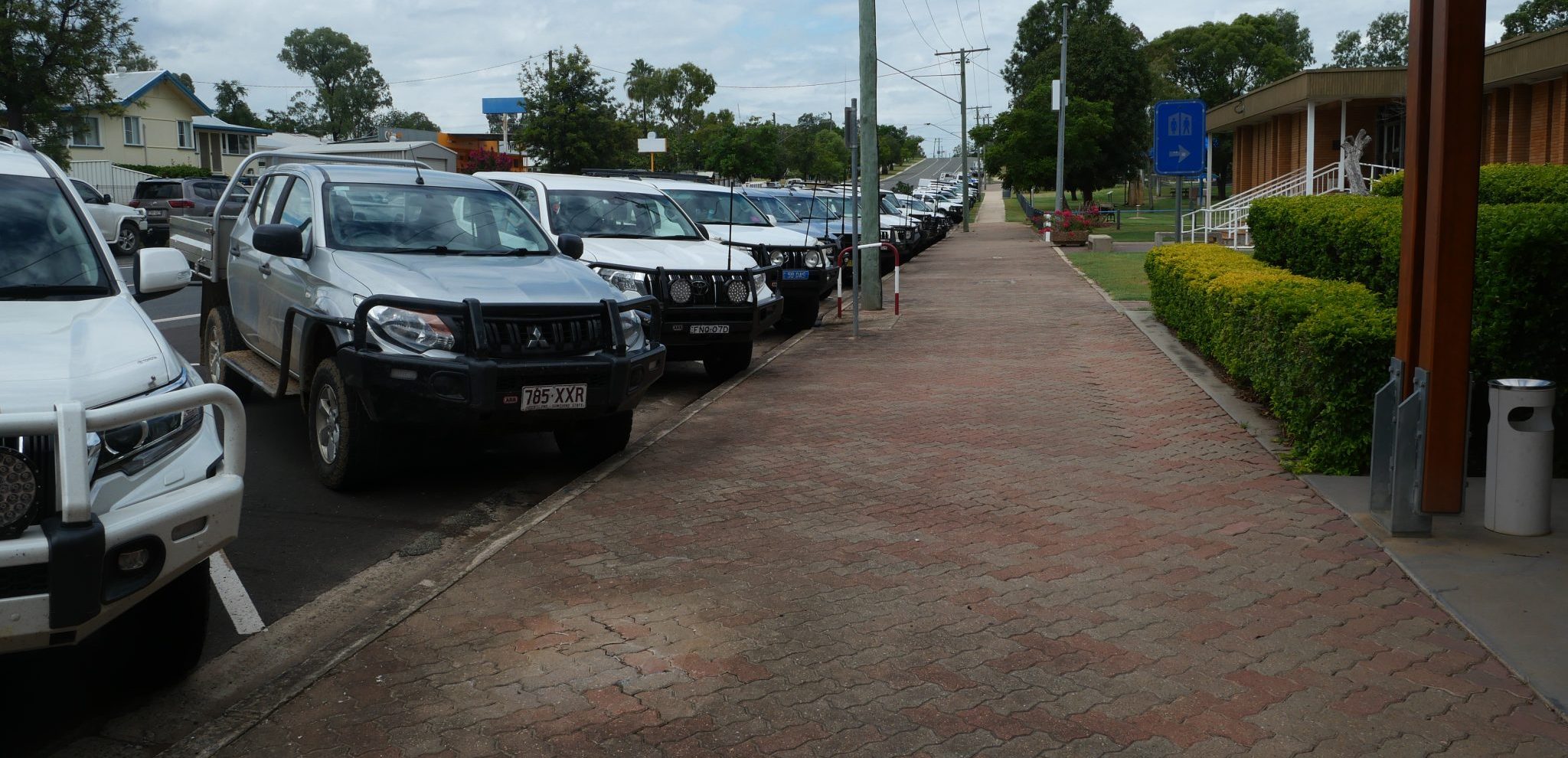
Cars lined the streets in Taroom with producers raising their concerns about the way ticks have been handled.
There were also questions on whether there would be any assistance for producers to scratch and treat cattle and whether the Government had revoked accreditation for poor performing third party scratchers.
“We have taken away accreditation of third-party scratchers,” Mr Taylor said.
- Beef Central will have more on the cattle tick outbreak and today’s meeting in Taroom next week.
After attending yesterdays meeting it is cery clear to say contry to AntheaHenwoods comments that thease outbreaks are caused by a failing of the DPI and their accredited contractors to properly and fully check and clear cattle
Therefore i believe the total cost burden should be covered by the GOVT DPI
millions is squandered on EV subsides with nil benefit
Support the BEEF industry or thease cases will expand and watch te city winge when prices go up or they go hungry
It would seem that the NLIS is failing in Queensland due to influencers.
If tracing systems are compromised, an outbreak of FMD or Lumpy Skin Disease in Australia will have huge implications for the economy, not only producers.
Tick fever is an example.
Governments may not understand the economic importance to the nation if NLIS is compromised.
Cattle producers have invested a huge amount of money to the NLIS to protect its industry and the nation.