
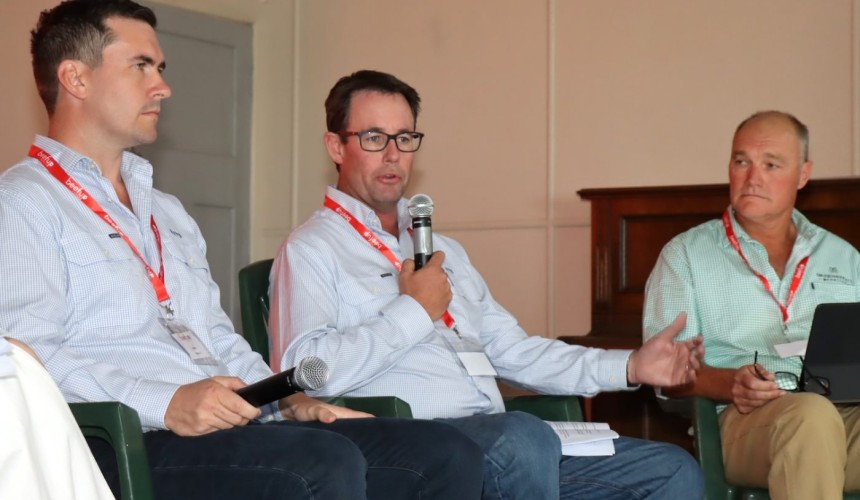
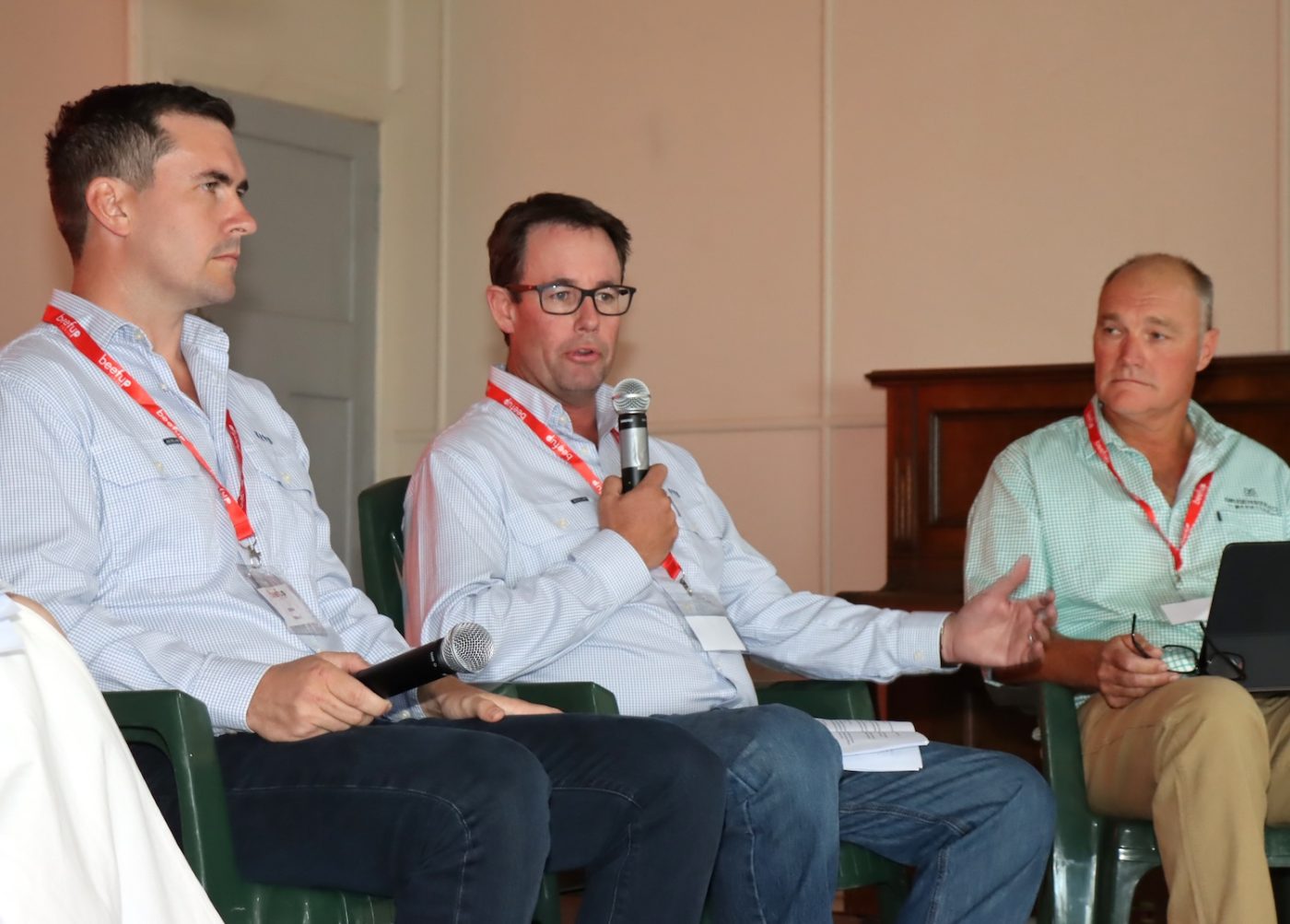
A paddock to processor panel with Ethan Mooney, from Teys, Phil Lambert from Teys Condamine Feedlot and Kenton Peart Greenstead Grazing, Charleville.
“ON A flight you are instructed to put your own oxygen mask on first, I think that’s relevant in the beef industry,” south-west Queensland grazier Kenton Peart shared at a recent Meat and Livestock Australia BeefUp forum.
“We have to look after our own profit margin first before delivering value down the supply chain.
“That doesn’t mean the rest of the supply chain doesn’t need to be profitable, we all do, but without us, the whole chain stops, so we need to generate profitability first and we need to take the necessary steps to do so.”
Mr Peart and his wife Amy run a certified organic beef operation Greenstead Grazing with properties in the Augathella/Charleville district as well as near Mitchell.
He was part of a panel discussion at the recent MLA BeefUp forum in Morven, which explored how decisions made at each stage of the supply chain influence performance, efficiency, sustainability and overall value.
“There’s only ever three ways to generate more profit in the beef industry, and that is to produce more kilos, produce those kilos for less or get more money for your kilos,” Mr Peart said.
Targeting the ‘low hanging fruit’ is where Mr Peart suggests producers should start.
 “How is our pre-sale or pre-slaughter management? Small improvements in this can make a big difference in terms of shrinkage, meat colour etc.
“Just picking up a couple of kilos here can make a big difference dollar wise and you can make these basic improvements, with next to no cost whatsoever.
“Look at your weaning and your cattle handling. Make your livestock cheaper and easier to handle. These small changes are a win-win. It’s win for us and it’s win for the industry.”
In 2025, Greenstead Grazing was named in Queensland’s top 100 producers in the Meat Standards Australia Excellence in Eating Quality Awards for their organic and grassfed beef.
Mr Peart explained despite targeting premium markets, when it comes to the budget he works off the prices being paid in conventional markets.
“You can get in a lot of trouble accepting the premium as the status quo, you have to accept the premium is a bonus,” Mr Peart said.
“At any stage the markets may change, something can happen and we might all be selling on the conventional market and if you have your cost structure wound so high that you can’t make money then, you’re in trouble.
“You have to keep your cost structure at a baseline where with or without that premium you are still making profit.”
Feedlot readiness will improve performance and profitability
Phil Lambert is the General Manager of Condamine Feedlot for Teys Australia and told the room of producers in Morven “animals that are profitable on farm, are going to be profitable through the feedlot”.
“We ask producers to make sure cattle are ready for feedlot entry,” Mr Lambert said.
“That looks like handling the animals well from a young age, so they have had that exposure.
“We want them to walk off the truck and be calm in their new environment, so if they’ve had that human exposure and have been handled in the correct way, it’s going to reduce challenges.
“Make sure you are getting rid of our host parasites on farm.
“If you are supplementing cattle in the paddock, get them eating out of a trough, because when those cattle arrive at the feedlot, if we can get those cattle eating and settled in those first 24 to 48 hours, they will be set up for their whole time at the yard.”
Mr Lambert also emphasised the importance to have heifers preg-tested before sending them to a feedlot to meet welfare guidelines.
Let data drive your decisions
At the processing end of the supply chain the producers at the Morven BeefUp forum were told to request data from their processor to help inform their on-farm decisions.
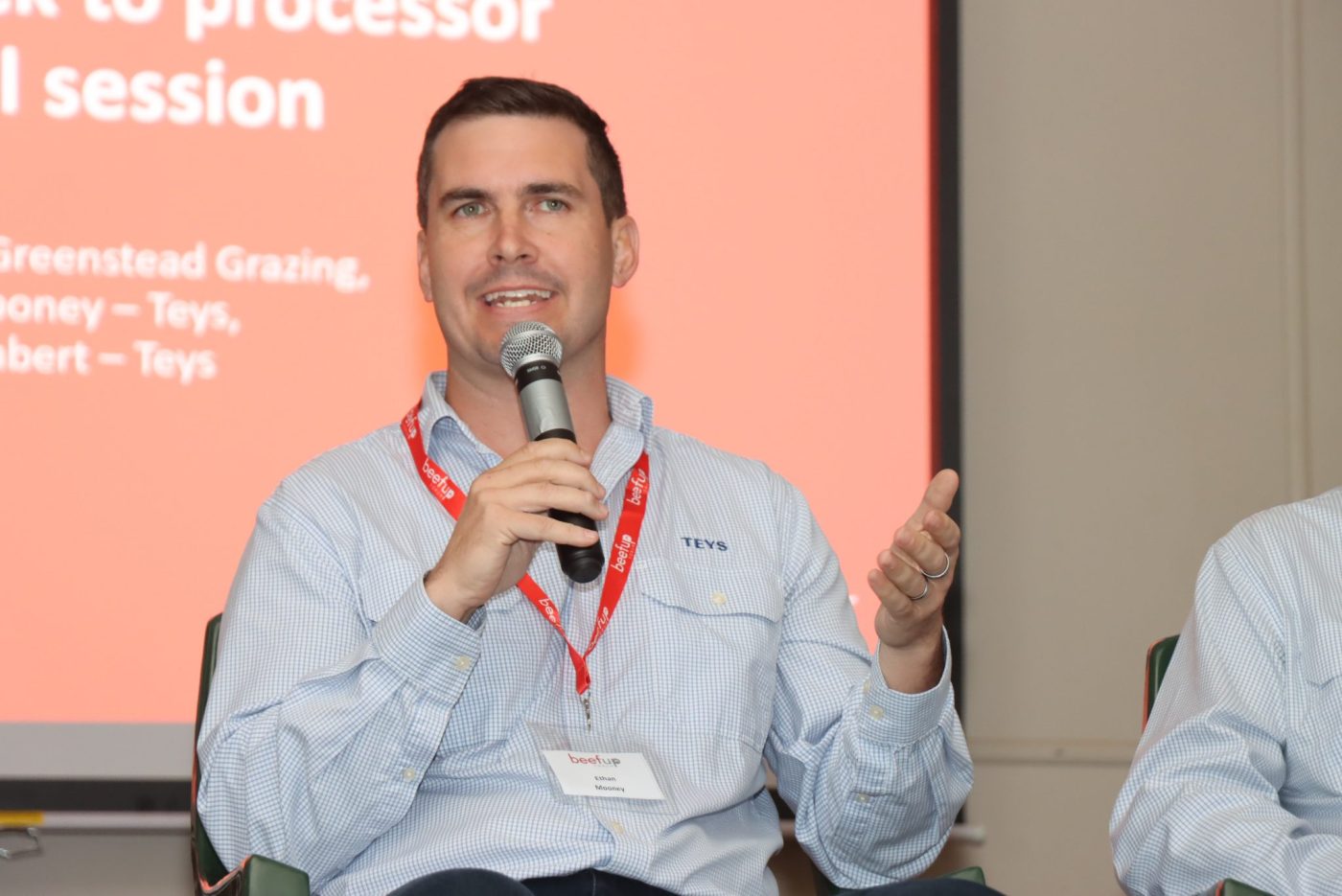 “I always tell people they should make decisions based on the data that is specific to their area,” Ethan Mooney, Livestock Project Manager with Teys Australia said.
“I encourage producers to align with whichever processor or lotfeeder or whatever supply chain they are part of and collect the data from that supply chain.
“Whether it’s average daily gains, it’s conversion ratios, it’s mortality or from a processing side of things – adherence to particular brand of beef programs, there’s a whole host of data that we collect that we’re very keen to share with you, because that’s the only way you change the dial to increase your profitability.
“You need it to be specific to your process and your markets so you can actually make beneficial changes.”