IN 2018 Ivan Hay lost 26 head of cattle to tick fever, which was just the start of a lengthy and costly process to clean up the majority of his properties situated in Queensland’s tick free area.
With recent tick outbreaks causing widespread concern around his local area of Taroom, Mr Hay sat down with Beef Central to detail how he discovered his tick outbreaks and how much they have cost him.
The process of cleaning up the 2018 outbreak began on ‘Canadianvale’ near Taroom, before quickly moving out to his other properties in the area.
“By the time we realised we had ticks, we had spread them to most of our properties. We have 11 properties, all in the tick-free zone and nine of them had tick outbreaks,” Mr Hay said.
“The only reason we knew we had ticks was because cattle died, so we got all the cattle in and scratched them. But unfortunately, we had other deaths on the other infested properties.”
Mr Hay reported his outbreak to Biosecurity Queensland, and the formal process of movement restrictions and eradication began.
“We believe the ticks came on a mob of cattle that we bought out of the Dalby saleyards, which are in the tick-free zone, so the cattle were supposed to be clean to be there which is why we didn’t inspect or treat them,” Mr Hay said.
“For years and years people have bought cattle out of Dalby and never had to check for ticks because it’s in the tick-free area.
“But once they started breaking down the system (Government changes to cattle tick management in 2016) the ticks started turning up at Dalby.”
Cost of eradication
The Hay family kept a spreadsheet of all the costs associated with the first eradication campaign.
“It was about $280,000 and we had to repeat the same campaign the following year because we didn’t get every property cleared in that first 12 months,” Mr Hay said.
“That figure includes the cost of using a helicopter to muster the cattle several times, the chemical cost and paying a third-party scratcher, but doesn’t include the financial toll of having movement restrictions or extra labour, so the figure would be more if you included all that.”
 Mr Hay was once again faced with cattle ticks last year following a truck rollover on the Leichardt Highway near one of his properties.
The truck was travelling from a property in the infested zone, through the free zone to a feedlot, which has been allowed in Qld since 2016.
“The cattle that made it off the truck went through our fence and ended up in five of our paddocks and the cattle that were killed in the rollover had dead ticks on them, so we knew there would be live ticks on the cattle that got into our place.
“So, we just went ahead and started our eradication campaign again on six paddocks that we isolated that were at risk.
“The first treatment costs $14,000, that was the chemical alone without the helicopter and the staff and we have to do that another two times.”
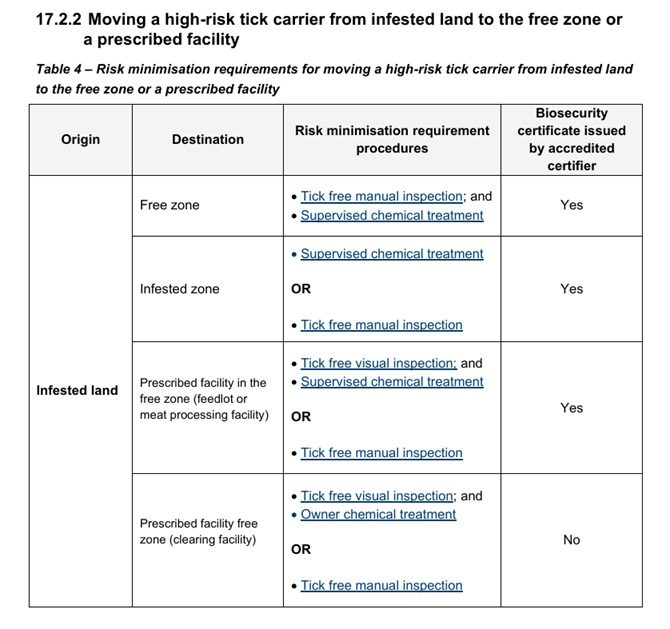
Qld’s Biosecurity Manual outlines that cattle travelling to a feedlot from the infested zone require a visual inspection and chemical treatment or a manual inspection (scratching).
“High-risk tick carriers must be visually inspected and found to be free of the adult stage of cattle tick to meet the risk minimisation requirement,” Qld’s Biosecurity Manual states.
“A tick-free visual inspection OR a tick free manual inspection to access a clearing facility (including a feedlot) in the free zone does not require a biosecurity certificate and can be completed by the owner or person in charge of the livestock.”
More properties near Taroom break down with cattle ticks
The current outbreak in the Taroom district has led to calls for changes to Queensland’s cattle tick management system.
This week tracing work by the Department of Primary Industries has found more properties have been infested with cattle tick from the outbreak in the Taroom district.
Mr Hay said his outbreak in 2018 was the first in the Taroom area since the region was cleared of ticks in the 1990’s during the Government’s eradication program in which properties were being cleared so the tick line could move further north.
“I remember cleaning up this area in the 1989, 1990 and outbreaks were basically unheard of straight after the clean-up,” Mr Hay said.
“It was only when they started relaxing the laws that we started getting outbreaks.
“The changes that were made in 2016 favour the producers that are not worried about ticks.
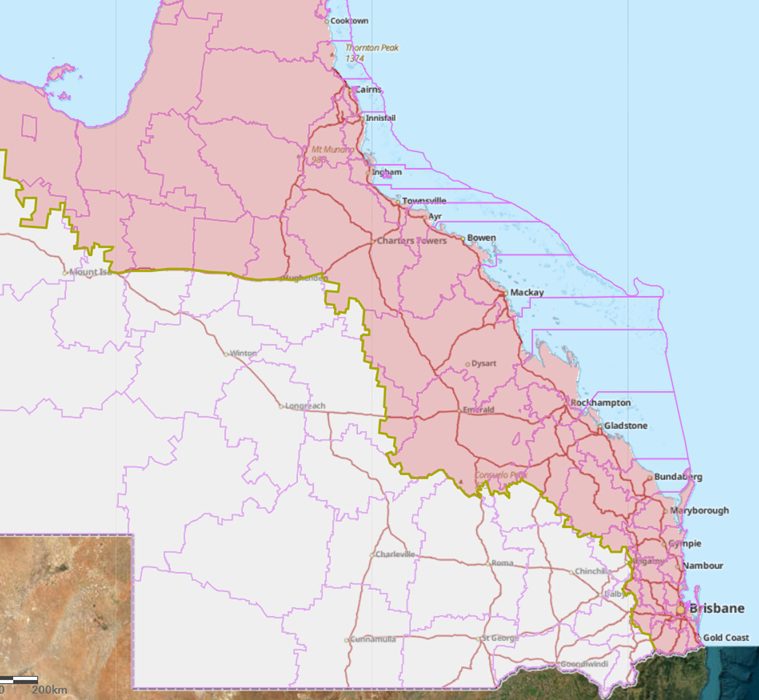
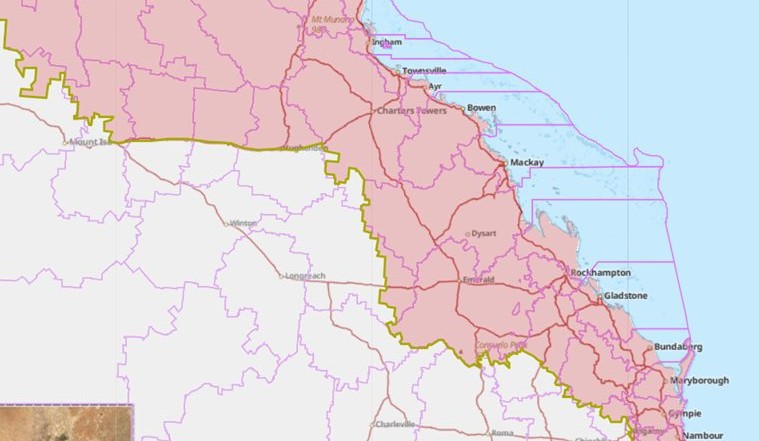
Qld cattle tick line.
“They have requirements so that they can come through the clean area but if there is a breakdown, it’s up to the people in the clean area to re-clean again, so the people that are getting the advantage of being able to move their cattle more freely, it’s not costing them a thing.
“The Government needs to start moving the tick line again, constantly eradicating ticks to move the line further north, otherwise the ticks will keep coming south into the clean areas.”
Read my lips: "Eradicating ticks is impossible".
Should you succeed, through a combination of chemicals, fire, depopulation (let your imagination run) to eradicate ticks in a paddock, or on a farm, or in a district, nothing else will be alive there.
Cattle are our only entry to keeping tick numbers down in Northern Australia, but they are not the only hosts used by ticks.
Losing cattle to tick fever need not happen if there is a diligent and sustained practice of vaccinating all newborn calves.
So, there you have it, with excellent reporting. The recent death of 26 head plus cleanup costs coming added to Ivan Hay’s previous $280,000 plus gives a picture of what has happened. And this will happen repeatedly following from the unacceptable weakened protocols from 10 years ago. As predicted. We had the right tick management and cattle movements then and we need to return to that. Those individuals who wanted the relaxed faulty movement requirements and benefits need to think about their industry rather than themselves.
Now it’s coming down to COST !! all neatly done and hopefully correct.
Compensation has been suggested WHAT ?.
Those of us who live north of the tick line have been paying that cost for 60 yrs or more .
Paid out of our own pockets.
Not including the “unknown” health issues that came with Spray and
Plunge dips using arsenic and Cooper base products that spring to mind.
Cost further Boosted by the larger numbers that had to be treated and stock deaths due to “Red Water”.
The same type of numbers are still treated to day.
The tick line hasn’t been shifted throughout that time.
Maybe the rail line between Mt Isa and Townsville has done a good job. ?
What’s happened to the DPI ? some detached bureaucrat has made an uninformed decision ?. Then advised the Government of the day .
Ticked Off
Jeff Forster